



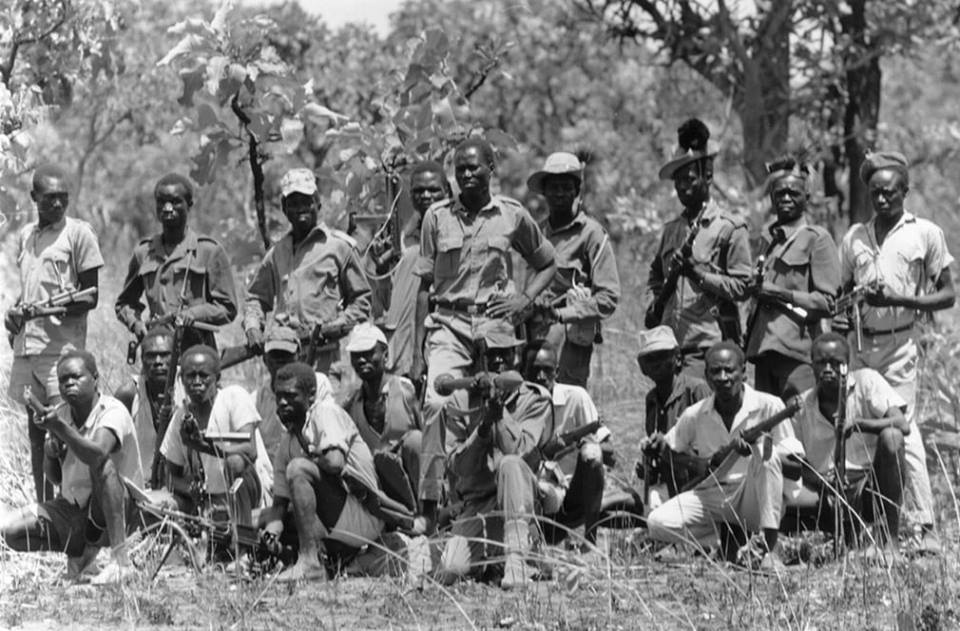
Yesterday, 18 August 2026, marked the 71st anniversary of the Torit Revolt of 18 August 1955, the historic uprising that marked the beginning of the long and arduous struggle of our people for freedom, dignity, justice and equality.
Seventy-one years ago, our forefathers took a courageous stand against a system of domination and political injustice that denied the people of Southern Sudan their rightful place in determining their own destiny. The uprising in Torit was eventually suppressed, and many of those who participated paid the ultimate price. Yet the suppression of the revolt could not extinguish the idea that had already taken root among our people – that a people deprived of their freedom and dignity would eventually rise to reclaim them.
The significance of 18 August therefore extends far beyond the events that took place in Torit in 1955. It became a symbol of resistance and the beginning of a struggle that passed from one generation to another. Those who survived carried the struggle forward, while those who fell became part of the history of our liberation.
We must remember the men and women of that generation not simply as historical figures, but as the first generation of freedom fighters who opened the path upon which subsequent generations would walk. Their sacrifices helped illuminate a road that would later be travelled by the Anyanya, the SPLM/A and countless other patriots who continued the struggle for the freedom of our people.
The road was long, painful and costly. Generations were born in war, lived through war and died without seeing the freedom for which they had sacrificed. Yet the dream survived because the struggle was never simply about changing the identity of those who ruled over us. It was about creating a society in which every citizen could live with freedom, justice, equality and human dignity.
Eventually, on 9 July 2011, South Sudan achieved independence. For our people, this was the fulfilment of a historic aspiration and a moment for which generations of freedom fighters had sacrificed their lives. The referendum demonstrated the overwhelming desire of our people to choose freedom and determine their own national destiny.
But independence was not supposed to be the end of the struggle. It was supposed to open a new chapter in which South Sudanese would build a republic where all citizens were equal before the law, protected by national institutions and united by common principles.
Sadly, fifteen years after independence, we are compelled to ask whether the dream of those who began the struggle in Torit has truly been fulfilled.
What has happened to the freedom for which they sacrificed? What has happened to the justice they envisioned? What has happened to the equality and dignity that were supposed to define our independent republic?
Instead of building upon the sacrifices of our forefathers, we have witnessed the emergence of a political system in which tribalism, corruption, exclusion and political repression have become deeply entrenched. The republic that was supposed to belong equally to all its citizens has increasingly been captured by political interests that place tribal and personal power above the national interest.
This is the great contradiction of our time. The first shot of liberation was fired in Torit against domination and injustice, yet today our people continue to confront another form of domination through an internal system of political and tribal segregation that denies them many of the very principles for which generations fought.
For this reason, the history of 18 August 1955 must not be reduced to speeches, ceremonies and the laying of wreaths. Commemorating our martyrs while preserving the conditions against which they fought would be an insult to their sacrifices. Their history should instead compel us to examine the state of our country and ask whether we have remained faithful to the ideals that gave meaning to their struggle.
If we say that our forefathers fought for freedom, then we must honestly ask whether our people are free today. If they fought for justice, we must ask whether justice is available equally to every South Sudanese. If they fought for equality, we must ask whether citizens are treated equally regardless of their tribe, region or political affiliation. And if they sacrificed for human dignity, we must ask whether our people can live without fear, displacement, poverty, and political persecution.
These are not merely questions for historians. They are questions about the South Sudan we have built since independence.
The tragedy of our country is that the generation that inherited the fruits of liberation has failed to protect the ideals behind them. Those who came to power under the banner of liberation have allowed its meaning to be distorted, while independence itself has increasingly become an instrument for political domination rather than the foundation of a democratic and inclusive republic.
The liberation struggle was never meant to produce a tribal republic, nor was it meant to replace one form of domination with another. It was not fought so that political power, national wealth and state institutions could become concentrated in the hands of a narrow political elite while the majority of our people remained impoverished, displaced and excluded from meaningful participation in the affairs of their own country.
This is why the struggle that began in Torit remains unfinished.
Our forefathers opened the road to freedom in 1955. Other generations continued along that road through enormous sacrifice, and the people of South Sudan eventually exercised their right to self-determination in 2011. The responsibility to defend the meaning of that freedom has now fallen upon our generation.
We must therefore understand the difference between independence as a legal status and freedom as a lived reality. A country may possess a flag, an anthem, a government and a seat among the nations of the world, yet still deny its citizens freedom, justice and dignity. True independence must ultimately be judged by the condition of the people themselves.
It must be reflected in the ability of citizens to speak without fear, participate in government without discrimination, move freely throughout their country, enjoy equal protection under the law and live without being targeted because of their identity or political beliefs.
This is the legacy we owe to the men and women who stood in Torit 71 years ago.
We honour them by continuing the work they began and by refusing to allow their sacrifices to be used merely as political symbols by those who have abandoned the principles of liberation. The first generation of our freedom fighters did not fight for one tribe, one region or one political party. They fought because they believed that our people deserved to live in freedom and with dignity.
That belief remains as relevant today as it was in 1955.
Seventy-one years after Torit, the history of our struggle therefore places a responsibility upon us. We must reclaim the meaning of independence from those who have turned it into an instrument of tribal domination, corruption and political repression, and work towards the kind of republic for which generations of our people sacrificed – a republic founded on freedom, justice, equality and human dignity.
On this 71st anniversary of the Torit Revolt, we remember those who took the first step and those who followed the path they opened. Their history belongs to all South Sudanese, and their sacrifices remain part of the foundation upon which the country was built.
The responsibility to defend the meaning of that freedom has now fallen upon our generation. The history of Torit should therefore remind us that independence cannot be considered complete simply because South Sudan became a sovereign state in 2011. The real measure of independence is whether the people can enjoy the freedom, security, justice and dignity for which generations before us sacrificed.
That responsibility requires us to understand our history honestly. The men who rose in Torit in 1955 could not have known where their action would eventually lead, nor could they have imagined the many decades of conflict and sacrifice that would follow. But they established something that could not easily be erased – the determination of the people of South Sudan to have a say in their own destiny.
Seventy-one years later, we are still living with the consequences of that first revolt. We have inherited both its achievements and its unfinished responsibilities. Independence gave us a country, but it did not automatically give every South Sudanese the freedom and dignity that they had hoped independence would bring.
It is therefore the responsibility of the present generation to ensure that the sacrifices made over these many decades are not reduced to ceremonies and anniversaries. The history of our liberation must continue to guide the struggle to establish a South Sudan in which citizenship is not determined by tribe, political affiliation or proximity to power, but by equal rights and equal protection under the law.
On this solemn anniversary, we salute the heroes of Torit and all the generations of freedom fighters who followed them. We honour the known and unknown martyrs whose blood watered the tree of our freedom, including those who fought without ever seeing the dawn of independence.
Their sacrifices must not be forgotten, and the dream for which they gave their lives must not be betrayed.
In the words of the NAS Chairman, Gen. Thomas Cirillo Swaka, on this anniversary: The struggle continues.
The writer, Sokiri Lo Poni, is a concerned South Sudanese. He can be reached via Sokiril8@gmail.com.
The views expressed in ‘opinion’ articles published by Radio Tamazuj are solely those of the writer. The veracity of any claims made is the responsibility of the author, not Radio Tamazuj.

 and then