



On 9 July 2026, South Sudanese commemorated the 15th anniversary of South Sudan’s independence. They marked this historical day with mixed reactions. The power brokers and political elites in power received this day with joy and jubilation simply because they amassed and accumulated wealth through rampant and runaway corruption.
However, the impoverished and the war-affected South Sudanese majority who are in the internally displaced camps and refugee camps marked their independence with silence and feelings of regret and betrayal. Since South Sudan became a member of the United Nations General Assembly (UNGA), it has never known peace and stability. The country continues to be threatened and affected by war and corruption.
In the book Patriotism and Visionary Leadership, Muriith Kiyu defines corruption as “the practice of using one’s official position to obtain private benefit, mainly due to the advantage available to the individual in terms of power, influence, Information, or access to public resources.” The problems of war and corruption prevent national cohesion and development. These challenges must be eliminated for the survival and progress of our country. The visible symptom of corruption is that it makes the people ask why their developmental projects and needs are not being fulfilled. (Muriithi, 2024).
In February 2026, Transparency International (TI) ranked South Sudan as the most corrupt country in the world. The corruption must be fought and defeated, for it is robbing South Sudan of everything that we toiled for many years. If the SPLM leadership knew what it ought to do, their new war would have been the fight against corruption. It is unfortunate and unimaginable that no single person has ever been prosecuted for corruption, and yet corruption cases are being reported now and then. In his book, What Is Africa’s Problem? President Yoweri Kaguta Museveni of Uganda stated that “In order to tackle the problems of backwardness, corruption must be eliminated once and for all.” Of course, there are institutions created to fight corruption in South Sudan; these include the Anti-Corruption Commission, police, judiciary, and National Security Services. These institutions should be led by people and individuals of high integrity. (Museveni, 2000).
In 2011, the people celebrated and cheered our Independence Day believing that we were “free at last.” Barely two years of independence, South Sudan degenerated into a political crisis caused by SPLM leadership’s appetite for dictatorship. In November 2012, the dictatorship and military rule were installed through a declaration of war that erupted on 15 December 2013. This incident came soon after they rejected internal and intra-SPLM Party elections ahead of the national election slated for 2015. Apart from the declaration and coronation of dictatorship and military rule, the SPLM leadership was still without a vision. Over the years, the SPLM has harbored the feeling of entitlement to rule South Sudan not through vision but through corruption, coercion, and abuse of human rights.
As a matter of fact, the SPLM government has excelled in dictatorship because it managed to maintain its iron hold on power without a democratic election for 15 years. The SPLM under President Gen. Salva Kiir has failed to fulfil its promises to unite the people toward a prosperous and peaceful nation. During the dark days of the liberation struggle, we fought and aspired for a united, free, and democratic nation governed by the constitution and the rule of law.
In history, we have learnt that whenever the government decides to preside over undemocratic activities such as abuse of human rights, it risks taking the country to war and anarchy. In chapter four of his book, Sowing the Mustard Seed: the struggle for Freedom and Democracy in Uganda, Yoweri Kaguta Museveni highlighted the political issues which took Uganda to war during the eras of Presidents Dr. Milton Obote and Gen. Idi Amin Dada. These political issues include but are not limited to suppression, lack of freedom to air political views, failure to organize elections, detention without trial, creation of a wealthy class of leaders, and corruption. (Museveni, 2016)
The SPLM regime refused to learn from Africa’s history, for they continue to perpetuate and preside over human rights abuses and dictatorship with a view to looting. The primary causes of war and conflict are a culture of violence and dictatorship which the SPLM and its military wing inherited from the old Sudan. The subnational and intercommunal violence is being encouraged and practiced to the point that they became a norm. This culture of violence emanated from our historical injustices and other political grievances whose history goes back to the days of the SPLM’s inception in 1983. For example, there was the Gaajak Nuer massacre in 1984. This incident gave birth to the Bor massacre in 1991. The 2013 Nuer massacre has a link with these incidents.
In 2025 and 2026, we heard about and witnessed the Ayod and Abiemnom massacres in Jonglei and Unity State, respectively. These recurrences of violent conflicts come from the SPLM’s culture of perpetuating and condoning impunity and injustice. The SPLM-led government has perfected the art of applying the law selectively. For example, in March 2025, they arrested and are now prosecuting opposition leaders like Dr. Riek Machar Teny Dhurgon and seven others in connection with the Nasir Incident. Any intelligent and inquisitive person would ask: Why didn’t they arrest and prosecute the suspects behind the Ayod and Abienhom incidents, which took place almost concurrently?
In 2022, the Upper House of the National Legislature, the Council of States, investigated and impeached the SPLM-appointed governor of Unity State due to his alleged involvement in the violent incidents which took place in Mayom and Leer counties. In their resolution and letter of impeachment, this August House recommended the removal of the Unity State governor pending prosecution.
In an article published by Sudan Tribune under the title “Minister Marial Benjamin wants to kill two birds with one stone,” the president’s office rubbished and refused the parliament’s recommendation, stating that the Council of States lacks legal jurisdiction to discuss and reach such a conclusion. In their knee-jerk reaction, the government arrogated to themselves the duty to interpret the constitution, which is a preserve of the judiciary. (Buoth, 2022).
Connection between conflict and human rights in South Sudan
The ongoing war and conflict in South Sudan can be described in terms of cause-effect connection and so forth. Usually, war and human rights have two-dimensional relationships. The first dimension is that war and conflict result in violation of human rights. In wartime, human rights such as the rights to life and freedom of movement are curbed and curtailed by the killing of combatants and non-combatants. The second dimension is that continuous human rights violations cause war and conflict in society. When people are repeatedly denied and stripped of their inherent rights and freedoms, such as rights to expression and the right to movement, as witnessed today in South Sudan, then conflict will occur at any given time. In a nutshell, war not only leads to human rights violations, but it could also result from violations of human rights. (Machira, 2008). You will hardly find and face a conflict that is free from human rights violations.
There is an adage which says “when two bulls fight, the grass suffers.” In fact, this proverb is at work in South Sudan. In 2014, when rival soldiers of President Kiir and opposition leader Dr. Riek Machar fought in Juba, thousands of children, women, and the elderly fell victim to their war. In any case, if you peruse the two reports by the United Nations Mission in South Sudan (UNMISS) and Africa Union Commission of Inquiry on South Sudan, there are thousands of human rights violations, some of which caused the ongoing war and conflict.
In wartime, human rights violations range from mistreatment of prisoners of war, unlawful attacks, and arbitrary arrest, and so forth. Veteran Mauritanian diplomat, Commissioner El Gassim Wani, opined that “no war can be fought without allegation of human rights violations.”
In the book Operation Linda Nchi: Kenya’s military experience in Somalia, the author/s aver that “…the major causes of human rights violations in any operation are poor leadership.” Normally, the army units that are not headed by well-trained officers end up violating human rights. Besides, the noncommissioned soldiers who are involved in war are likely to break human rights and humanitarian law. (Migue & Co., 2014). Alternatively, one of the leading proponents of humanitarian intervention theory, Peter Hoffman, was quoted as saying that the state does not have an absolute territorial right over the people who reside in the country.
When the people are suffering from violent conflict, insurgency, repression, and the country in question is unwilling or unable to avert the violence, then the principle of non-intervention should be waived or set aside to allow military intervention from the United Nations Security Council. Further, Hoffman opined that humanitarian intervention is an accepted principle available and accorded to the international community when the state acts in a manner that abuses the rights of its own citizens. I think the African Union borrowed a leaf from this theory. The AU principle of non-indifference is akin to this principle of humanitarian intervention. These legal and humanitarian principles of intervention are similar in terms of application and what they are meant to achieve. Article 4(h) and (j) of the Constitutive Act of the African Union (CAA) obligated the AU to intervene in a country where there are continuous abuses of Human Rights.
In 2017, I addressed then Kenyan President Uhuru Kenyatta in an open letter entitled “South Sudan independence risk being reversed.” In this excerpt, I besieged his excellency to intervene actively based on the aforementioned legal theories. (Buoth, 2017)
Finally, the country of South Sudan, which has suffered from years of slavery and human rights abuse under various Khartoum regimes, should be a champion of human rights enshrined in the UN Charter. The Universal Declaration of Human Rights is one of the first documents that highlights the inherent and inalienable rights of all persons irrespective of their colors and creeds. The effort to build a human rights society requires the collective and concerted commitments from all persons in the country. This struggle to prevent human rights violations and protect human rights is an achievable work in progress.
They say prevention is better than cure. As such, South Sudan should prevent the occurrence of conflict and war by embracing human rights and democracy. I believe that someday South Sudan will be a country with human rights and a progressive constitution like Kenya and other countries. This particular vision is rooted in the love for peace and development. I am afraid that South Sudan will not achieve its objectives to build roads, health, and schools if we don’t embrace human rights and democracy.
Annually, the world commemorates Human Rights Day by renewing our commitments and paying tributes to individuals who paid the ultimate price in the defense and advancement of human rights. By definition, human rights mean empowerment, and thus, when we promote and protect human rights, we are creating an enabling environment where we can thrive economically, socially and politically.
In her speech, former Human Rights Commissioner Mary Robinson stated that “Providing this assurance of protection, in turn, will contribute to preventing so many of the conflicts based on poverty, discrimination and political oppression which continue to plague humanity.” (Robinson, 1997).
In conclusion, I suggest that the SPLM regime should make a U-turn before it is too late. They should come to their senses by apologizing to the country for denouncing the Tumaini Peace Initiative before accepting the proposed AU-led inter-party dialogue headed by former Tanzanian President Jakaya Kikwete. As we have learned and experienced, the consequences of declaring the death of the Tumaini Peace Initiative are there for everyone to see with regret. Should they continue with their habits of denying and denouncing national dialogue, then South Sudan is not yet off the hook.
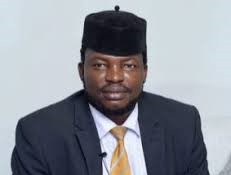
The Writer is a Lawyer and Criminologist by Profession and former Delegate to the High-Level Mediation for South Sudan alias Tumaini Peace Initiative, where he represented SSPM as its National chairperson for the constitutional and Legal Affairs committee. He can be reached via eligodakb@yahoo.com.
The views expressed in ‘opinion’ articles published by Radio Tamazuj are solely those of the writer. The veracity of any claims made is the responsibility of the author, not Radio Tamazuj.
REFERENCES:
Muriithi. (2024). Patriotism and visionary leadership: The hope for a stable and Prosperous Kenya.
Buoth. (2022). Minister Marial Benjamin wants to kill two birds with one stone.
Museveni. (2016). Sowing the Mustard Seed: the struggle for Freedom and Democracy in Uganda
Colonel Pius T. Migue & others (2014). Operation Linda Nchi: Kenya Military Experience in Somalia
Buoth. (2017). South Sudan Independence Risk Being Reversed
Apollos. (2008). Working for Peace: New Thinking for Peacebuilding
Museveni. (2000). What is Africa’s problem?
Robinson. (1997). Statement by United Nations High Commissioner for Human Rights, Nipilar Awards Ceremony, South Africa

 and then