



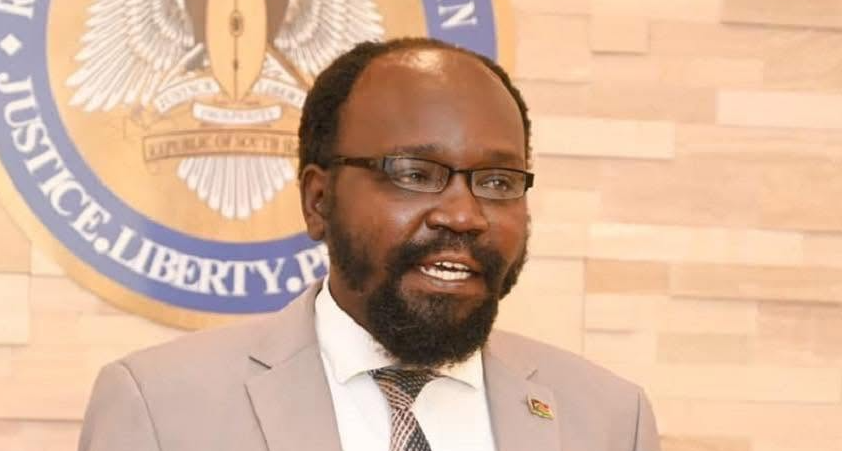
The ministerial order issued on 18 November 2026 by Peter Mayen Majongdit, Minister of Humanitarian Affairs and Disaster Management, raises serious questions about legality, institutional authority and executive power. Ministerial Order No. 3-2026 requires national and international organizations to re-register by 21 December and introduces a localization quota of up to 80 per cent of staff. At a time when millions depend on humanitarian assistance, this is not a routine administrative matter.
The question is not whether South Sudan should strengthen national capacity and promote local leadership. These are legitimate objectives. The question is whether a minister can impose sweeping new requirements through an administrative order without clear authority under the laws governing non-governmental organizations.
Under the NGO Act 2016 and the Relief and Rehabilitation Commission (RRC) Act 2016, the RRC is the statutory institution responsible for registering and overseeing organizations. The Ministry has a policy role, but that should not be confused with the Commission’s legal mandate. Unless the minister can identify a clear legal provision authorizing compulsory re-registration and a mandatory staffing quota, the order risks exceeding ministerial powers and undermining institutions established by Parliament.
Lawyer Godfrey Victor Bulla, Executive Director of the Justice and Human Rights Observatory, has questioned the need for re-registration when organizations already submit documents to the Commission annually. He has also argued that the absence of a 2022 Country Host Agreement does not, by itself, invalidate existing registrations. Administrative concerns cannot automatically justify cancelling lawful status or disrupting essential services.
The order further threatens legal certainty. Organizations have made staffing, funding and programme commitments under the existing framework. New deadlines and quotas imposed without a transparent legal basis, consultation or a reasonable transition period could disrupt operations and put services to vulnerable communities at risk. Localization should be advanced through investment in skills, leadership and national institutions—not abrupt quotas whose legal basis and practical consequences remain unclear.
Civil society leaders have also challenged the decision. Edmund Yakani, Executive Director of the Community Empowerment for Progress Organization (CEPO), has described the order as a violation of existing law and warned against leaders using administrative decisions to create rules that conflict with legislation passed by Parliament. CEPO and other organizations have indicated their readiness to pursue legal action. Their concern goes to a basic principle: executive convenience cannot replace the rule of law.
The timing makes the order more troubling. Following the dissolution of the transitional government and legislative bodies on 22 September 2026, South Sudan entered a caretaker period ahead of elections scheduled for 22 December. A caretaker administration is generally expected to maintain continuity and manage routine government business, not introduce major policy changes with far-reaching consequences. The precise limits of its authority must be assessed against the applicable constitutional and legal instruments. But a measure affecting hundreds of organizations and humanitarian services demands clear legal authority, public justification and meaningful scrutiny.
The UN Commission on Human Rights in South Sudan has raised concerns about governance without legislative oversight. That absence of oversight should make the executive more restrained, not embolden it to use administrative orders as substitutes for parliamentary lawmaking.
The government should suspend implementation of Order No. 3-2026 and publish the legal provisions on which it relies. The RRC, the Ministry of Justice, the Ministry of Foreign Affairs and civil society representatives should review the order transparently, clarify institutional mandates and determine whether its requirements comply with the NGO Act and RRC Act. Any reform must be lawful, consultative and proportionate, while protecting the continuity of humanitarian assistance.
South Sudan needs stronger national institutions and greater local leadership in the humanitarian sector. But these goals cannot be achieved by weakening the legal framework or imposing obligations whose authority is uncertain. A government’s legitimacy is measured not by the force of its orders, but by its respect for the law. For a caretaker government, restraint is not weakness; it is a constitutional responsibility.
The writer, Sebit Ernest, is a researcher and policy analyst and the Director of the Nexus Institute for Inclusive Development and Research (NIDR).
The views expressed in ‘opinion’ articles published by Radio Tamazuj are solely those of the writer. The veracity of any claims made is the responsibility of the author, not Radio Tamazuj.

 and then