



Fifteen years after independence, South Sudan faces a challenge that extends beyond inflation, currency pressures, or rising commodity prices. The country is confronting a more fundamental question: whether the institutions created after independence are delivering on the promises that inspired one of Africa’s most significant state-building projects of the twenty-first century.
When South Sudan became independent in 2011, it represented more than the creation of a new state. For millions of South Sudanese, independence embodied aspirations for peace, justice, dignity, and political self-determination after decades of conflict. The struggle for statehood demanded enormous sacrifices: countless lives lost, communities displaced, and generations shaped by war.
Yet today, many citizens are confronting a reality in which economic survival itself has become increasingly uncertain.
Across South Sudan, households are under growing pressure from rising prices of essential goods, declining purchasing power, and persistent economic instability. Inflation and currency volatility are not unique to South Sudan; many countries face similar pressures. But the challenge in South Sudan lies not only in the economic indicators themselves. It lies in the limited capacity of institutions to shield citizens from their consequences.
Small movements in foreign exchange markets often translate into disproportionately large increases in the prices of essential commodities. Public servants in some cases have reportedly experienced prolonged delays in salary payments, while many workers who receive wages find that those earnings no longer provide sufficient support for their families.
The implications reach beyond household finances.
Healthcare systems continue to face serious constraints in medicines, equipment, and service delivery. Rising living costs place additional burdens on already vulnerable populations. For many households, economic hardship increasingly shapes decisions about healthcare, education, nutrition, and long-term security.
More troubling is the possibility that prolonged economic stress may gradually evolve into a broader governance challenge.
Economic hardship rarely remains confined to markets. When citizens face sustained difficulties in accessing basic services and maintaining livelihoods, perceptions of state effectiveness can become increasingly fragile. Questions begin to emerge not only about economic management, but about institutional credibility itself.
For post-conflict states, this issue carries particular significance. State legitimacy is built not only through political agreements or constitutional frameworks, but through the everyday experiences of citizens. Governments establish trust when institutions consistently deliver services, create opportunities, and provide a sense of security and predictability.
Economic pressures, therefore, should not be viewed solely through a financial lens. They also represent a test of governance capacity.
South Sudan’s current challenges do not necessarily indicate institutional failure, but they do underscore the urgency of policy action. Short-term measures such as ensuring regular salary payments, strengthening oversight of markets, and protecting vulnerable populations are important immediate steps. Longer-term reforms—including investments in domestic production, infrastructure development, healthcare capacity, and institutional strengthening—are equally critical.
The country’s future will depend not simply on managing economic fluctuations, but on addressing the deeper structural conditions that influence public confidence and state resilience.
Fifteen years after independence, South Sudan remains a nation with significant potential and remarkable resilience. But the aspirations that accompanied independence cannot be sustained indefinitely by memory alone.
The ultimate measure of state-building is not the achievement of sovereignty itself. It is whether citizens experience that sovereignty as an improvement in their daily lives.
For South Sudan, that question is becoming increasingly urgent.
May God bless our beloved Country
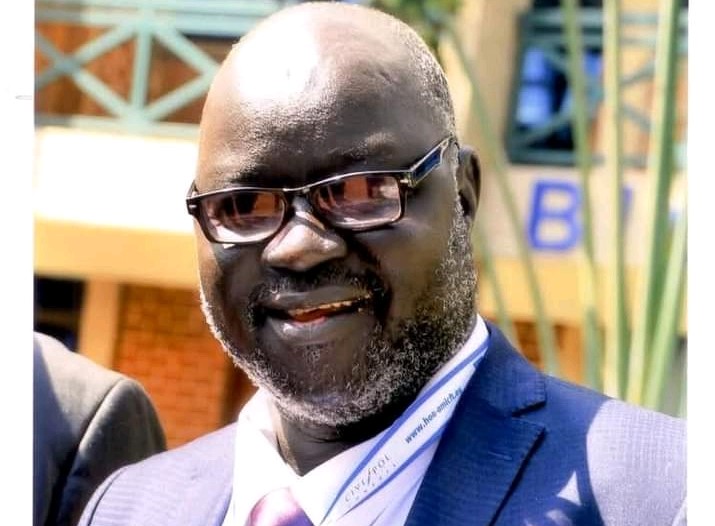
William Sunday D. Tor is a political and social researcher and currently a Lecturer of Security Studies, International Development, and Regional Planning at Starford International University, Juba. He can be reached via williamtor2011@gmail.com
The views expressed in ‘opinion’ articles published by Radio Tamazuj are solely those of the writer. The veracity of any claims made is the responsibility of the author, not Radio Tamazuj.

 and then