



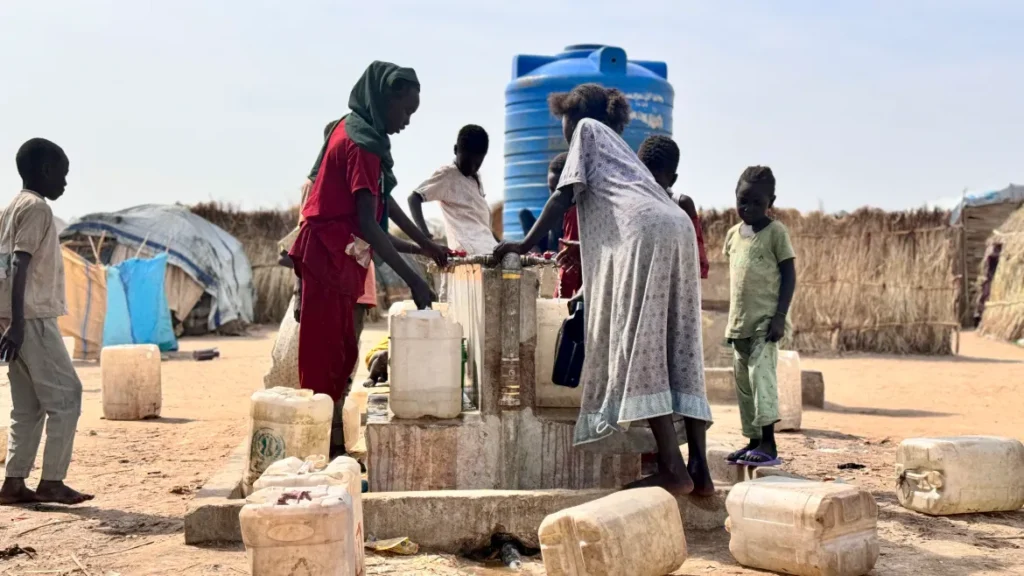
A drinking water crisis has deepened at the Goz Al-Salam Displacement Camp in Kosti in Sudan’s White Nile State, as power outages and diesel shortages disrupt water supplies, compounding the hardship faced by thousands of displaced families.
The deteriorating situation has prompted calls for regular fuel allocations and the inclusion of the camp’s water needs in the state’s emergency response plan.
The power crisis stems from the destruction of the Um Dabaker Power Station, which supplies electricity to Kosti. The resulting outages have disrupted water services, and the lack of fuel has hampered the operation of water tankers transporting supplies to the camp, on which residents depend for a substantial proportion of their daily water needs.
Khalid Idris, the camp’s chairman, told Radio Tamazuj that persistent fuel shortages had made water deliveries increasingly irregular.
“I implore the authorities to allocate a regular supply of diesel to keep water tankers operational and incorporate the camp’s drinking water requirements into the state’s emergency response plan to ensure a reliable and uninterrupted supply,” he pleaded.
Idris said the area’s petroleum director had authorized a diesel allocation for the camp, but the quantity provided remained insufficient to meet its daily needs.
Meanwhile, Jamila Mustafa, a camp resident, said the worsening water shortage had placed an additional burden on families, particularly schoolchildren and people living with chronic illnesses. He added that access to water has become increasingly difficult and the cost of obtaining it continues to rise.
“I personally suffer from diabetes and experience severe kidney pain,” she bemoaned. “I went to clinics in the market but could not find the medicines I need, and those that are available are extremely expensive.”
Goz Al-Salam Displacement Camp accommodates more than 5,000 families, most of whom fled conflict in the Kordofan and Darfur regions. Residents rely heavily on water tankers to meet their daily needs.

 and then