



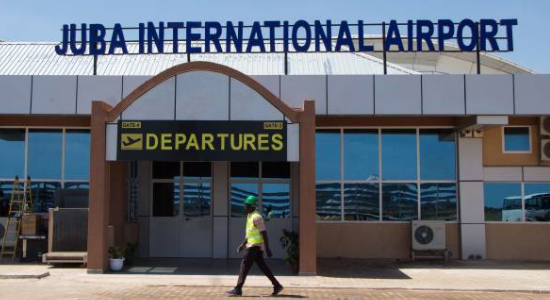
Congratulations to South Sudan on the successful renovation and modernization of Juba International Airport (JIA) to meet international standards. This is a remarkable national milestone that deserves recognition and appreciation. I commend the country’s leadership for investing in infrastructure that reflects South Sudan’s aspirations for growth, development, and greater regional and global integration.
A modern international airport is far more than a place where aircraft take off and land. It serves as a gateway to the nation, creating a positive first impression for visitors while facilitating trade, tourism, investment, and government revenue generation. The upgraded Juba International Airport will undoubtedly strengthen South Sudan’s position as it pursues greater economic opportunities and deeper international engagement.
As the saying goes, “Rome was not built in a day.” Every major achievement should inspire the next stage of progress. While we celebrate this success, it is also an appropriate time to consider practical and cost-effective ways of strengthening the country’s aviation network.
One proposal worthy of consideration is the improvement of nearby airstrips, particularly Bor Airstrip. This is not a call to construct another international airport, but rather to upgrade existing infrastructure to support the country’s aviation system better.
Bor is strategically located only a short distance from Juba and has become more accessible following improvements to the Juba–Bor road network. Its proximity to the capital makes it an ideal location for an upgraded airstrip that could complement Juba International Airport as needed.
An improved Bor Airstrip could serve several important functions. It could provide an alternative landing site during emergencies, such as when an aircraft is unable to land safely in Juba due to technical problems, adverse weather, or other unforeseen circumstances. It could also strengthen medical evacuation services, humanitarian operations, disaster response, and other government emergency interventions.
Looking ahead, the modernization of Juba International Airport is expected to attract more domestic and international flights, thereby increasing air traffic. While the airport is designed to accommodate future growth, having a nearby, well-maintained airstrip such as Bor would add an extra layer of resilience to South Sudan’s aviation system. It would enhance operational flexibility and improve emergency preparedness without requiring the enormous financial investment associated with constructing another major airport.
Bor’s strategic location offers an additional advantage. Passengers or cargo diverted there could reach Juba quickly via the improved road network linking the two towns. This makes Bor an effective support facility for Juba International Airport rather than a competitor.
This proposal is not intended as criticism but as a constructive contribution to the national conversation on infrastructure planning. The successful renovation of Juba International Airport demonstrates that South Sudan is capable of delivering ambitious infrastructure projects. Building on that achievement by upgrading nearby supporting airstrips would be a logical, practical, and forward-looking next step.
As citizens, we all have a responsibility to contribute ideas that support our country’s development. Sustainable national progress is achieved through continuous planning, strategic investment, and innovation.
The renovation of Juba International Airport is a source of national pride and a clear demonstration of South Sudan’s commitment to building infrastructure that meets international standards. It is an achievement that deserves to be celebrated by all South Sudanese.
At the same time, every milestone should lay the foundation for future progress. Strengthening nearby airstrips, particularly Bor Airstrip, would enhance aviation safety, improve emergency response capabilities, and provide valuable operational support to Juba International Airport whenever required. Given Bor’s proximity to the capital and the improved Juba–Bor road network, such an investment would be both strategic and cost-effective.
Development is a continuous journey, not a final destination. Every completed project should inspire the next phase of national advancement. By planning and investing wisely, South Sudan can build a stronger, safer, and more resilient aviation sector that supports economic growth, national connectivity, and public safety.
The renovation of Juba International Airport should therefore be viewed not as the end of a successful project, but as the beginning of a broader vision for modern infrastructure development. Together, the government, the private sector, development partners, and citizens can continue to promote practical ideas and support initiatives that move our nation forward. The future of South Sudan will be shaped not only by the projects we complete today, but also by the vision, planning, and commitment we demonstrate for tomorrow.
The writer is a media specialist and development practitioner. He can be reached via leek2daniel@gmail.com.
The views expressed in ‘opinion’ articles published by Radio Tamazuj are solely those of the writer. The veracity of any claims made is the responsibility of the author, not Radio Tamazuj.

 and then