



“A tree is rarely appreciated by the person sitting beneath its shade; its value becomes clearer to the traveler who has crossed the burning sun.”
The story of South Sudan is inseparable from the story of its liberation. Some nations are born through negotiations; others are born through sacrifice. South Sudan was born through both, but sacrifice came first. Before there was a Republic, generations endured war and displacement while carrying what once seemed like an impossible dream.
At the centre of the SPLM/A’s extraordinary journey stands H.E. Gen. Salva Kiir Mayardit, a young liberation fighter who travelled from the bush to the State House and ultimately stood at the helm of an independent Republic on July 9, 2011.
The story of Salva Kiir began in the bush, where freedom was not a speech but a sacrifice. Through the Anyanya era and subsequently the SPLM/A struggle, he experienced the realities of war, command, loss and endurance. He rose through the ranks not from comfortable offices, but through years of military service and political responsibility in the harsh school of liberation.
“A man who has walked through the fire does not need to be told that freedom has a price.”
President Salva Kiir did not inherit the road to freedom; he walked it through hardship and personal sacrifice.
The liberation struggle demanded more than courage with a weapon. It was a long river of sacrifice flowing through generations. Salva Kiir remained part of that resistance through its most difficult periods, eventually becoming one of the senior figures of the liberation movement. When the storm lasted for decades, endurance itself became a weapon. The battlefield created pressure; the negotiating table created possibilities.
Yet the gun alone could never deliver the dream. The SPLM/A struggle eventually demanded another kind of bravery: the courage to negotiate. The long struggle moved from the battlefield to the negotiating table. The liberation movement had to become a political force capable of negotiating a future for its people.
H.E. Salva Kiir became part of that difficult transition—from commander to statesman, from resistance to reconciliation.
“A rifle can defend a dream; wisdom is needed to turn that dream into a nation.”
The struggle had finally crossed the bridge from liberation to statehood and, ultimately, independence.
But independence was not the destination. It was the beginning.
Then came the referendum on January 9, 2011—the day the dream became a decision. A liberation movement had to become a government. A territory had to become a state. Communities that had lived through war had to begin imagining roads, hospitals, universities, institutions, markets and a functioning national administration.
Winning a country is one struggle; building one is another.
The legacy of President Salva Kiir Mayardit must ultimately be measured by the nation he helped bring into existence and by the development that followed. The new nation became Africa’s 54th country, taking its place among sovereign states and international institutions such as the United Nations. Our flag became a permanent reminder that what once appeared impossible had become reality, and that the sacrifices of countless South Sudanese had not been forgotten.
The enemy was no longer simply political domination from Khartoum. The new challenges became peace, national unity, institution-building, security, development and the creation of a state capable of serving its citizens. President Kiir therefore faced the difficult task of leading a young nation whose foundations had been laid through decades of conflict rather than decades of peaceful development.
This is why many regard Salva Kiir as a father of the nation—not because independence was the achievement of one individual, but because his leadership became inseparably connected to the final chapter of the liberation struggle and the birth of the Republic.
He inherited a movement forged in war and was entrusted with transforming it into a government capable of building a country. The transition from liberation movement to sovereign state became one of the greatest responsibilities of his political life.
Look at Juba today, then remember Juba yesterday.
The capital inherited at independence was once regarded as a remote, underdeveloped town, often described as little more than a large village. Today’s Juba is an expanding capital with government institutions, businesses, new neighbourhoods, growing road networks and an increasingly visible urban economy.
A capital city like Juba does not become a metropolis overnight. It grows one road, one building and one generation at a time.
It is difficult for people to notice such changes when they experience them every day. As the saying goes, a person sitting beneath a tree may notice its fallen leaves, while a traveller who has crossed the desert understands the value of its shade. In this sense, Salva Kiir’s leadership has been part of the story behind this transformation.
The transformation extends beyond the capital.
Independence created the architecture of a sovereign state: national institutions, states, counties, payams and bomas, universities, hospitals and public administration across a country that previously had very limited indigenous state infrastructure.
The government of Salva Kiir Mayardit has increasingly worked with international partners to support education, healthcare, agriculture, humanitarian response and economic development. These are not signs of a finished country; they are signs of a new country learning to build itself.
Rome was not built in a day, and neither is a new country rising from the ashes of war.
“A young nation is like a house under construction: the scaffolding may remain, but the walls are already rising.”
Roads have become another symbol of transformation. They perhaps tell the most powerful physical story of the country’s development. Strategic corridors such as Juba-Nimule, Juba-Bor and Juba-Terekeka, together with ongoing and planned connections toward Rumbek, Torit, Yei, Kaya, Mundri, Maridi and other parts of the country, represent an attempt to physically bind a geographically vast nation together.
Where a road reaches, opportunity can follow; where communities connect, a nation becomes stronger.
Every kilometre carries a meaning larger than asphalt. A road connects people to possibilities and offers the promise that distance will no longer determine who receives opportunities. It takes farmers to markets, patients to hospitals, students to schools, traders to consumers and communities closer to one another.
But the road to nationhood has never been straight.
Two years after independence, political crises, armed rebellions, economic hardship and internal divisions repeatedly tested South Sudan’s fragile peace. Former SPLM/A comrades became opponents. Disaffected leaders took up arms, while those seeking political opportunities have sometimes threatened rebellion when those opportunities did not come their way.
Yet, time and again, the country has stood at a crossroads, facing the risk of returning to the cycle of conflict from which it painfully emerged.
South Sudan has been privileged, in the author’s view, to have a leader who, like Joshua guiding his people through the wilderness, has carried the burden of a young nation through uncertainty while holding firmly to the path of peace.
Through difficult moments, Salva Kiir Mayardit, a central figure in the country’s peace journey, has remained steadfast and patient, choosing peace and stability despite the many tests of his leadership.
Our journey is unfinished, but our duty is clear: never again should South Sudan return to war.
The greatest test of independence, however, lies beyond measurements of infrastructure and economic growth. It is found in the mother who reaches a hospital, the child who enters a classroom, the farmer who reaches a market, the young person who finds an opportunity and the family that can sleep without fear.
A flag tells the world that a nation is free; good governance tells its people what that freedom means.
From the SPLM/A resistance camps to the Presidential Palace; from the armed struggle against Khartoum to the birth of the Republic; from liberation to the difficult work of nation-building—Salva Kiir Mayardit’s journey remains woven into the history of South Sudan.
His greatest historical contribution, in the author’s view, is the role he played in carrying the liberation generation to the threshold of independence. The struggle gave birth to the nation; history now challenges the nation to fulfil the promise of that struggle.
And that is the chapter South Sudan continues to write.
The forthcoming elections in December 2026 therefore carry significance beyond political competition. Elections should give citizens an opportunity to reflect on the journey, measure what has been achieved, acknowledge what remains undone and decide who deserves the opportunity to continue the work.
The ballot must never become a battlefield; it should become a bridge between yesterday’s sacrifices and tomorrow’s hopes.
The decades of sacrifice, resilience, patience and commitment to keeping South Sudan together deserve recognition in the upcoming election. This exercise presents an opportunity, in the author’s view, to offer Salva Kiir Mayardit another mandate as a token of appreciation for the journey he has travelled and the work that remains ahead.
Let us give the architect of our independence the opportunity to continue building the nation he helped bring into existence.
South Sudan was born through struggle; let the next chapter be written through peace, development, unity and perseverance.
Salva Kiir Mayardit’s journey mirrors one of the most extraordinary transformations in South Sudan’s modern history. He travelled from the liberation struggle to the State House and inherited the enormous responsibility of converting independence into nationhood.
The country has travelled a long road—and the road ahead remains longer still.
The journey is unfinished, and perhaps that is the most important truth of all. The struggle gave birth to the Republic; now the Republic must give birth to a future worthy of that struggle.
The deepest tribute to the liberation generation will not merely be remembering how independence was won, but ensuring that the nation for which they sacrificed becomes peaceful, united, prosperous and worthy of their dreams.
THE JOURNEY CONTINUES
The bush gave birth to the struggle.
The struggle was yesterday, and it gave birth to the Republic.
The Republic is today, and it must give birth to a better future.
Nation-building is tomorrow, and the journey continues.
The dream remains alive.
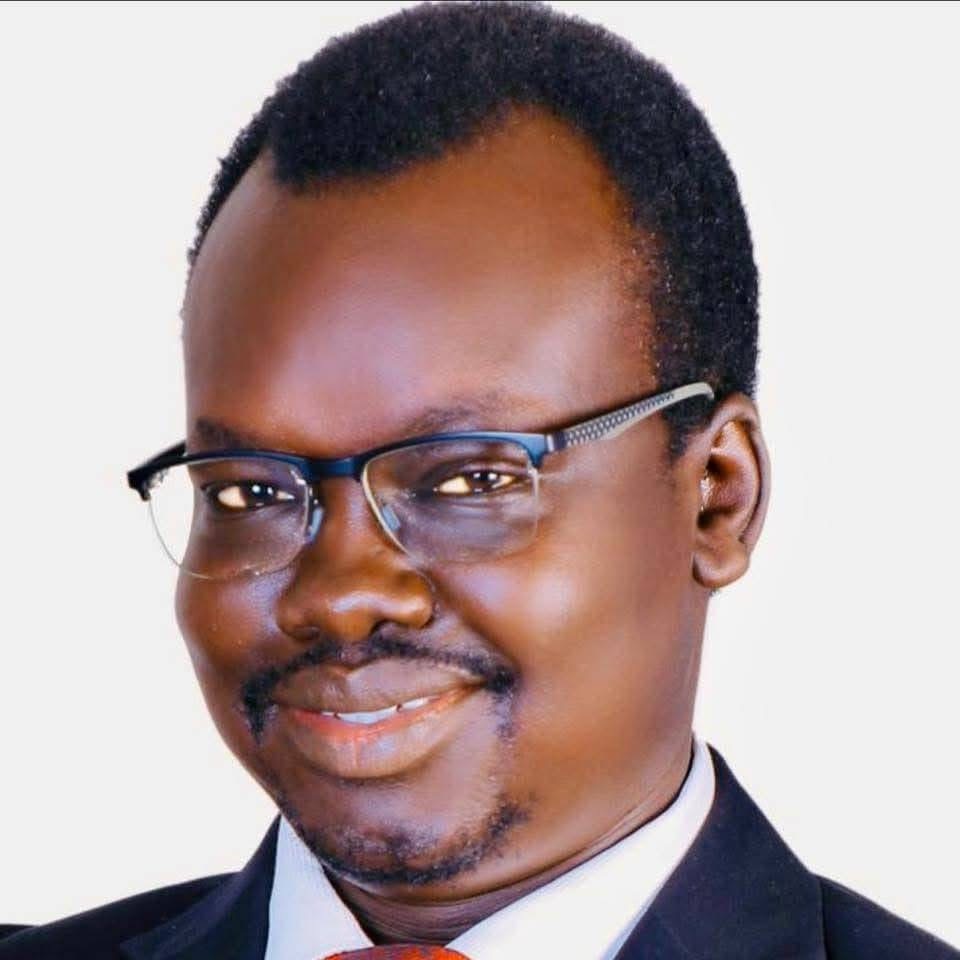
The writer, Dr. Thon Agok Adier, is a humanitarian worker, senior medical doctor, and reproductive health consultant with 19 years of experience across South Sudan, Uganda, and Kenya. He currently serves as the Country Director of LiveWell South Sudan.
The views expressed in ‘opinion’ articles published by Radio Tamazuj are solely those of the writer. The veracity of any claims made is the responsibility of the author, not Radio Tamazuj.

 and then