



Statistics show that countries dependent on point source resources such as oil often face 20 percent lower growth rates and significantly higher risks of civil war compared to resource poor peers. In South Sudan, this reality has manifested through approximately 20 billion dollars in oil revenue lost to a toxic cocktail of corruption and conflict since 2011. We have measured our worth in barrels, but when wealth flows from a pipe rather than the labor of citizens, accountability evaporates, leaving behind rusting infrastructure and a fragile economy.
Globally, agriculture remains the true backbone of sustainable development, employing over 25 percent of the world’s workforce and acting as the primary engine for poverty reduction in developing states. South Sudan is exceptionally endowed, possessing over 80 percent arable land and the expansive Sudd Wetland, the largest wetland in Africa. Yet despite agriculture contributing nearly 40 percent of non-oil GDP and employing up to 80 percent of the population, the sub sector remains severely underfunded and underdeveloped.
The recently concluded South Sudan Agriculture Conference 2026, themed “Investing in agri food systems for a better life in South Sudan,” marked a pivotal shift. Held from May 4 to 8 in Juba, the conference was convened under a presidential directive designating 2025 as the Year of Agriculture. However, while the conference outlined strategic visions for crops, livestock, fisheries, and forestry, a hard truth remains: crops do not grow in chaos.
The conference’s focus on Public Private Partnerships and market integration hinged on one factor: the rule of law. A farmer in Renk will not invest if land tenure is insecure, and an entrepreneur will not scale if contracts are not enforced.
Currently, the absence of a land tenure policy and policy uncertainty serve as invisible barriers to the transformation we seek.
The 2026 conference identified land tenure security, inclusive financing, and transparent policy alignment as critical thematic areas. We must move from an economy of lottery ticket oil to one of bank account agriculture. This requires:
- Secure land titles: Improving land tenure security to motivate farmers to adopt long term sustainable practices.
- Predictable regulation: Establishing a clear implementation framework to ensure agribusiness, trade, and investment are expanded at all levels.
- Judicial integrity: Strengthening the role of the private sector by ensuring that the rules of engagement are inclusive and competitive.
The bridge from oil to agriculture is not just a new ministry. It is a functional legal framework that protects the energy and creativity of youth and women leaders the conference aimed to harness. If we want South Sudan to feed itself, we must mint a new currency: the rule of law. It is the only resource that does not devalue when the wells run dry.
Oil made us rich but weak. Agriculture can make us fed, but only if law makes us fair. No title, no tractor. No courts, no contracts. Rule of law is the real currency. The rest is just petty cash.
For One People, One Nation!
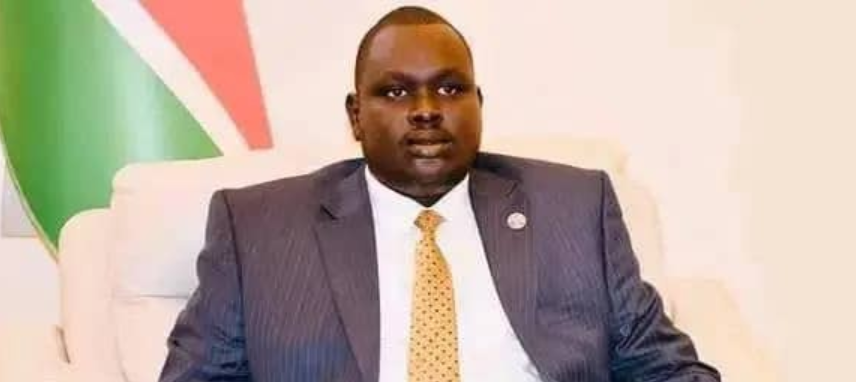
The writer, Bec George Anyak, is a former Deputy Minister of Finance and Planning, South Sudan.
The views expressed in ‘opinion’ articles published by Radio Tamazuj are solely those of the writer. The veracity of any claims made is the responsibility of the author, not Radio Tamazuj.

 and then