



Dr. Adwok Nyabol is right. The SPLM has failed to transform itself from a liberation movement into a genuinely democratic political party. What we are witnessing today is not the consolidation of democracy but the continuation of a military-political culture that has defined the movement since its inception.
I arrived at this conclusion many years ago. In 1998, while still an active supporter of the SPLM/A and serving as General Secretary of the Sudanese Community Relief and Rehabilitation organization in Canada, I argued that the SPLM and the SPLA were inseparable. Many supporters dismissed my concerns, insisting that the SPLM/A could champion every political aspiration of the people of South Sudan. I disagreed then, and I disagree now.
My argument was simple: a movement whose political identity is tied to its military structure cannot easily become a democratic party. The SPLM/A deliberately cultivated a culture in which its leadership was not to be questioned. It presented itself as the sole legitimate representative of the aspirations of the people. Criticism was often viewed as disloyalty, while alternative political visions were dismissed as divisive.
The problem was never whether the SPLM could lead a liberation struggle. The problem was whether it could abandon the habits of a liberation movement and embrace the principles of democratic governance. The evidence suggests that it has not.
A party that does not practice democracy internally cannot credibly claim to be building democracy nationally. Leadership within the SPLM has largely been shaped by appointments from above rather than transparent and competitive internal elections. The concentration of political authority, state authority, and military authority in the same leadership structure reflects the characteristics of a military-oriented movement rather than a democratic political party.
Since independence, the SPLM has maintained the appearance of democracy while preserving the realities of centralized control. Elections are promised, democratic language is used, and political institutions exist. Yet power continues to revolve around appointments, decrees, and political accommodation rather than genuine competition.
Potential challengers are often absorbed into government through appointments and political deals. Opposition figures who might threaten the status quo are brought into the system, weakening the development of a strong and independent opposition. As a result, the ruling party has mastered the art of neutralizing political competition without necessarily outlawing it.
If I am allowed by my conscience and intellect to say more, then my greatest concern today is no longer whether the SPLM will embrace democracy. My concern is the growing perception that sections of the political elite have come to view themselves as entitled to the state, its institutions, and its resources.
Increasingly, positions of influence in government, diplomacy, security institutions, the military, and state enterprises appear concentrated within networks of family relations, relatives, clans, friendships, and political loyalty. Whether real or perceived, this pattern is deeply damaging to public confidence in the state.
How else should citizens interpret the repeated placement of family members, loyalists, and well-connected individuals in strategic positions across government and national institutions? Such practices are not the foundations of democratic governance. They are the foundations of patronage politics and elite control.
South Sudan is gradually becoming a country where loyalty is often more rewarding than merit, where political silence is more valuable than constructive criticism, and where many ambitious individuals wait for the next presidential decree rather than compete for public office through democratic processes.
In such an environment, elections risk becoming little more than a political ritual. Why should citizens place their faith in the ballot box when elected officials can be removed through executive decrees? We have witnessed elected governors dismissed before completing their mandates. We have seen the same trusted individuals rotate from one influential position to another for years, while others remain permanently excluded from public life.
This is why I find Dr. Adwok’s assessment compelling. The SPLM has embraced the language of democracy, but it continues to govern through structures and habits inherited from its military past. Democracy has become the public face of the system, while centralized control remains its operating principle.
The central question facing South Sudan today is not whether elections will be held. The real question is whether a movement founded on military command can genuinely embrace democratic accountability, internal party democracy, political competition, and the possibility of losing power through the ballot box.
Until that question is answered in practice rather than rhetoric, the SPLM’s democracy will remain what Dr. Adwok describes it to be: a façade. Beneath it lies a system still governed by the instincts of a military movement and increasingly influenced by a culture of elite entitlement rather than democratic citizenship.
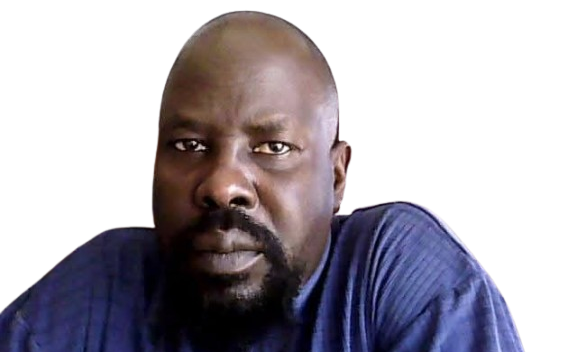
The writer, Morris Kuol Yoll, is a South Sudanese Canadian. He could be reached at myoll2002@yahoo.com
The views expressed in ‘opinion’ articles published by Radio Tamazuj are solely those of the writer. The veracity of any claims made is the responsibility of the author, not Radio Tamazuj.

 and then