



As the people of South Sudan commemorate the 43rd anniversary of the May 16 Revolution, the occasion stands not only as a remembrance of a historic liberation struggle, but also as an opportunity for national reflection on the promises, achievements, and unresolved challenges of the post-independence era.
The May 16 Revolution remains one of the most consequential political and military movements in the modern history of Sudan and South Sudan. It represented a struggle for freedom, dignity, equality, and self-determination, led by generations of men and women who sacrificed their lives in pursuit of a more just and inclusive political order.
At the forefront of this historic movement stood John Garang de Mabior, alongside prominent liberation figures such as Kerubino Kuanyin Bol, William Nyuon Bany, Yousif Kuwa Mekki, Yahya Bolad, Samuel Gai Tut, Edward Lino, and Mansour Khalid, among many others whose contributions shaped the course of the liberation struggle.
From its inception, the Sudan People’s Liberation Movement presented itself as a movement committed to ending political, economic, and cultural marginalization while advocating for justice, equality, democratic transformation, and inclusive national development. That long struggle ultimately culminated in the independence of South Sudan in 2011, a historic achievement secured at enormous human and material cost.
Yet more than a decade after independence, fundamental questions continue to dominate public discourse: Has the vision of the liberation struggle been realized? Has independence translated into meaningful improvements in the lives of ordinary citizens? And to what extent have the founding ideals of the revolution been preserved?
There is no doubt that political independence represented a major milestone in the history of the people of South Sudan. However, independence was never intended to be the final destination. Rather, it was expected to mark the beginning of a new national project based on accountable governance, social justice, institutional development, and improved public service delivery.
Today, however, many citizens continue to face severe economic hardship and deteriorating living conditions. The government’s prolonged failure to pay salaries and wages for public employees, in some cases for nearly two years, has placed immense pressure on thousands of families across the country and weakened public confidence in state institutions.
This crisis persists despite the country’s significant oil and non oil revenues, raising growing public concern over transparency, accountability, and the management of national resources. Many citizens increasingly question why public revenues have not been effectively directed toward salary payments, healthcare, education, infrastructure, and other essential public services.
At the same time, the country continues to suffer from weak infrastructure and limited development projects. Roads remain inadequate, healthcare institutions face severe shortages of equipment and medicines, and the education sector continues to struggle with poor facilities, underfunding, and shortages of qualified teachers.
As economic conditions worsen, increasing numbers of children remain outside the formal education system, while many young people face unemployment and limited economic opportunities. Despite the country’s vast agricultural potential, South Sudan has yet to develop a productive agricultural economy or establish agro industrial sectors capable of generating employment, enhancing food security, and reducing dependency on imports.
One of the central promises of the liberation struggle was the extension of development and state services to rural and marginalized communities. Yet many rural areas continue to lack basic infrastructure, including roads, schools, healthcare facilities, electricity, and clean water, contributing to widening inequalities between urban and rural populations.
Politically, the country also continues to confront serious challenges related to governance, democratic transition, and public freedoms. Many citizens still aspire to a political system grounded in the rule of law, equal citizenship, and institutional accountability rather than ethnic division and political polarization.
The democratic transition process remains fragile, marked by delayed elections, weak institutions, and the absence of a fully functioning democratic order capable of ensuring the peaceful transfer of power through free and credible elections.
Similarly, calls for greater political freedoms, freedom of expression, and press freedom continue to grow, as citizens and civil society organizations seek a more open political environment that encourages participation, transparency, and constructive national dialogue.
Throughout the liberation struggle, John Garang de Mabior consistently argued that liberation was not an end in itself, but a means of building a state capable of serving its citizens and improving their quality of life. He maintained that governments should ultimately be judged not by slogans or military achievements, but by their ability to provide security, education, healthcare, infrastructure, and economic opportunity.
He also warned that any failure to transform liberation into tangible development and social progress would inevitably erode public trust in political leadership because citizens ultimately evaluate governments based on justice, stability, and service delivery.
In this context, the Revitalized Agreement on the Resolution of the Conflict in South Sudan remains the country’s most important political framework for peacebuilding, institutional reform, and national reconciliation. However, implementation of the agreement continues to face serious obstacles, particularly regarding security sector reform, unification of forces, constitutional processes, transitional justice, and governance reforms.
At the same time, many South Sudanese increasingly hope that the current transitional period will represent the final phase of prolonged political transition in the country. Since independence, the nation has experienced repeated cycles of peace agreements, transitional governments, political crises, and renewed instability, which have delayed the consolidation of democratic institutions and sustainable governance.
The general elections scheduled for December 2026 therefore carry enormous political and national significance. For many citizens, these elections are not simply a constitutional exercise, but a potential turning point capable of ending the prolonged transitional arrangements established under the revitalized peace agreement and opening a new chapter based on democratic legitimacy and constitutional governance.
There is growing public expectation that the elections will finally pave the way for peaceful transfer of power, stronger state institutions, political accountability, and long term stability. Many citizens hope the country can move beyond transitional politics and recurring power sharing arrangements toward a permanent democratic order founded on the will of the people.
However, the success and credibility of the elections will depend largely on the political will of all parties to fully implement the outstanding provisions of the peace agreement, guarantee political freedoms, strengthen electoral institutions, improve security conditions, and create an environment conducive to free, fair, transparent, and inclusive elections.
The people of South Sudan have endured years of conflict, economic hardship, political uncertainty, and displacement. As the country marks the 43rd anniversary of the May 16 Revolution, many citizens hope that December 2026 will become not another extension of transitional politics, but rather a historic milestone marking the beginning of democratic governance, institutional stability, and lasting peace.
The 43rd anniversary of the May 16 Revolution should therefore serve as more than a symbolic celebration. It should be treated as a moment for honest national assessment and renewed commitment to the principles for which so many sacrificed.
Preserving the legacy of the revolution requires more than political rhetoric. It requires responsible leadership, transparent governance, sound management of public resources, institutional reform, and a genuine commitment to peace, democracy, justice, and inclusive development.
The future of South Sudan will not be secured through slogans alone, but through practical reforms capable of restoring public trust, strengthening state institutions, and improving the daily lives of citizens.
The May 16 Revolution will always remain a symbol of sacrifice, resilience, and hope. Yet its true legacy will ultimately depend on whether the country’s current and future leaders can transform the sacrifices of the liberation era into a stable, democratic, and prosperous national future for all South Sudanese citizens.
Long live the May 16 Revolution.
Long live South Sudan, free, peaceful, and united.
Glory and eternal honor to the martyrs of the revolution.
May God Almighty bless South Sudan.
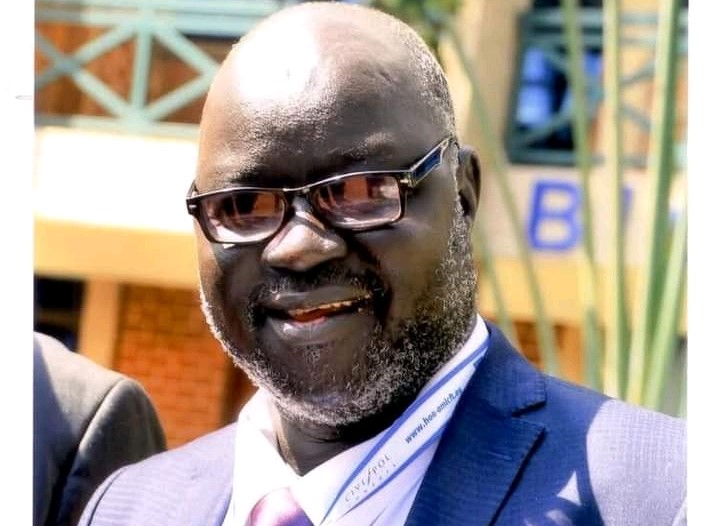
The writer, William Sunday D. Tor, is a political and social researcher and currently a Lecturer of Security Studies, International Development, and Regional Planning at Starford International University. He can be reached at: williamtor2011@gmail.com.
The views expressed in ‘opinion’ articles published by Radio Tamazuj are solely those of the writer. The veracity of any claims made is the responsibility of the author, not Radio Tamazuj.

 and then