



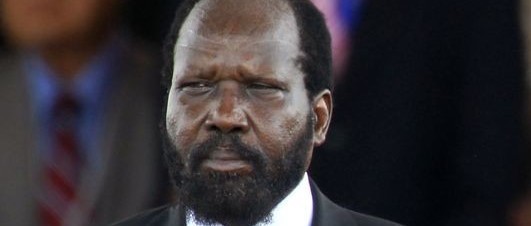
South Sudan’s National Congress Party (NCP) says it will support President Salva Kiir Mayardit in the country’s presidential election due in December 2026, opting not to field its own candidate.
The party’s chairperson, Agnes Poni Lukudu, told journalists in Juba on Wednesday that the NCP would instead focus on contesting parliamentary seats while maintaining its alliance with the governing Sudan People’s Liberation Movement (SPLM).
“I am not contesting, but some of my people will be contesting and I will stand with them throughout,” Ms Lukudu said, adding that party members were preparing to seek nomination for legislative seats.
Explaining the decision not to field a presidential candidate, she said the party regarded President Kiir, who is also the chairman of the ruling SPLM, as its preferred leader.
“We are not thinking of contesting the presidency because we think the president of the SPLM is ours,” she said.
Lukudu said the NCP had worked alongside the SPLM since South Sudan gained independence in 2011, although she acknowledged there had been tensions between the two parties.
She also rejected suggestions that the South Sudanese NCP remained linked to Sudan’s former ruling National Congress Party, saying the parties had gone their separate ways after independence.
“We have no connection with the North,” she said, adding that the Sudanese party had encouraged its southern members to leave and join the SPLM, an offer they declined in order to establish their own political party.
Lukudu called on South Sudanese to respect political parties and their internal affairs, describing them as central to a functioning democracy. She said the NCP was reorganising its structures ahead of next year’s elections.
The South Sudanese NCP is a registered political party that says it is committed to democracy, peace, economic development and national unity. Although it shares its name with Sudan’s former ruling National Congress Party, it says it operates independently.
The party’s announcement comes as South Sudan intensifies preparations for its first elections since independence.
On Wednesday, lawmakers approved controversial amendments to the 2018 peace agreement, postponing requirements for a national population census and the completion of a permanent constitution until after the planned December 2026 elections, despite objections from opposition MPs.
The changes came a day after the Political Parties Council granted full registration to five additional political parties, increasing the number eligible to contest the elections to 36.
The National Elections Commission announced on 22 June that voting would take place in December 2026, meeting the legal requirement to declare the election at least six months in advance.
However, the commission has warned that funding shortages, legal inconsistencies and delays in implementing key provisions of the 2018 peace agreement could hinder preparations.
While President Kiir’s allies insist the elections will go ahead as scheduled, opposition groups, including the Sudan People’s Liberation Movement in Opposition led by detained First Vice President Riek Machar, argue that critical benchmarks such as security reforms, constitution making and the unification of armed forces remain incomplete, raising questions about whether the conditions for a credible election are in place.

 and then