



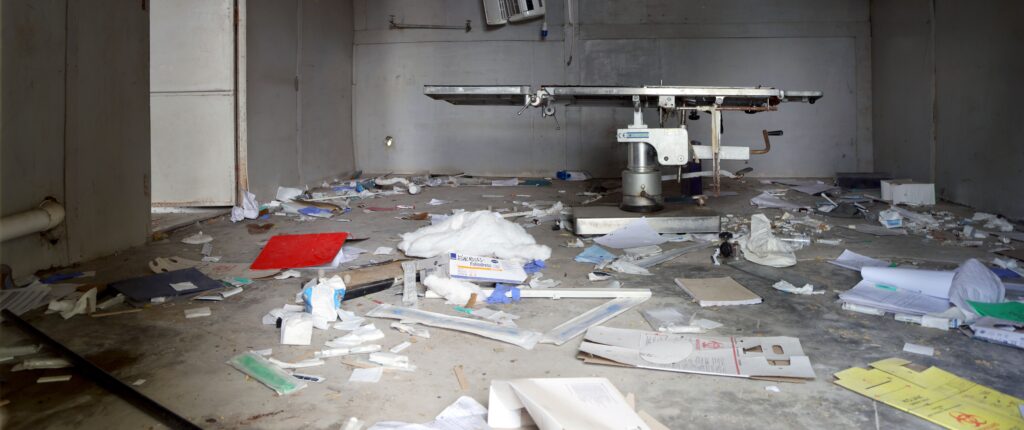
Medical charity Médecins Sans Frontières (MSF) said on Thursday it had permanently closed its hospital in Lankien, Jonglei State, after it was bombed earlier this year, ending more than three decades of medical services in a region with limited healthcare access.
MSF said a bomb dropped from a plane struck a warehouse inside the hospital compound on Feb. 3, destroying critical medical supplies and forcing the organisation to halt all operations.
Although MSF said it could not confirm who carried out the attack, it noted that government forces are the only side in South Sudan’s conflict known to have the capacity for aerial bombardment. Government troops were reported to be in control of Lankien in the days following the strike.
The hospital was subsequently looted, partially burned and vandalised, leaving it unusable. MSF said it could not confirm who was responsible for the destruction.
“We are outraged by what we witnessed,” said Gul Badshah, MSF operations manager, describing extensive damage including burned medical buildings and destroyed paediatric equipment.
Patients had been evacuated hours before the strike amid rising tensions, and residents fled the town after the bombardment of both the hospital and the local market, MSF said.
The closure marks the end of 31 years of continuous MSF operations in Lankien, where the group began work in 1995 responding to kala azar. The facility had grown into the only advanced healthcare provider in the area, serving around 250,000 people.
MSF said the incident reflects a broader pattern of violence against healthcare in South Sudan. Since early 2025, at least 12 attacks have affected its facilities or staff, forcing the closure of four hospitals, including those in Ulang, Old Fangak and Akobo.
The organisation called for an independent investigation into the Lankien attack and urged all parties to the conflict to respect international humanitarian law and protect medical facilities, staff and civilians.
South Sudanese authorities should ensure accountability and take steps to safeguard healthcare services, MSF added.

 and then