



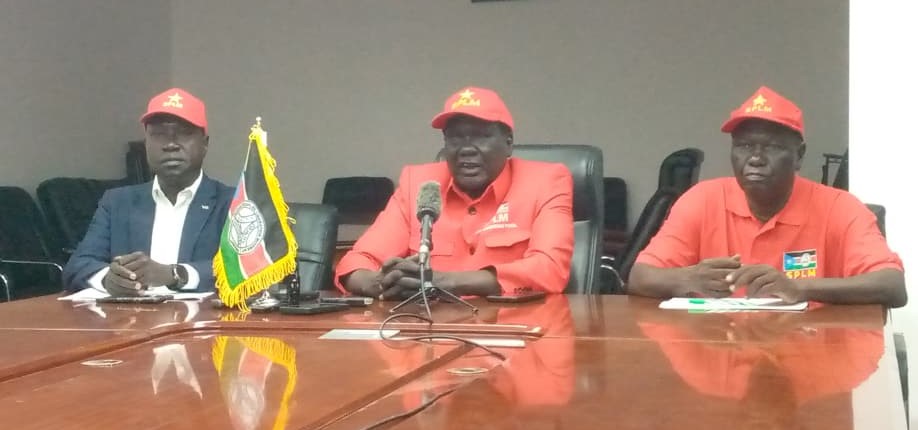
The Sudan People’s Liberation Movement (SPLM), South Sudan’s ruling party, said Wednesday it will celebrate the 43rd anniversary of SPLA Day on May 16, even as the country faces worsening economic conditions.
The annual commemoration honors the May 16, 1983 mutiny in Bor that led to the formation of the Sudan People’s Liberation Army (SPLA) and the start of the country’s long liberation war.
SPLA Day is a national public holiday.
In recent years, official celebrations have been scaled down, with party officials citing economic constraints.
On May 16, 1983, a group of mutinous Sudanese army soldiers opened fire in a barracks in Bor, forming the core of what became the SPLA. Colonel John Garang de Mabior was initially sent to suppress the rebellion but instead became its leader.
Speaking to reporters in Juba on Wednesday, SPLM Secretary for External Affairs Bol Makueng Yol said a high-level committee had been formed to oversee preparations for the celebration.
“We had a good meeting of the SPLM high-level committee, chaired by Comrade Baba Medan, the acting secretary-general and chair of the committee,” Makueng said. “We were discussing and planning for the celebration of 16th May. This is a day which will always live with us, we South Sudanese, in our lives.”
He said the commemoration would celebrate the contributions of those who fought for the country’s independence and called on citizens and SPLM members to participate.
“So this day will be remembered from generation to generation,” he said. “We are calling all South Sudanese, all SPLM officers in the diaspora, and all citizens to come out and celebrate on the 16th of May, the 43rd anniversary of the revolution that brought peace to the country.”
Makueng said preparations include official ceremonies, cultural events and public gatherings to honor veterans, martyrs and civilians who supported the liberation struggle.
The main event is expected to be held at the Dr. John Garang Mausoleum in Juba, bringing together senior government officials, SPLM leaders and members of the public.
“We remember our martyrs. We remember the farmers who contributed. We remember the young people of South Sudan who shared their lives and also contributed to the liberation of this country,” he said.
He added that eight organizing committees had been formed to coordinate the celebrations.

 and then