



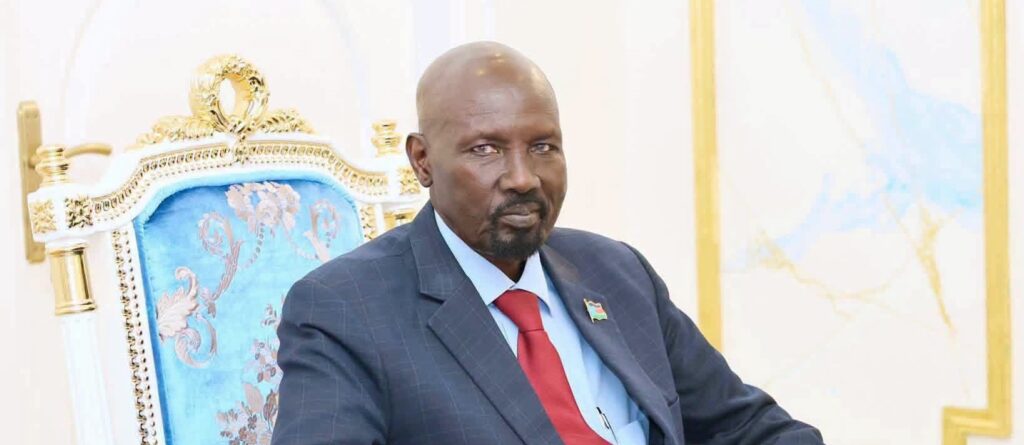
South Sudan’s Justice and Constitutional Affairs Minister Wek Mamer Kuol on Monday tabled a constitutional amendment bill in parliament aimed at clearing the way for elections scheduled for Dec. 22, despite opposition and international concerns about the readiness and inclusiveness of the vote.
The Transitional Constitution of the Republic of South Sudan 2011 (Amendment No. 4, 2026) seeks to amend Articles 53(3)(d) and (m), 104(9), (10) and (14), and 202(4), among other provisions.
Kuol said the proposed changes would delink the permanent constitution-making process and the national population and housing census from the elections, allowing the vote to proceed while those processes continue separately.
“The purpose of this bill is to delink the permanent constitution-making process and the conduct of the national population and housing census from the elections,” Kuol told lawmakers.
The cabinet approved the bill on Aug. 7 at a meeting chaired by President Salva Kiir, saying the amendments were needed to remove legal obstacles to the planned December elections.
The proposed changes follow controversial amendments to the 2018 peace agreement approved by parliament in July that removed requirements for a permanent constitution and national population census to be completed before elections.
Oliver Mori Benjamin, chairperson of parliament’s Information Committee, said the bill had been referred to the Committee on Legislation and Legal Affairs for scrutiny.
He said the proposed amendments also provide for a five-year term for an elected president.
“The important thing in this presentation is to delink the process of census and other things to pave the way for the smooth conduct of elections,” Mori said.
The committee is expected to review the bill and report back to parliament within 30 days.
South Sudan’s government is preparing for the Dec. 22 elections, but the timetable faces opposition and international concerns over security, the implementation of the 2018 peace agreement and the readiness of electoral institutions.
The main opposition SPLM-IO has questioned the election timetable and objected to changes to the peace agreement.
International partners, including the United States, Britain, Norway, Germany, France, Canada, Japan, Switzerland, the Netherlands and the European Union, have also criticised unilateral changes to the 2018 peace agreement and called for an inclusive process.

 and then