



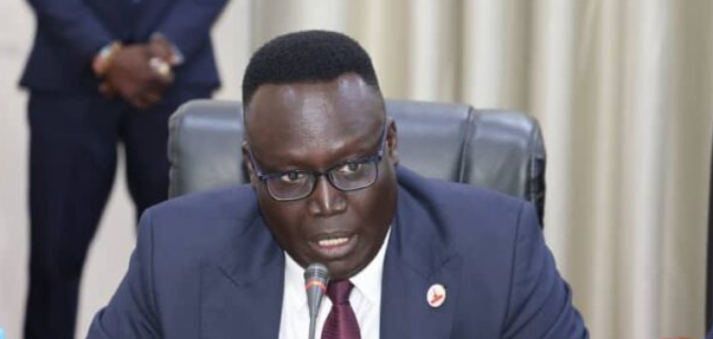
Juba City Council has proposed cutting the property tax, or rental value tax, from 8.3% to 6% of annual rental income to ease the burden on property owners and encourage compliance, Mayor Christopher Wani Sarafino said.
Speaking on Saturday at a media and opinion leaders’ networking programme organized by the council, Sarafino said the proposed reduction would be considered as part of amendments to the relevant law.
The rental value tax is calculated at one-twelfth of annual rental income, equivalent to about 8.3%, he said.
“We gave a proposal, when we’re amending that law, to drop it from 8.3% to 6%, so that we can give a reprieve,” Sarafino said.
He said lower taxes could encourage more property owners to comply, potentially increasing government revenue by broadening the tax base.
“If the tax is affordable, many people will pay,” he said.
Sarafino said the city council could collect taxes and fees only where they were authorized by law.
“In this country, and the city council is not exempted, you cannot collect money when it’s not law,” he said.
Tax harmonization
Sarafino also called for greater coordination of taxes imposed by national, state and local governments, saying businesses can face multiple collections from different levels of government.
He said the issue was not only the number of taxes but also the burden of dealing separately with different authorities.
“What are we talking about? We’re talking about harmonization of our collection,” he said.
Under the proposed system, traders would make their payments to different levels of government through a coordinated mechanism, reducing repeated visits by tax collectors.
“You pay it once, no one sees you again up to next year,” Sarafino said, adding that authorities would follow up only with businesses identified as non-compliant.
He said the Central Equatoria state government was also pushing for tax harmonization to reduce the burden on traders.
Tax collection
Sarafino said Juba City Council currently collects about seven of the 18 taxes and fees provided for under Section 74 of the Local Government Act.
The provisions include nine taxes and nine fees, but the council has limited its collections to avoid placing excessive pressure on residents and businesses, he said.
“We don’t collect all of them. We only limit ourselves to about seven of them,” Sarafino said.
He said taxation decisions should take into account economic conditions and residents’ ability to pay.
“Why? Because we develop these taxes based on the condition of the country. Based on the living condition of the people,” he said.
Sarafino said the council could introduce additional taxes and fees gradually as Juba’s economy and infrastructure develop, but warned against imposing all legally available charges at once.
“If I say that the law gives me these powers, and I want to include everything, trust me, no one will do business in this town,” he said.
The proposed harmonization, he said, would make tax payments more predictable for businesses while ensuring that national, state and local authorities receive revenues due to them under the law.

 and then