



South Sudan’s preparations for its planned December 2026 elections risk falling behind schedule because of funding shortages and insecurity, two key institutions responsible for political party oversight and constitution-making told peace monitors on Thursday.
The warning came as the Political Parties Council (PPC) and the National Constitutional Review Commission (NCRC) briefed the Revitalized Joint Monitoring and Evaluation Commission (RJMEC), saying progress had been made on party registration and nationwide constitutional consultations, but financial constraints and insecurity continued to threaten critical milestones ahead of the country’s first post-independence elections.
PPC Chairperson James Akol Zakayo said the council had expanded political participation by registering additional parties and strengthening its presence across the country.
“I am pleased to report that the PPC now stands at 39 legally registered, recognized political parties. We have successfully processed the full registration of five new political parties, including the institutional transition of the SPLM-IO into the IO Party, alongside the National Democratic Movement and others,” Zakayo said.
He said the council had also adopted a binding election code of conduct setting rules on peaceful campaigning, media conduct and the use of state resources.
The PPC has deployed regional coordinators and inspectors to South Sudan’s 10 states and three administrative areas to verify that political parties comply with legal requirements, including membership thresholds and representation of women, youth and people with disabilities, he said.
“Our inspectors are currently on the ground … physically checking local secretariats, ensuring political inclusivity for youth and persons with disabilities, and auditing rosters to verify the statutory requirement of at least 500 distinct members per state,” Zakayo said.
However, he warned that the council’s work was being hampered by delayed funding.
“Our operational timeline is hitting a wall. While the Ministry of Finance committed to funding this electoral cycle, less than 40% of the allocated capital has actually reached the PPC,” he said.
He said inspectors lack vehicles, fuel and communication equipment, delaying verification work, particularly in remote counties.
Zakayo also cited insecurity as a major obstacle, saying inspections had been suspended in conflict-affected areas including parts of Malakal, Akobo, Fangak, Fashoda and Twic County because of security threats.
He urged the government to release the remaining funds and called on security agencies and the United Nations Mission in South Sudan (UNMISS) to help secure safe access for electoral officials.
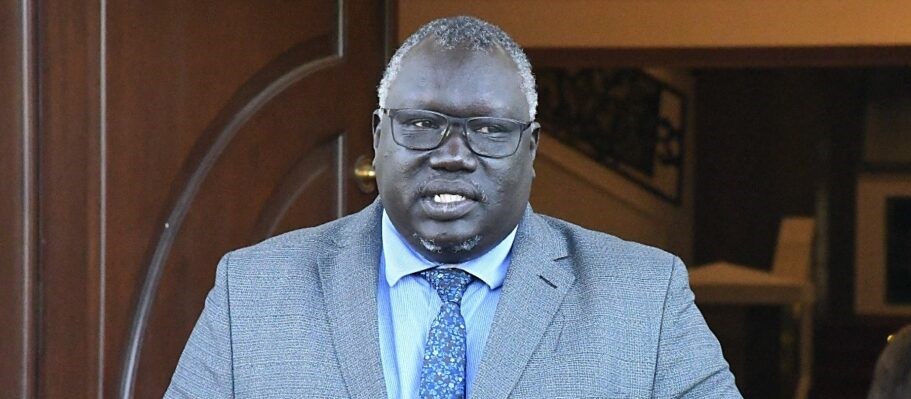
Meanwhile, NCRC Chairperson Riang Yer Zuor said the commission had completed civic education and public consultations in all 10 states and three administrative areas.
“By the end of April of this year, the Commission was able to cover the remaining two states and the three administrative areas, thus covering the whole country,” he said.
The commission is now consulting national institutions, including the judiciary, civil society organisations, the media, security agencies and internally displaced people before beginning the drafting of a permanent constitution, Zuor said.
He added that preparations to establish the Constitutional Drafting Committee were at an advanced stage, with recruitment under way and shortlisting of applicants expected soon.
Like the PPC, Zuor said inadequate and delayed funding remained the commission’s biggest challenge.
“It is also worth mentioning that there are challenges, the central one of which, as always, is lack of adequate and timely funding for the Commission’s activities,” he said.
Despite the setbacks, Zuor said he remained optimistic that South Sudan could complete a permanent constitution before the end of the transitional period, as required under the 2018 peace agreement.
The warnings came a day after parliament approved controversial amendments to the 2018 peace agreement, postponing requirements for a national population census and completion of a permanent constitution until after elections scheduled for December 2026, despite opposition objections.
Earlier this week, the PPC granted full registration to five additional political parties, while the National Elections Commission announced that voting would take place in December 2026, satisfying the legal requirement to announce elections at least six months in advance.
The electoral commission has also cautioned that funding shortages and unresolved legal issues could undermine preparations.
President Salva Kiir’s allies say the elections will proceed as planned. Opposition groups, including those aligned with Riek Machar’s SPLM-IO, argue that key provisions of the 2018 peace agreement, including security reforms, constitution-making and the unification of armed forces, remain incomplete, casting doubt on whether conditions for a credible vote can be met.

 and then