



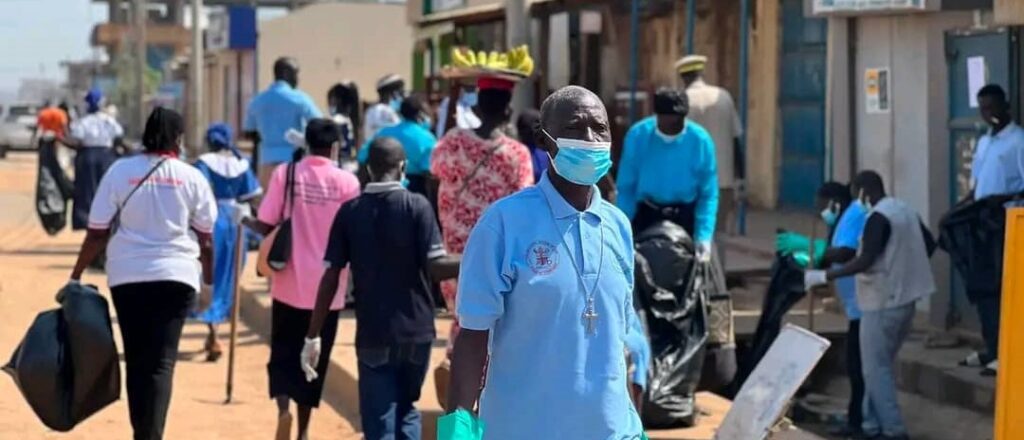
Juba City Council has warned residents against dumping rubbish on roads and other public spaces, saying those who violate the directive could face legal action.
The council’s Deputy Mayor for Environment and Infrastructure, Stephen Lomude, issued the warning on Friday during a cleaning campaign at Libya Market in Munuki.
The campaign was organised by the Diocese of Juba in collaboration with St Stephen Parish Munuki and Juba City Council as part of activities marking the Juba Diocese Day of Peace.
Lomude urged residents to keep household waste in designated places until collection trucks arrive.
He said dumping rubbish on roadsides could create health and environmental risks.
“Bringing waste on the streets is a crime. That was what our mayor said on the first day he came into office. I also want to say here that it is a crime,” he said.
“Bringing the waste to the roadside is not good because you are causing sicknesses to the people around.”
Lomude said the council had organised waste collection in shifts, with trucks operating across Juba’s 57 quarter councils.
“When we came to office, we decided that waste collection has to be done in shifts. So, we have trucks moving in all the 57 quarter councils,” he said.
“That means there is no need for you to take waste on a wheelbarrow to the street when there are trucks coming to collect.”
He directed quarter council chairpersons in Munuki and other parts of Juba to raise awareness about proper waste disposal and ensure rubbish is kept in places accessible to collection vehicles.
He warned that residents who continued to dump waste on roads and other public areas could be taken to court.
The warning comes as Juba City Council seeks to improve waste management and cleanliness in South Sudan’s capital.
Cleaning streets and hearts
Assistant Bishop Jackson Gabriel, who spoke during the campaign, said the exercise should go beyond cleaning streets and homes and encourage residents to address divisions that contribute to conflict.
“Peace begins with us. Before we ask others to change, we must first look into our hearts. We need to clean our houses, and more importantly, our hearts,” he said.
He urged residents to reject hatred, tribalism, revenge and discrimination, and instead promote forgiveness, reconciliation and love.
Gabriel also called on families to resolve disputes through dialogue rather than violence and urged churches to promote forgiveness and reconciliation.
He encouraged community leaders to bring divided people together and resolve disputes peacefully.
“South Sudan, let us clean our houses, clean our hearts. Let us reject hatred, embrace forgiveness, and pursue peace together,” he said.
Gabriel said clean streets should symbolise renewal, while forgiveness could help promote healing and unity.
The campaign brought together Christians from different churches, Juba City Council officials from Munuki, market vendors and local residents.

 and then