



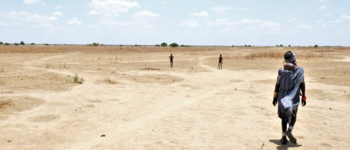
The government of South Sudan’s Eastern Equatoria State has warned that prolonged drought, insecurity and food shortages are putting growing pressure on communities across the state.
State Information Minister and government spokesman Elia John Ahaji said the state cabinet, at its 17th meeting of 2026 on Thursday, discussed the worsening situation and called for urgent assistance.
Ahaji said drought had forced people and livestock to move to neighbouring counties, states and countries in search of food, water and pasture.
“The people and their animals are migrating to neighbouring counties, states and countries in search of food, pasture and water,” he told reporters.
He said women, children and older people are particularly affected as livestock moved away and crops dried up.
“Women, children and the elderly are cut off from their livelihoods because livestock have moved far away, while crops have dried up in the fields,” Ahaji said.
The minister warned that the movement of drought-affected communities could increase tensions over access to water, pasture and other scarce resources.
Some families are also moving to areas where they have little purchasing power, while artisanal miners are struggling as ponds, rivers and streams have dried up, he said
The state government called on the national government and humanitarian organisations to provide food, medicines for people and livestock, and support to repair damaged boreholes.
Ahaji also urged communities hosting people displaced by drought to welcome them and resolve disputes through dialogue.
“We call on the host communities to welcome the affected people and engage in dialogue on how to share the limited resources until the situation stabilizes,” he said.
The state government also raised concerns about insecurity along the Juba-Torit highway, citing reports of child abductions, killings and robberies targeting passengers.
Ahaji called for greater cooperation between the national government and the governments of Central and Eastern Equatoria states to improve security along the highway.
“There is a need for the national government and Central Equatoria government to collaborate with Eastern Equatoria to protect the highway,” he said.
He urged communities living along major roads to work with community police and support regular patrols during the day and at night.
The state government said it had exempted some essential food commodities, including sorghum, maize and beans, from taxation.
It also appealed to traders to increase food supplies from neighbouring counties, states and countries to help ease shortages and pressure on households.
The government said urgent humanitarian assistance, improved security and dialogue between communities would be critical as Eastern Equatoria faces the effects of the prolonged dry spell.

 and then