



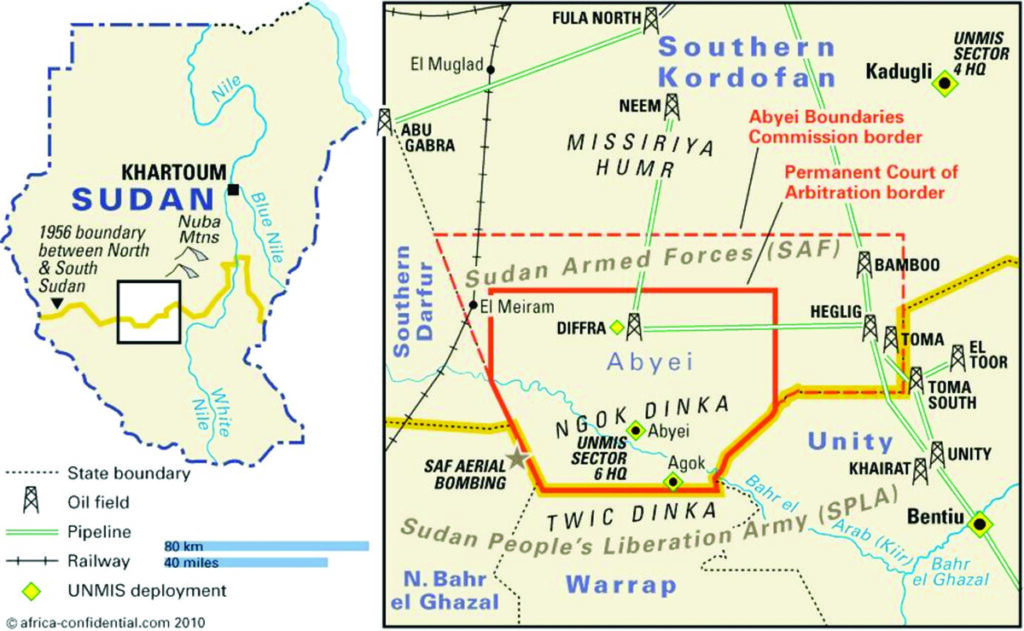
The dispute between South Sudan and Sudan over the disputed Abyei region, which straddles the border of the two countries, came to a head on 13 July when the Government of Sudan issued a statement barring Abyei residents from participating in South Sudan’s General Elections slated for 22 December 2026.
The Ngok Dinka population that inhabits Abyei was quick to reject the statement and organized a peaceful march in the region to condemn the Sudanese government’s declaration and assert their right to participate in the upcoming elections.
In what appeared to be a knee-jerk reaction, the South Sudanese Foreign Ministry also woke up to reject the Sudanese government’s statement last week through Ambassador Agok Anyar Madut, its spokesperson.
At a press conference, Amb. Anyar said the ministry was surprised by Khartoum’s decision to raise its concerns publicly instead of through official diplomatic channels.
“It is surprising that Sudan would raise such an objection through the public media and lodge complaints with the United Nations and some regional bodies instead of using official diplomatic channels,” he charged.
He explained that Sudan claimed the participation of Abyei residents in South Sudan’s elections violated the Abyei Protocol of the 2005 Comprehensive Peace Agreement (CPA) and subsequent agreements between the two countries, describing this move as a unilateral action by Juba.
However, Anyar stated that the South Sudanese Ministry of Foreign Affairs rejected this claim, asserting that the participation of Abyei residents is supported by numerous legal and constitutional provisions.
He cited the Abyei Protocol of the CPA, the Interim National Constitution of Sudan (2005), the Interim Constitution of South Sudan (2005), and the Interim Constitution of the Republic of South Sudan (2011, as amended) as legal instruments recognizing the rights of the Ngok Dinka people in Abyei.
He noted that, under Article 97(4)(a) of the Interim Constitution of South Sudan, the Ngok Dinka people of Abyei have “an inalienable right to enjoy citizenship and nationality in South Sudan, and all the rights and freedoms guaranteed by this Constitution.” He also pointed out that the residents of Abyei participated in the 2010 general elections in South Sudan (before secession) without any objection.
“The upcoming general elections will proceed in accordance with established constitutional and legal practices, based on the citizenship rights recognized by both parties,” Anyar stated.
He added that Juba reaffirms its commitment to resolving the final status of the Abyei region through peaceful means.
“We reaffirm that the Government of the Republic of South Sudan remains fully committed to reaching a peaceful solution to the final status of Abyei through dialogue and negotiations,” Anyar said.
He added that the government also commended the ongoing mediation efforts of the African Union, the United Nations, and other international partners aimed at achieving a peaceful and lasting settlement to the Abyei issue.
However, Edmund Yakani, a civil society activist who doubles as the Executive Director of the Juba-based Community Empowerment for Progress Organization (CEPO), called for a peaceful resolution of Abyei’s status through dialogue rather than armed conflict.
He noted that since South Sudan seceded from Sudan, the Abyei region has been politically administered by the Juba government, which appoints its officials. However, according to the 2005 Comprehensive Peace Agreement, Abyei remains a disputed territory between Sudan and South Sudan.
Yakani urged the governments of Sudan and South Sudan to allow the people of Abyei to participate in elections, as they have political rights. He pointed out that the people of Abyei participated in the 2010 elections after independence and were elected to the South Sudanese parliament, reflecting their national affiliation with South Sudan.
“Why are conflicts between Juba and Khartoum escalating again just as South Sudan is preparing for elections?” he questioned.
Relatedly, Aisha Abbas Akuei, a member of parliament representing Abyei in the South Sudanese parliament, recapped that Abyei residents had participated in the 2010 elections and questioned why the Sudanese government was preventing them from participating in South Sudan’s polls.
Meanwhile, Ngok Malik, spokesperson for the Abyei Final Resolution Initiative, called on the Government of South Sudan to stand with the people of Abyei, as the Ngok Dinka people voted in the 2013 referendum in favor of joining South Sudan, not the Republic of Sudan.

 and then