



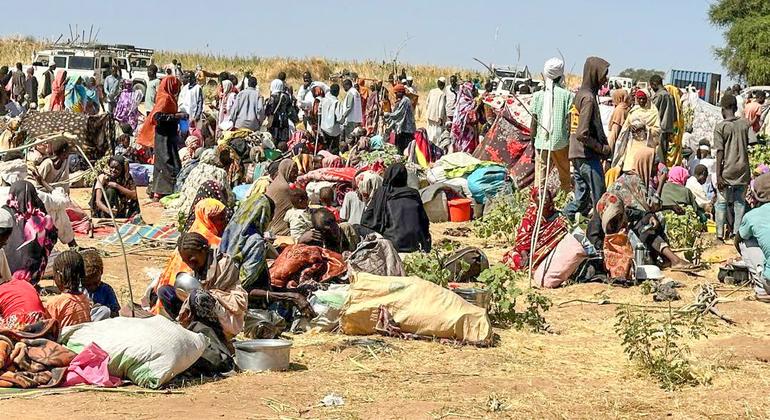
In displacement centers across Sudan’s Blue Nile region, the suffering of displaced people does not end with the loss of their homes and sources of income. For people with disabilities, the details of daily life become even more difficult, from accessing food and water to reaching shelter and healthcare services.
Displaced people with disabilities say that the assistance reaching some displacement centers does not always take their specific needs into account, while some face difficulties reaching aid distribution points or receiving assistance without support.
Mohamed Ismail, a displaced person from the western area, said he had passed through Bout, Wad Abug, Boli and Roro and is currently living in Al-Karama 4 displacement camp. Mohamed said they are usually promised that services will be provided, but that such services are not available. He said this has worsened their suffering, particularly during the current rainy season.
“We suffer from difficulties in accessing services and from rough roads, in addition to the poor services provided to us,” he said. “As people with disabilities, we are not provided with services specifically addressing our needs.”
Regarding displaced people with disabilities in Blue Nile, particularly in Damazin and Roseires, an employee working with the Blue Nile Council for Persons with Disabilities said services provided to this group remain inadequate and that there is a shortage in the distribution of assistance.
He noted that, in general, there is a shortage of mobility aids, wheelchairs, walking sticks and three-wheeled mobility devices. Regarding people with visual and hearing disabilities, he said there is also a lack of assistive services, such as sign-language interpretation, leaving people with hearing disabilities unable to communicate with service providers and other members of the displaced community.
He also said that the environment in displacement camps is not fully suitable for people with disabilities, as they require specially designed toilets equipped with seats and ramps to make them accessible.
Another source said they had managed to provide reasonable services to displaced people with disabilities and other displaced people, noting that they are trying to secure wheelchairs as well as hearing and visual aids, such as hearing devices and eyeglasses.
The source added that they have currently exhausted the financial grant they had received and are seeking additional support to enable them to provide further assistance to people with disabilities.

 and then