



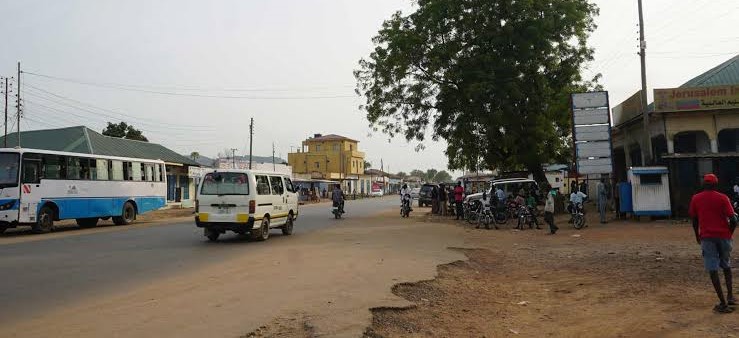
As soaring prices continue to erode household purchasing power in South Sudan, growing numbers of consumers in the capital, Juba, say low-cost Chinese-owned retail shops have become an important source of affordable household goods, helping families cope with the country’s economic crisis.
Chinese retailers, which have expanded from wholesale businesses into neighbourhood outlets in areas such as Munuki, Gudele and Buluk, sell a wide range of products including clothing, footwear, kitchenware, electronics and school supplies, often at prices shoppers say are substantially lower than those charged by other retailers.
At Suk Libya market in Munuki, where one of the Chinese-owned stores attracts large crowds, shoppers said lower prices had made essential goods more accessible despite worsening economic conditions.
Sarah Aputu Emmanuel, a resident of Munuki, said price differences between Chinese-owned shops and other retailers are often significant.
She said a hair straightening comb that typically sells for between SSP 60,000 and SSP 70,000 elsewhere could be purchased for about SSP 15,000 at a Chinese-owned shop. Likewise, a box of 12 tea glasses selling for around SSP 90,000 in other stores was available for roughly half that price.
“The prices are much lower. Many people think Chinese goods are of poor quality, but what matters to most families now is that they can afford them,” she said.
She said the lower prices had helped households manage the rising cost of living by making everyday items more affordable.
Philip Buda Ladu, a resident of Hai Tarawa, said Chinese retailers had widened consumers’ options at a time when many families were struggling financially.
“Many people prefer Chinese shops because their prices are relatively lower than those charged by other traders,” he said.
Ladu said he had purchased household items, including bedsheets, a mosquito net and a bed, at prices he considered more affordable than elsewhere in Juba.
He also recalled buying a camping tent from a Chinese shop before travelling to Terekeka for the Mundari Cultural Festival after failing to find one elsewhere.
“It solved my problem. I was able to buy a tent at a price I could afford and use it during the festival,” he said.
Moses Ayume, who lives in Joppa residential area, estimated that some products sold in Chinese-owned shops are between 30% and 40% cheaper than similar items in other markets.
“If I can find the item in a Chinese shop, I usually buy it there because it is cheaper,” he said.
However, Ayume said the popularity of the stores had created new challenges, including overcrowding and long queues at checkout counters.
“Sometimes you have to wait several minutes before reaching the cashier because there are so many customers,” he said.
Economist Abraham Maliet said consumer preferences are increasingly shaped by affordability as South Sudan’s economic difficulties continued to squeeze household incomes.
He said competition among retailers gave consumers more options, with purchasing decisions largely determined by income levels.
“Consumers naturally go where prices match their purchasing power. Some choose Chinese-owned shops, while others shop elsewhere. That is how markets function,” Maliet said.
He said the presence of retailers targeting different income groups helped broaden consumer choice, but noted that businesses ultimately set prices to maximise profits rather than to meet social needs.
“Businesses are driven by profit. Their pricing decisions are influenced by commercial considerations,” he said.
South Sudan has faced years of economic instability fuelled by conflict, currency depreciation and high inflation, leaving many households struggling to afford basic goods.

 and then