



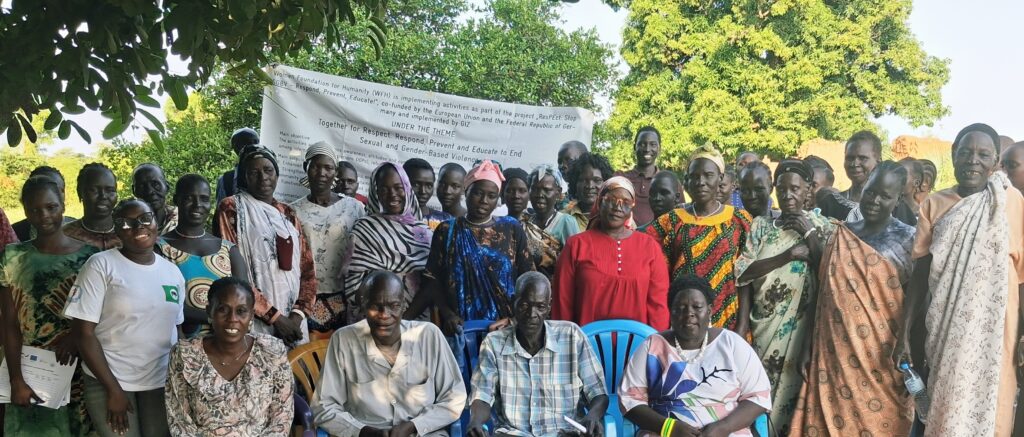
Thirty young women and girls on Thursday began a three-day training programme on women’s rights aimed at improving awareness of South Sudan’s laws protecting women’s ownership and inheritance of land.
The training, organised by the Women’s Foundation for Humanity, is part of the ResPEct: Stop SGBV – Respond, Prevent, Educate! project, which is co-funded by Germany and the European Union and implemented by GIZ. The programme seeks to strengthen participants’ understanding of national, regional and international legal frameworks that safeguard women’s rights.
“This training is basically for you to know about your rights as women and to understand the laws in this country that protect those rights,” Dorothy Drabuga Ambrose, Executive Director of the Women’s Foundation for Humanity, told participants at the opening session.
Ambrose said many women remain unaware of the legal protections available to them, particularly regarding land ownership and inheritance, limiting their ability to claim their rights.
She said South Sudan’s Transitional Constitution of 2011, as amended, guarantees women’s rights, including inheritance rights, and is complemented by other legislation such as the Land Act and the Local Government Act.
Participants will also be introduced to regional and international legal instruments that promote gender equality, including the Convention on the Elimination of All Forms of Discrimination Against Women (CEDAW) and the Maputo Protocol.
“The Maputo Protocol was developed by Africans to protect the rights of African women,” Ambrose said.
She added that the training would also cover South Sudan’s Women’s Land Rights Agenda, a policy framework developed under an Intergovernmental Authority on Development (IGAD) initiative to strengthen women’s access to land and other resources across member states.
Ambrose said the programme would also highlight international frameworks that encourage women’s participation in peacebuilding and decision-making while addressing the impact of conflict on women and girls.
The three-day training is expected to equip participants with practical knowledge to advocate for their land and inheritance rights and raise awareness of women’s legal protections within their communities.

 and then