



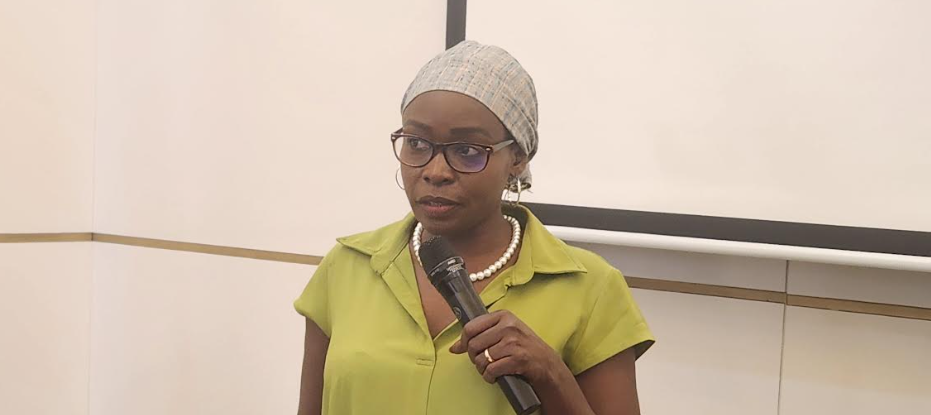
Women’s groups in South Sudan on Friday called for an urgent and inclusive political dialogue to complete pending tasks under the peace agreement and ensure credible elections scheduled for December this year.
The call came in a communiqué issued at the end of a three-day meeting in Juba by women signatories to the Revitalized Agreement on the Resolution of the Conflict in South Sudan, together with the South Sudan Women’s Coalition for Peace, the South Sudan Women’s Union, civil society groups, mediators, business leaders and faith-based representatives.
Rita Lopidia, executive director of the Eve Organization for Women Development, who read the communiqué, said women were deeply concerned about the country’s deteriorating political and security situation.
Participants cited recent violence in Akobo and Abiemnom, warning that the attacks risk renewed conflict and displacement, particularly affecting women, children and the elderly.
They also highlighted a worsening economic and humanitarian crisis marked by hyperinflation, loss of livelihoods and the collapse of basic services.
The women’s groups urged the government to immediately launch a time-bound leadership dialogue to resolve outstanding issues in the peace agreement and prepare for credible elections. They said no further extension of the transitional period should be accepted.
The statement also appealed to President Salva Kiir to facilitate the release of First Vice President Riek Machar, who was recently suspended, along with other political detainees, and to grant amnesty to political exiles as part of efforts to restore trust and advance reconciliation.
The groups also demanded full implementation of the constitutional provision requiring at least 35% representation of women in government structures, criticizing the current composition of the planned political dialogue body where only seven of the 70 delegates are women.
They further called for an immediate ceasefire and the protection of civic and political freedoms to enable internally displaced people and refugees to safely return and participate in elections.
On the economic front, the groups urged the presidency to approve emergency funds to address rising food shortages and the broader economic crisis. They proposed establishing cooperative outlets to help reduce commodity prices and recommended that women’s organizations help oversee aid distribution to ensure assistance reaches vulnerable populations.
The meeting took place amid rising political tensions and growing concern about delays in implementing key provisions of the 2018 peace deal as the country prepares for its first elections since independence.
“Without women, there can be no peace,” Lopidia said.
Alokir Malual Aguer, a member of the Women’s Coalition for Peace, said the gathering aimed to unify women’s voices to strengthen peacebuilding efforts ahead of the anticipated political dialogue and elections.
She said South Sudanese women remain committed to supporting peace and working alongside the government, citizens and partners to address the country’s challenges, urging women to maintain a unified front and advocate for stability and inclusive participation in the political transition.
Julia Aker Dauny, also a member of the coalition, said South Sudanese women are exhausted by years of conflict and called for urgent efforts to secure lasting peace.
She highlighted the growing humanitarian crisis, with families facing hunger and displacement, and urged President Kiir to engage with Machar and other leaders to steer the country away from further violence.
Pauline Riak, another coalition member, praised participants for focusing on solutions rather than assigning blame during the discussions.
She said the meeting demonstrated political maturity among women leaders and stressed the importance of collective action, urging women to spread peace messages across communities and languages while working with partners, including UN Women, to advance peace and development in South Sudan.
Speaking at the closing of the meeting, Hulda Ouma, deputy country representative of UN Women in South Sudan, said the outcomes of the dialogue belong to South Sudanese women and reaffirmed the agency’s commitment to supporting their efforts.
She acknowledged the political tensions surrounding the country’s transition and said UN Women would continue working with women leaders to ensure they play an active role in peacebuilding, political dialogue and development.

 and then