



Sudan and South Sudan have agreed to strengthen cooperation on security, trade and oil, including resuming production at key oil fields, following a high-level visit by a South Sudanese delegation to Port Sudan, officials said on Wednesday.
Oil production involving South Sudan was recently halted after Sudan’s paramilitary Rapid Support Forces (RSF) seized Heglig, Sudan’s largest oil field, amid ongoing fighting with the Sudanese Armed Forces (SAF) in the country’s oil-producing south.
Heglig, a small border town between Sudan’s West Kordofan state and South Sudan, hosts some of Sudan’s most important oil infrastructure, including dozens of wells, storage facilities and processing stations. The field processes between 80,000 and 100,000 barrels per day for both countries.
A key pipeline carrying crude from South Sudan’s Unity oil fields to Port Sudan runs through Heglig, making the area critical to export revenues and transit fees earned by Sudan.
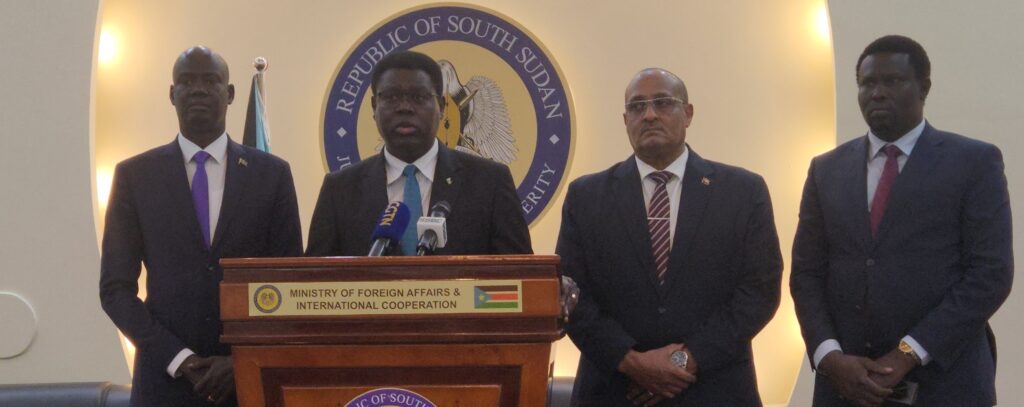
South Sudan’s Foreign Minister Monday Semaya Kumba said the visit to Port Sudan was carried out on the directive of President Salva Kiir Mayardit to reinforce ties between the two neighbours.
Speaking to reporters at Juba International Airport after returning from Sudan on Wednesday, Kumba said the delegation, led by presidential security adviser Tut Gatluak Manime, delivered a written message from Kiir to Sudan’s Transitional Sovereign Council chairman, General Abdel Fattah al-Burhan.
Gatluak later held talks with Burhan on bilateral relations, Kumba said.
The discussions focused on economic cooperation, trade and investment, oil, security and political issues, as well as the situation of citizens from both countries living across the border. Peace processes in Sudan and South Sudan and the exchange of official visits were also discussed.
During the visit, Gatluak met senior Sudanese officials, including Transitional Sovereign Council Vice President Malik Agar, Prime Minister Kamil Idris and council member General Shams al-Din Kabashi Ibrahim.
Kumba said the talks also covered Sudan’s allocation of a free economic and trade zone for South Sudan at Port Sudan, the activation of joint ministerial and economic committees, and the status of citizens in both countries.
In separate meetings, Kumba said he and Sudan’s acting foreign minister agreed to establish a joint mechanism to address bilateral issues and support each other in regional and international forums. He also met Sudan’s interior minister to discuss cooperation between the two ministries.
On oil, Kumba said a technical delegation led by Petroleum Ministry Undersecretary Chol Thon held talks with Sudan’s petroleum minister and agreed to resume production at the Heglig and Bamboo oil fields.
Both sides committed to continued consultation and coordination and signed minutes of their meetings, issuing a joint statement at the end of the visit, Kumba said.
Relations between conflict-hit Sudan and South Sudan are closely tied to oil, with landlocked South Sudan relying on Sudan to export more than 90% of its oil revenues through pipelines and port facilities on Sudanese territory.

 and then