



South Sudan’s caretaker government has assigned acting ministers to oversee national ministries without caretaker ministers, as the country prepares for elections scheduled for December 22 amid concerns that preparations are falling behind schedule.
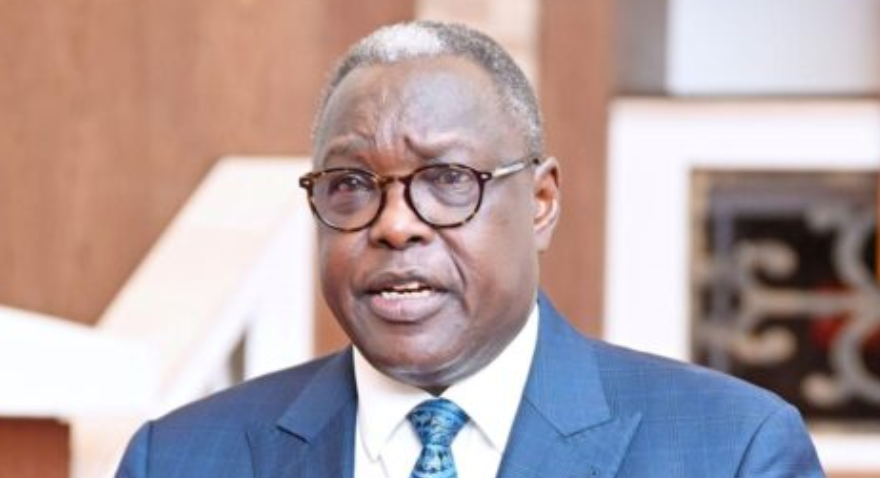
Caretaker Minister of Cabinet Affairs Martin Elia Lomuro issued Ministerial Order No. AM-01/2026 on Tuesday, October 20, assigning acting responsibilities across the governance, economic, service, infrastructure, and gender and youth clusters.
The new order directs under-secretaries to continue managing the day-to-day administration of their respective ministries under the supervision and direction of the assigned acting ministers.
President Salva Kiir dissolved the transitional government on September 22 and established a caretaker administration.
Governance cluster
Under the order, the minister of Cabinet Affairs will act for Presidential Affairs, while the minister of Presidential Affairs will act for Cabinet Affairs.
The deputy minister of Foreign Affairs and International Cooperation will act for the Ministry of Foreign Affairs and International Cooperation, with the minister of Cabinet Affairs designated as second alternate.
The deputy minister of Defence and Veterans Affairs will act for the Ministry of Defence and Veterans Affairs, with the minister of National Security as second alternate.
The deputy minister of Interior will act for the Ministry of Interior, with the minister of National Security as second alternate.
The minister of Justice and Constitutional Affairs will act for Peace Building, while the minister of Information, Communication Technology and Postal Services will act for Justice and Constitutional Affairs.
The minister of Interior will act for National Security, with the deputy minister of Interior as second alternate.
The minister of Cabinet Affairs will act for Parliamentary Affairs, with the minister of Information, Communication Technology and Postal Services as second alternate. The minister of Cabinet Affairs will also act for Information, Communication Technology and Postal Services.
The minister of Peace Building will act for Federal Affairs, while the minister of Foreign Affairs and International Cooperation will act for East African Community Affairs.
Economic cluster
The minister of Petroleum will act for Finance and Planning, while the minister of Finance and Planning will act for Petroleum.
The minister of Cabinet Affairs will act for Agriculture and Food Security, while the minister of Trade and Industry will act for Livestock and Fisheries.
The minister of Finance and Planning will act for Trade and Industry and Transport.
The minister of Wildlife Conservation and Tourism will act for Environment and Forestry, Land, Housing and Urban Development, and Water Resources and Irrigation.
The minister of Trade and Industry will act for Wildlife Conservation and Tourism.
Service cluster
The minister of General Education and Instruction will act for Higher Education, Science and Technology.
The minister of Health will act for General Education and Instruction and Public Service and Human Resource Development.
The minister of General Education and Instruction will also act for Health, according to the order’s schedule.
Infrastructure cluster
The minister of Petroleum will act for Energy and Dams.
The minister of Trade and Industry will act for Transport, while the minister of Finance and Planning will act for Roads and Bridges.
Gender and youth cluster
The minister of General Education and Instruction will act for Gender, Child and Social Welfare. The same minister will also act for Humanitarian Affairs and Disaster Management.
The minister of Humanitarian Affairs and Disaster Management will act for Culture, Museums and National Heritage, as well as Youth and Sport.
The order requires all concerned under-secretaries to recognise and comply with the authority of their assigned acting ministers and to continue carrying out their administrative responsibilities under their supervision.
It states that undersecretaries are civil servants, not constitutional postholders, and therefore cannot exercise constitutional powers and functions reserved for ministers.
Failure to comply with the order, including refusal to recognise or obstruction of the authority of assigned acting ministers, may result in administrative and disciplinary action under applicable laws and regulations.
The order takes effect immediately and remains in force until it is amended, revoked or superseded by a competent authority.

 and then