



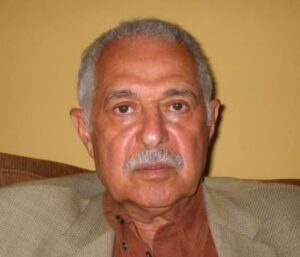
South Sudan’s oil has become a strategic tool in the war in neighbouring Sudan, with competing sides using access to the country’s crude as leverage, according to Professor Taj Elkhazin, a Sudan and South Sudan researcher.
Elkhazin, an associate professor at the Norman Paterson School of International Affairs at Carleton University in Ottawa, said the country’s dependence on Sudan’s oil infrastructure had left Juba vulnerable to pressure from both the Sudanese army and the paramilitary Rapid Support Forces (RSF).
He told Radio Tamazuj on Thursday that South Sudan’s oil is increasingly being used for political and military purposes rather than to meet the needs of its population.
“The issue of oil is a classical case of mismanagement and a classical case of corruption,” he said.
His comments come as South Sudan prepares for planned elections in December, while fighting in Sudan continues to affect border areas and the pipeline infrastructure through which South Sudan exports most of its crude.
Oil exports
Elkhazin said that South Sudan oil transported through Sudan is currently generating revenue for both the army-aligned government in Khartoum and the RSF despite the two sides being at war.
He said information from people he described as insiders indicated that about $4 from each barrel of crude oil goes to RSF leader Mohamed Hamdan Dagalo, widely known as Hemedti, while about $6 goes to the Sudanese army.
The RSF seized Heglig on 8 December 2025, prompting South Sudan to deploy troops to secure the strategic oil field. Heglig, in Sudan’s South Kordofan state near the South Sudan border, is a key oil-processing site for South Sudanese crude.
Elkhazin also alleged that the South Sudanese government had recently requested $20 million from Hemedti and that the money was delivered in cash by plane.
In return, he said, the RSF received two shipments of South Sudanese crude, each involving about 600,000 barrels.
“This was about one and a half months back,” he said.
Radio Tamazuj could not independently verify the alleged payment or the shipments.
South Sudan’s crude is exported through infrastructure in Sudan to the Red Sea. The Bashair oil terminals, located south of Port Sudan, are key parts of Sudan’s oil-export infrastructure.
Elkhazin said the oil arrangement creates a dangerous dependency because Sudan could disrupt South Sudan’s exports by restricting access to the pipeline and export terminals.
River Dredging
Elkhazin, who is also a water management expert, revisited a 2022 dispute over Egyptian equipment brought into South Sudan for work on the Bahr al-Ghazal Basin.
He said he had been personally invited by President Salva Kiir Mayardit to advise the South Sudanese government on water management and that a team of South Sudanese and international experts spent five days examining the issue.
According to Elkhazin, the team produced a report dated 27 July 2022 that was subsequently presented to the Council of Ministers.
He said the equipment brought from Egypt was intended for dredging rather than simply clearing vegetation from waterways.
“Dredging” involves deepening or altering the riverbed to increase the capacity and flow of water, while routine clearing involves removing vegetation from the surface, he said.
Elkhazin said that members of the Misseriya community in Sudan intercepted the Egyptian equipment convoy and were paid $50,000 to allow it to proceed.
He said the equipment eventually reached the Bahr al-Ghazal Basin, where dredging took place before being returned to Egypt.
He also claimed that vegetation removed during the operation contributed to flooding around the old bridge at Kosti in Sudan.
Elkhazin said the report produced by his team remains largely unused.
“The report is still sitting on desks,” he said.
RSF Presence in South Sudan
Elkhazin also alleged that about 450 RSF personnel are stationed near Juba.
He said the declared purpose of the deployment was to assist with stabilization and preparations for South Sudan’s elections.
But he questioned why foreign armed personnel would be needed for such duties while South Sudan has its own security forces.
He argued that the presence of the RSF was instead intended to help protect the government of President Kiir.
“The declared mission was to help with some stabilisation and help with the upcoming elections,” he said.
“However, you do not bring forces from outside to your country while you have an army to do that.”
Elkhazin further alleged that supplies are moving from or through Juba towards RSF-held areas in Sudan.
He said he had seen a United Nations report which, in his interpretation, traced the movement of oil and other supplies through South Sudan towards areas controlled by the RSF.
He warned that the fighting in Sudan could increasingly spill across the border and complicate South Sudan’s security and economic interests.
Election Credibility
Turning to South Sudan’s planned elections, Elkhazin questioned whether a credible vote could be held without a national census.
“No census has been done in South Sudan for years now,” he said, arguing that uncertainty over the size and location of the population could create opportunities for manipulation.
He also criticised the political and security environment ahead of the elections, pointing to the detention and trial of opposition leader Riek Machar and recent political appointments and dismissals.
The country’s transitional government was dissolved by President Kiir on 22 September, although the president said the administration would continue in a caretaker capacity until elected leaders take office.
Elkhazin argued that the broader political environment is not conducive to what he described as fair and credible elections.
He accused the government of using political appointments and dismissals to divert public attention from deeper governance problems.
“The whole scenario now has become what we call a political stunt,” he said.
Elkhazin also warned that the conflict in Sudan is likely to continue unless the two main warring sides—the Sudanese Armed Forces and the RSF—are brought into a comprehensive political settlement.
He said Sudan’s ethnic and political divisions were structural and could not be resolved through a series of conferences alone.
Drawing on his involvement in the negotiations that eventually produced Sudan’s 2005 Comprehensive Peace Agreement, he argued that a prolonged process involving experts and sustained negotiations would be required.
“No meeting, no conference is going to resolve the conflict. You need a due process of analysis and of experts to end the conflict.”
Elkhazin said the continuing war risks further fragmentation of Sudan and could have serious consequences for South Sudan, particularly through oil exports, border security and political instability.
He said the two countries remain deeply interdependent despite becoming separate states in 2011.
“We need South Sudan, Sudan needs South Sudan, and South Sudan needs Sudan,” he said.

 and then