



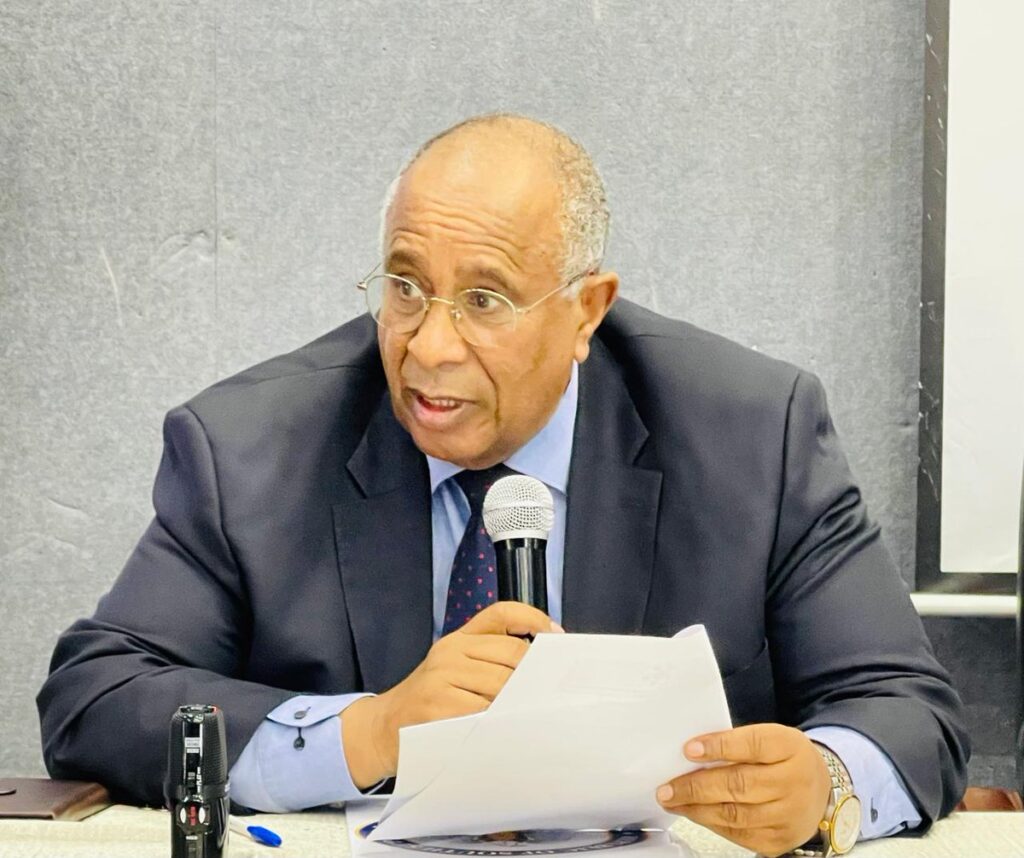
The Reconstituted Joint Monitoring and Evaluation Commission (RJMEC) has warned that South Sudan’s political and security situation significantly deteriorated in the last quarter, putting the implementation of the 2018 Revitalised Peace Agreement and the conduct of the 2026 elections at serious risk.
Presenting the RJMEC Quarterly Report to the Transitional National Legislative Assembly (TNLA) on Tuesday, Ambassador Berhanu Kebede, RJMEC Chief of Staff, said the latest findings—covering 1 July to 30 September 2025—show worrying regression.
“During the reporting period, the political and security situation continued to deteriorate significantly, undermining the implementation of the revitalized peace agreement,” he told lawmakers.
Kebede said the situation worsened following the Nasir incident, describing it as a major violation of the permanent ceasefire.
“The agreement faced renewed pressure following the Nasir incident, a major violation of the permanent ceasefire, and its aftermath, which triggered arrests, prolonged detention, and judicial process, as well as several political actions detrimental to trust building between the parties to the peace agreement and its implementation,” he stated.
While the RJMEC quarterly report warned of serious violations, it also acknowledged some positive steps, especially in governance, where the legislature managed to pass a number of bills into law.
“The TNLA resumed sittings after a six-month recess and made some progress on its legislative priorities, and this is a welcome development,” Kebede noted, adding that RJMEC appreciated being invited to present its report for the third consecutive time.
However, he raised concerns about the slow pace of judicial reforms.
“The implementation of the judicial reforms as contained in the recommendations of the Ad hoc Judicial Reform Committee, the report is still pending,” Kebede said.
He added that although new judges had been appointed to the Supreme Court and Court of Appeal, deeper reforms require “the review and implementation of the judiciary act, and the reconstitution of the judicial service commission, both of which are still pending.”
The report further warned that preparations for the December 2026 elections remain far behind schedule.
“The election-related institutions, such as the National Election Commission and the Political Parties Council, continued with institutional strengthening and capacity building activities, but lacked subject funding to discharge their mandates with time, fast running out,” Kebede stated. “If urgent steps are not taken to expedite progress, then holding elections as scheduled in December 2026 may be extremely difficult.”
“We appeal to this August House to prevail upon RTGoNU to provide funding to expedite the implementation of the critical pending elections-related tasks,” he added.
Upon its tabling in the House, Speaker Jemma Nunu Kumba committed the report to the committees of peace and reconciliation and justice and legislation, respectively, for scrutiny and ordered them to report to the House within 14 days.

 and then