



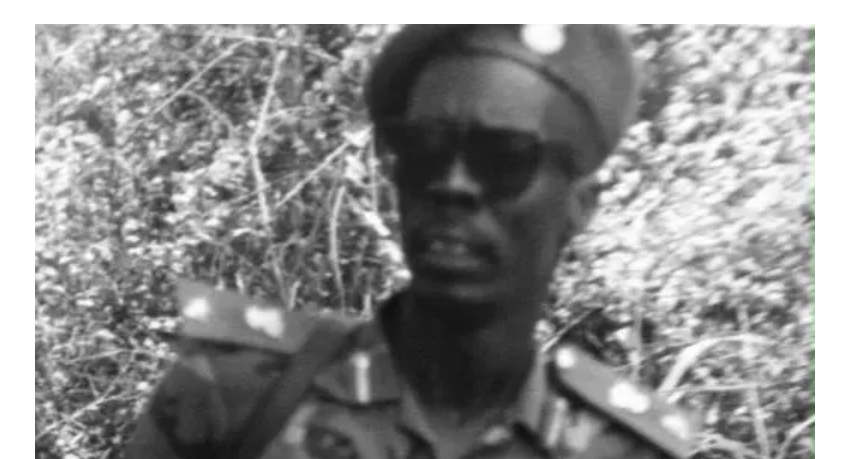
The decision by William Nyuon Bany to leave the Sudan People’s Liberation Movement/Army (SPLM/A) Torit faction stemmed from growing political disagreements, mistrust among senior commanders and widening divisions within the liberation movement after the Nasir Declaration.
The split was led by Riek Machar and Lam Akol, who broke away from the leadership of John Garang in the town of Nasir in 1991. They accused the SPLM/A leadership of authoritarianism, lack of internal democracy and human-rights violations.
Although William Nyuon initially remained loyal to Garang’s leadership in what became known as the Torit faction, the tensions created by the split gradually strained relationships within the movement.
In 1992, while peace negotiations were taking place in Abuja between the rival SPLM/A factions and the Sudanese government, William Nyuon represented the Torit faction. Lam Akol represented the Nasir faction, while Ali Elhaj represented the Sudanese government.
During the talks, Lam Akol privately urged Nyuon to join the Nasir faction. He argued that Nyuon was one of the most influential commanders in the movement and that his defection would significantly strengthen their position. Lam also said the Nasir faction was fighting for reforms within the movement, particularly democracy and respect for human rights.
At first, Nyuon resisted the proposal. He maintained that the original vision of the SPLM/A under John Garang still reflected the goals agreed upon when the liberation struggle began. But after continued discussions and reflection on the growing internal tensions within the movement, he eventually agreed to join the Nasir faction, believing that the divided groups might one day reunite under the broader objectives of the liberation struggle.
When Nyuon returned from Abuja to the liberated areas of Eastern Equatoria, his headquarters was based in Pageri along the Juba–Nimule road.
By that time, relations between him and some SPLA commanders had already deteriorated, particularly with Kuol Manyang Juuk. Disagreements emerged after some of Nyuon’s forces were redeployed to front-line positions without his knowledge, a move he viewed as interference in his command.
Tensions between the two leaders deepened and created an atmosphere of mistrust. Although John Garang attempted to mediate and narrow the gap, the situation continued to deteriorate.
These tensions, combined with fears that some officers could be targeted following the 1991 split, convinced Nyuon that his position within the Torit faction had become untenable. On Sept. 28, 1992, he formally broke away and joined the Nasir faction led by Riek Machar and Lam Akol. Many officers, noncommissioned officers and soldiers followed him.
From 1992 to 1995, Nyuon’s forces fought several fierce battles against SPLA forces loyal to Garang. His forces operated in areas including Mogiri and Lafon, and at times received military supplies from government forces based in Juba.
A crisis later emerged when a Sudanese government convoy moved through territory controlled by Nyuon without informing him. The convoy was intercepted near Lafon by his commanders, including Thomas Gatdor and Peter Gatdet, who captured soldiers and military equipment, including tanks.
The development placed Nyuon’s forces in a precarious position. They risked aerial attacks from Sudanese government forces while SPLA troops loyal to Garang were positioned behind them.
Realizing the danger of fighting on multiple fronts, Nyuon contacted Riek Machar to explain the situation. Machar advised that instead of confronting both sides, they should establish contact with nearby SPLA forces to explore the possibility of reconciliation.
Following this advice, Nyuon communicated with SPLA units stationed in the Lopit Mountains under the command of Wilson Deng Wek. The message eventually reached John Garang, who was then based in Chukudum.
Recognizing an opportunity for reconciliation, Garang sent senior commanders Oyai Deng Ajak and James Hoth Mai to meet Nyuon in Lafon.
During the meeting, the commanders discussed ways to reunite the divided liberation movement. Nyuon explained that the initiative had the support of Riek Machar and suggested that the factions reunite under Garang’s leadership.
In a significant gesture of compromise, Nyuon proposed that Machar should become deputy chairman of the reunited movement — even though Nyuon himself had previously held the position. He offered to step aside in order to promote unity and strengthen the struggle.
Garang reportedly welcomed the proposal and emphasized the importance of unity for the success of the liberation movement.
The understanding became known as the Lafon Declaration, an attempt to bring together the rival factions of the SPLM/A.
Although the declaration represented a serious effort at reconciliation, it ultimately faced resistance from some political and administrative groups within the South Sudan Independence Movement, who feared losing influence in a unified structure. Their opposition disrupted the process and prevented Machar from traveling to finalize the agreement with Garang in Chukudum.
As a result, the Lafon Declaration did not fully succeed. Still, it remains an important moment in the history of the liberation struggle, reflecting early efforts by leaders such as William Nyuon Bany to restore unity within the SPLM/A and strengthen the fight for the rights and self-determination of the people of southern Sudan.
The writer, Tuong Majok Deng, is a member of the Jonglei State Legislative Assembly and a former Jonglei State minister of cabinet affairs. He can be reached at tuongmajok711@gmail.com.
The views expressed in ‘opinion’ articles published by Radio Tamazuj are solely those of the writer. The veracity of any claims made is the responsibility of the author, not Radio Tamazuj.

 and then