



Last week, the lights went out at Juba Teaching Hospital—South Sudan’s only national referral hospital. For more than 52 hours, the facility reportedly experienced a power blackout. Patients on life-support machines and premature babies in incubators were suddenly left vulnerable. The result was tragedy: an undisclosed number of deaths linked to the interruption of electricity.
In a functioning state, such an event would trigger national outrage, parliamentary investigations, and emergency reforms. But in South Sudan, it passed almost as another unfortunate incident. This was not merely a technical failure. It was a policy failure. The blackout at Juba teaching hospital exposed a deeper and more troubling reality: the gradual neglect or commodification of our healthcare sector, a sector that should be guaranteed as a basic human right but has increasingly been left to market forces, charity, or private actors.
Rights, not privileges
Globally, education and healthcare are recognized as fundamental rights. The right to education is a human right affirmed under the framework of the United Nations in instruments such as the International Covenant on Economic, Social, and Cultural Rights. Similarly, the right to health—including access to functioning healthcare facilities—is central to international human rights law.
These principles are reinforced by the global development agenda embodied in the UN’s Sustainable Development Goal 3 and Sustainable Development Goal 4, which call for universal access to healthcare services and inclusive, equitable education. Yet the fiscal budget decisions of South Sudan’s government tell a very different story.
Budgets reveal political priorities.
Between 2021 and 2026, South Sudan’s national budgets have consistently allocated only modest resources to education and healthcare while maintaining heavy expenditures in security and defense.
In the 2023–2024 national budget, education received about 8 percent of total government spending, while healthcare received around 2 percent. These allocations translate to roughly SSP 172 billion for education and SSP 42 billion for health, far below international benchmarks for social investment. (mofp.gov.ss).
The situation has not improved significantly in subsequent budgets. Fiscal proposals for this fiscal year continued to prioritize non-essential public administration and security sectors, while imperative social sectors remained marginal in relative share.
To put it in perspective, global commitments such as the Incheon Declaration recommend that governments allocate 15–20 percent of their national budgets to education alone. South Sudan spends less than half that threshold.
Healthcare spending is even more alarming. In some years, it has hovered around 2 percent of the national budget, far below the 15 percent benchmark recommended under the Abuja Declaration for African governments. These numbers matter because budgets are moral documents. They reveal what governments truly prioritize.
The energy paradox
The tragedy at Juba Teaching Hospital also exposes a critical weakness in South Sudan’s energy governance. Electricity in Juba is supplied through a private energy arrangement involving Ezra Group Limited, a company linked to Ethiopian businessman Eyob Mamo. The company operates thermal generators that supply much of the capital’s electricity through agreements with the government. The reliance on a private provider for a city’s primary electricity supply illustrates a broader structural problem: the state has gradually outsourced critical public infrastructure rather than building sustainable national systems.
When energy supply relies on private deals and irregular government payments, outages become unavoidable. And when power stops, hospitals stop saving lives.
The economics of neglect
When limited resources are allocated to one sector, society necessarily sacrifices investment elsewhere. When a government chooses to prioritize military spending over schools, hospitals, and energy infrastructure, the opportunity cost is borne by ordinary citizens—children studying without classrooms, patients dying in powerless hospitals, and mothers traveling miles for basic medical care.
In South Sudan today, more than 2,000 schools lack access to clean water, and thousands of classrooms are temporary structures or simply open spaces under trees. (Amnesty International)
The blackout at Juba Teaching Hospital, therefore, cannot be dismissed as a one-off event. It is the predictable outcome of a system that has underinvested in public service and human development for years.
The security argument, and why it fails
Supporters of current spending priorities often invoke South Sudan’s history of civil war and intercommunal conflicts to justify large security budgets. This argument sounds persuasive until examined closely.
First, many of the conflicts cited are themselves symptoms of governance failure. Chronic underinvestment in education and economic opportunity leaves millions of young people without prospects, creating fertile ground for instability.
Second, history shows that post-conflict recovery rarely succeeds through militarization alone. Countries that have successfully emerged from devastating wars—from Rwanda after the Rwandan Genocide to Liberia after its brutal civil wars—placed human development at the center of national reconstruction. Human development—not militarization—became the foundation of their long-term stability.
The hidden cost of privatization
When governments retreat from providing essential services, markets rush in to fill the gap. That is precisely what has happened in South Sudan. Private clinics, informal medical providers, and fee-based schools have become the default alternatives to failing public systems. While these services offer short-term relief, they come with a heavy price: inequality. When healthcare and education depend on personal wealth rather than citizenship, the social contract begins to fracture. Children from poor families are excluded from quality education. Sick patients delay treatment until conditions become fatal. Entire communities are locked out of opportunities that should belong to every citizen. Such inequality directly contradicts the principle of equality we fought for and the global commitment to Sustainable Development Goal 10, which seeks to ensure fair access to services and opportunities. But beyond international commitments, the moral cost is even greater: a society divided between those who can buy survival and those who cannot.
A crisis of political will
The tragedy at Juba Teaching Hospital should have sparked a national reckoning.
Why does the country’s most important hospital lack reliable electricity? Why must premature infants depend on fragile power systems in a national referral facility? Why are healthcare workers expected to save lives without the most basic infrastructure?
These questions do not require technical answers. They require political ones.
Hospitals need investment. Schools need teachers and classrooms. Energy infrastructure must support essential services. None of these is an impossible task. They are the foundations of a functioning state and the basic responsibilities of every government.
Governments that understand their responsibilities place human development at the center of national policy. They recognize that the defense of a nation ultimately begins with the well-being of its people. A healthy and educated population is not merely a social objective—it is an economic and political necessity. What is missing is not capacity alone but political will.
The future at stake
South Sudan is a nation born from decades of struggle and sacrifice. That history should have produced a leadership committed to building strong institutions that protect citizens’ rights. Instead, the country risks drifting toward a system where fundamental services are available only to those who can pay for them. The consequences will not appear overnight. They will unfold gradually: a generation of poorly educated youth, rising inequality, declining public health, and deepening poverty.
History offers a clear warning.
A nation that neglects its schools undermines its future workforce. A nation that neglects its hospitals weakens its social resilience. And a nation that neglects both risks trapping itself in permanent underdevelopment.
Ultimately, budgets reflect intentions.
The choices a government makes about its budget reveal its priorities and, ultimately, its vision for the future.
If education remains underfunded and healthcare neglected, the consequences will extend far beyond the present crisis. In the end, one uncomfortable truth remains: A government that ignores human development either intends to create a generational poverty cycle or to maintain rigid social classes for generations to come.
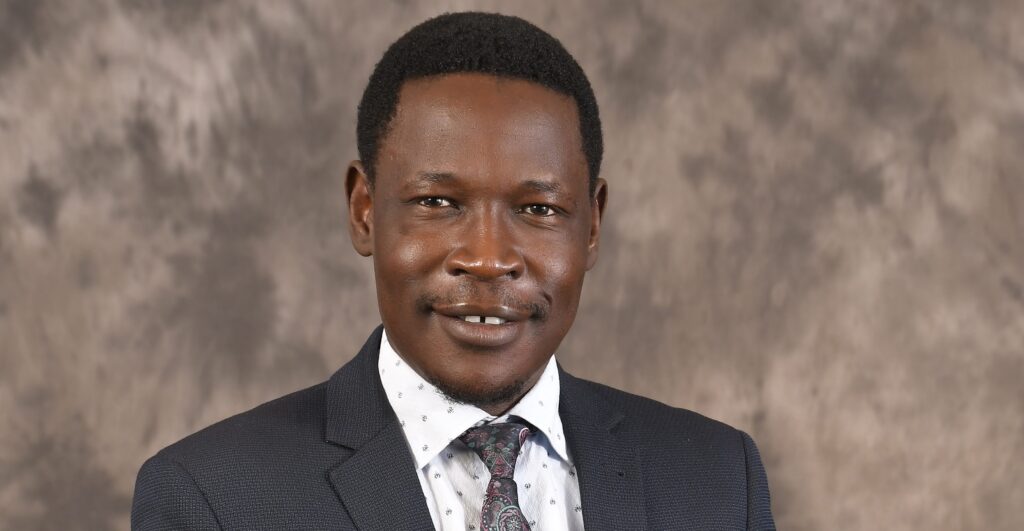
The writer, Diing Deng Mou, is a political activist, former political prisoner, co-founder, and current chair of the 7 October Movement. He can be reached via diingmouaguer@gmail.com.
The views expressed in ‘opinion’ articles published by Radio Tamazuj are solely those of the writer. The veracity of any claims made is the responsibility of the author, not Radio Tamazuj.

 and then