



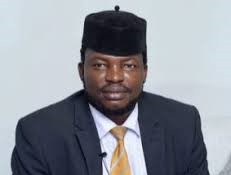
On 30 November 2025, I met with Tut Kuany Kok, one of our political activists and the author of the book SUFFERING WITHOUT BITTERNESS: Love That Breaks The Curse. We talked at length on a number of topics, ranging from conflict, human rights, opposition politics, and mainly the recent appointments of Unity State’s Panyijiar County Commissioner Stephen Gai Riek Gaak and Upper Nile State Governor Kech Ngoth.
At the tail end of our discourse, he inquired whether or not the Chairman of the South Sudan People’s Movement (SSPM), Gen. Stephen Buay, regrets the traitorous treatment that saw him being demoted from the rank of General to private and discharged from the army by the SPLM regime, which he defended and protected between 2014 and 2017.
In an articulate answer that kept him nodding at ease, I told him, of course, General Buay does not regret having been on the side of President Salva Kiir in those years of the conflict due to conviction to keep the country united by not encouraging tribal animosities.
In early 2025, I coined the phrase that Gen. Buay is not just a trained but a “soldier by choice.” On this note, the betrayal he faced at the hands of President Kiir’s lethal loyalists was part and parcel of the profession and military career that he embraced at a young age. In other words, he was not surprised, nor does he regret his tribulations.
Unlike most South Sudanese army officers who became soldiers by default, Buay opted to be a soldier by choice because it was his passion.
In a fine film and YouTube video titled ‘‘Roaring Lion,’’ a doyen Jamaican Rasta woman and follower of Leonard Howell, Gertrude Campbell, was interviewed along with the pioneer and iconic Rasta community leaders, Mortimo Plano and Filmore Alvaranga, who received the King Emperor Haile Selassie, during his historical visit to Kingston, Jamaica in 1963. She said, “You can’t take Rasta out of me, and you can’t take me out of Rasta. If you try till you can’t try more, I will always be Rastafri.” In the same way, if you look at the journey of Gen. Buay, it appeared that you can’t take him out of the military, and you can’t take the military out of Gen. Buay. He is just a soldier by choice who cannot be relegated to obscurity.
Historically, in 1984, Buay was demobilized from Anyanya 2 due to his young age. But after a short while, he made his way back to the Anyanya 2 and SPLA. In 2019, Buay was demoted and dismissed from the SPLA.
In 2021, he, however, made a hasty return to the army after establishing a revolutionary army called South Sudan People’s Army (SSPA), which is now part of a political-military bloc dubbed United People’s Alliance (UPA) in which he serves as the Chief of General Staff and Chairperson of Military Cluster under UPA leader Gen. Pagan Amum.
Those who are aware and acquainted with Buay’s biography will know that when he finished intermediate school in Khartoum, he was offered a chance to join St. Augustine Seminary in Khartoum. There, he was expected to study to become a Catholic priest. Fortunately, or unfortunately, he abandoned the seminary and joined the armed rebellion to fight for South Sudan’s independence, which we achieved on 9th July 2011.
As we concluded our discussion, we asked ourselves whether some people would argue if the betrayal of Buay emanated from the fact that he left the path to the priesthood. As far as I know, there is no coercion in the church. The priesthood, like any other church calling, is undertaken by free will. Good enough, Gen. Buay did not abandon the church, and that is why he retained his Christian name, Stephen. He only left the priesthood, like many others who did so out of choice. At times, when seminarians are about to be ordained, they are often asked to go home to decide if they still want to become priests or missionaries. Later in the course of church service, a priest or pastor can quit without hindrance if they want to. Moreover, any job or profession that we decide to pursue is a calling from God. At the end of the day, we are pursuing our desires and passions based on our strengths and skills, which are rooted in our God given talents.
Barely a week after my insightful meeting with Tut, I came across the biography of Former Vice President Benjamin Bol Mel, the second General to be demoted to private, in Radio Tamazuj under the title “Profile (Part 1): Was Bol shrewd schemer or a facilitator of kleptocracy?” In part, the article said “The Awany family then facilitated his [Bol’s] enrolment into the Apostles of Jesus Minor Seminary in Moroto, in Uganda’s North East Karamoja region, for the Uganda certificate of Education, which he completed in 1998. After a long vacation, Bol went to St. Paul’s College in Mbale, a town in Eastern Uganda on the Slopes of Mount Elgon. Here, he completed his Uganda Advanced Certificate of Education (UACE) in 2000.”
Upon perusal of the above-cited excerpt, I found out that Stephen Buay Rolnyang and Benjamin Bol Mel shared not just the history of demotion in the South Sudan Army, but also a history of being in the seminary. The fact that the duo went to the seminary and left for the army can boost and bolster any assumption that God has a hand in their painful demotions. Like I stated earlier, the demotion of these generals was artificial in the sense that it was politically motivated. Looking at the facts, we can make the best comparison and conclusion on their respective cases. In light of this, I urge our common South Sudanese people not to be superstitious about these issues while we have factual evidence supporting our analyses on the same.
Power struggle
In 2019, Buay was demoted following a sham trial conducted by the General Court Martial (GCM). In reality, Buay was dismissed from the South Sudan People’s Defense Forces (SSPDF) through the influence of certain senior army officers and Nuer politicians close to President Kiir at the time. Relatively, Benjamin Bol Mel’s meteoric rise to power troubled many in the president’s inner circle, including members of the latter’s family. There is an adage in politics that “a lie repeated many times becomes the truth.” In October, when rumors made rounds that Vice President Gen. Dr. Benjamin Bol Mel was getting closer to power, President Kiir got terrified and eventually devised a plan to appoint his daughter Adut Salva Kiir as Presidential Advisor on Special programs with the main goal to deal with Bol ‘perpendicularly.’ On 12 November, Bol was summarily sacked by a surprise presidential decree, which also demoted him to private and dismissed him from the National Security Service (NSS).
This widely broadcast decree was necessitated by the fact that Bol successfully secured the appointment of his political allies, including his fourth wife, Sarah Peter Nyot Kok, in government. The speedy elevation of his political comrades and cronies, like Dr. Joseph Geng Akech, was achieved when Bol and his cronies ensured that his potential opponents, as First Vice President Dr. Riek Machar and NSS-ISB Director General Akol Koor Kuc, were put behind bars in Juba.
In one of his articles, the recently appointed Government information minister, Ateny Wek, referred to Adut as “Wun weng,” which means the owner of a cow. Immediately after, Bol decreed out of office, a renowned analyst, Joshua Craze, penned an article entitled “Wun Weng’s victory: The rise and fall of Benjamin Bol Mel.” In part, Craze rightly opined that “the winner was Adut, whose nickname is Wun Weng, which means the owner of a cow. In the run-up to Bol Mel’s exit, most of his allies were fired.”
Political pundits have said time and again that President Kiir’s style is to use others to deal with people he dislikes.
In this military and political scenario involving the now Bol, the president used his daughter to get rid of him. Whereas in the previous case of General Stephen Buay, the President used his Nuer political allies to get rid of him. At times, this is what a powerful person does with power. Lord Acton once said, “Power tends to corrupt, and absolute power corrupts absolutely.”
In conclusion, the duo’s demotion and subsequent dismissal from SSPDF emanated from the fact that their adversaries felt afraid and apprehensive of their power and physical presence in the SPLM dictatorial regime. Their demotion was an act of human beings, not an act of God or force majeure. In other words, God is innocent in the cases of Gen. Buay and Bol Mel. If the two were purged due to false claims, we can always apportion blame on their rivals only.
The writer is a lawyer and a criminologist by profession. He was a former delegate to the High-Level Mediation for South Sudan, alias Tumaini Peace Initiative, where he represented SSPM as its national chairperson for legal and constitutional affairs. He can be reached for comments via eligodakb@gmail.com.
The views expressed in ‘opinion’ articles published by Radio Tamazuj are solely those of the writer. The veracity of any claims made is the responsibility of the author, not Radio Tamazuj.

 and then