



As diplomatic relations with donors and the international community have deteriorated amid mounting concerns over governance failures, corruption, and human rights abuses—and with the December 2026 elections looming—President Salva Kiir has recently orchestrated a series of high-profile arrests of senior officials. Publicly framed as an anti-corruption initiative to signal accountability, the detentions have also targeted officials accused of orchestrating politically motivated killings. Yet the timing and selection of targets invite a critical question: are these arrests a genuine step toward reform, or a calculated instrument of political scapegoating? Evidence suggests the latter—a deliberate use of anti-corruption rhetoric to gain international legitimacy while consolidating authoritarian control.
Anti-corruption as a political instrument
In political systems like South Sudan, where executive power overshadows institutional independence, anti-corruption campaigns frequently serve political ends rather than legal ones. The recent arrests of military, security, and political figures by Kiir’s regime come as little surprise to observers, given the recurring pattern of investigations that often conclude without resolution. These detentions are less an expression of genuine accountability than they are a calculated response to domestic and international pressures, particularly criticism over the regime’s systematic obstruction of the Revitalized Agreement on the Resolution of the Conflict in the Republic of South Sudan (R-ARCSS) and the persecution of his political rivals.
The timing also coincides with a legal case engineered against the suspended First Vice President and leader of the Sudan People’s Liberation Movement/Army-In Opposition (SPLM/A-IO), Dr. Riek Machar, widely perceived within the country as politically motivated.
This approach is not new. While the regime frequently announces arrests, it often couples them with the creation of committees whose investigations produce little or no results. These latest arrests follow the same predictable pattern. Through its information minister, Ateny Wek Ateny, the government has already announced the formation of a so-called special committee tasked by President Kiir with investigating what the regime described as “financial irregularities.” Beyond asserting internal control, these arrests also signal responsiveness to external financial and diplomatic pressures.
Among those detained were former Central Bank Governor Moses Makur Deng Manguak, former Finance Ministers Dr. Bak Barnaba Chol and Dr. Marial Dongrin Ater, Maj. Gen. Manasseh Machar Bol, senior security official Deng Lual Wol, and other senior officials. The selection of these figures exemplifies the regime’s strategy of selective enforcement—targeting prominent yet relatively low-risk elites without addressing the structural causes of corruption or explaining why it has been widespread even before the young nation gained independence. These arrests may also reflect a belated attempt to respond to a deepening fiscal crisis and heightened scrutiny from international donors. They illustrate how domestic political control and international financial expectations intersect in the regime’s strategic calculations. The detention of senior financial and security officials may indicate an effort, albeit limited, to curb entrenched patronage networks and reassure international partners concerned about governance failures.
If there is any doubt that nearly every anti-corruption effort conducted under Kiir’s regime has ended without results, consider this: ironically, many individuals who were previously accused of wrongdoing and investigated later re-emerged as ministers or heads of government departments—reappointed by Kiir himself. In South Sudan, investigating corruption is widely perceived as merely performative—intended to display toughness when, in reality, the opposite is often true.
These observations are reinforced by independent assessments. In its February 2026 Corruption Perceptions Index (CPI), Transparency International ranked South Sudan as one of the most corrupt countries in the world and among the lowest-performing countries globally, citing entrenched patronage networks and weak prosecutorial independence. Likewise, governance indicators published by the World Bank consistently highlight severe deficits in the rule of law and the control of corruption. Together, these external benchmarks suggest that high-profile arrests do not equate to measurable improvements in institutional performance.
Yet these findings are undermined by the lack of internal institutional safeguards. No legislative reforms have been enacted to strengthen prosecutorial independence, and no permanent anti-corruption court has been established. Without such procedural reforms, isolated arrests cannot serve as credible indicators of systemic transformation.
Genuine reform requires systemic institutional changes, including strengthening prosecutorial independence, insulating the judiciary, enforcing transparent procurement rules, and limiting executive discretion—all of these measures exist only on paper in South Sudan. Instead, punitive action has concentrated on select senior figures, while the governance structures that enable corruption remain intact. Such selective measures serve as a warning to ruling elites, consolidate internal loyalty, and set the stage for pre-electoral maneuvering. In this context, anti-corruption efforts cease to function as a mechanism of reform and operate instead as a strategic instrument of political control—disciplining elites, sidelining rivals, and projecting responsiveness to external observers without ever checking executive authority.
Institutional vulnerabilities in public finance underscore this point. South Sudan’s heavy dependence on oil revenues, which account for more than 90 percent of government income in recent fiscal years, concentrates fiscal discretion within the executive branch. Reports from the International Monetary Fund (IMF) have repeatedly called for improved public financial management and transparent oil revenue reporting, noting weaknesses in budget execution and oversight. In the absence of fiscal transparency reforms, anti-corruption detentions risk becoming episodic interventions within an opaque financial system.
Electoral consolidation ahead of 2026
The approaching December 2026 elections amplify the political rationale behind the arrests. Pre-election periods heighten the regime’s sensitivity to both elite cohesion and international perception. Domestically, these detentions serve as a coercive warning that political deviation carries tangible consequences, reinforcing the regime’s repressive control within ruling circles. The strategy reflects a calculated effort by Kiir to project decisiveness to international donors whose confidence has waned, aiming to secure renewed support or maintain existing financial assistance.
Yet this strategy is fundamentally self-serving: the judicial, political, and security reforms stipulated in the 2018 peace agreement, which were required to be implemented before free and fair elections could take place, have all been deliberately obstructed by Kiir himself. Ironically, he now embraces the prospect of elections as if no obstacles exist and as if the required stipulations have been met, when the primary barrier has been his own systematic obstruction. Selective prosecutions do not address pressing issues; they strengthen executive authority while reinforcing the perception that accountability hinges on loyalty, not principle. If systemic reform were the genuine objective, institutional safeguards would have preceded or accompanied the arrests. In their absence, this campaign represents not a milestone of governance reform but a calculated pre-electoral maneuver to consolidate executive power.
This obstruction extends beyond rhetoric into the operational core of the transition. Responsibility for the stagnation of transitional institutions rests squarely with Kiir. The prolonged delay in establishing transitional bodies, advancing the permanent constitutional-making process, and completing the unification of security forces—core benchmarks of the R-ARCSS—was not accidental. It has been structurally engineered through the systematic denial of funding to peace implementation mechanisms, effectively paralyzing the bodies tasked with overseeing reform.
The obstruction was not merely rhetorical. Throughout 2020–2025, the government repeatedly failed to release the pledged funds to key peace implementation bodies, including the National Constitutional Amendment Committee and the Joint Defense Board. Public statements by the United Nations Mission in South Sudan and reports by the Reconstituted Joint Monitoring and Evaluation Commission documented persistent budgetary shortfalls that repeatedly stalled implementation benchmarks. Despite public commitments, allocations for security sector reform and transitional justice mechanisms were consistently delayed or only partially disbursed, thereby making it harder for the agreement’s core provisions to be implemented.
Numerous reports by human rights organizations, including the UN Commission on Human Rights in South Sudan, have similarly noted the slow operationalization of the National Constitutional Review Commission and inadequate financial support for constitution-making bodies. Although institutional frameworks were formally announced, the pace of implementation and resource allocation lagged significantly behind agreed timelines, reinforcing concerns about deliberate obstruction.
Withholding food and basic logistical support from opposition forces at designated training centers has further undermined the formation of unified forces, eroding trust among peace partners while maintaining military asymmetry. Moreover, the dismissal of opposition officials from their posts without the required consensus among signatory parties constitutes a direct violation of the power-sharing framework. Collectively, these measures point to intentional structural manipulation rather than mere administrative incapacity, preserving the outward appearance of compliance while effectively neutralizing the agreement’s transformative substance.
This persistent practice has been documented in successive quarterly reports by the Reconstituted Joint Monitoring and Evaluation Commission and other peace implementation mechanism bodies, which noted that cantonment sites housing opposition forces frequently lacked food, medical supplies, and basic infrastructure. Between 2020 and 2024, repeated warnings underscored prolonged delays in graduating unified forces, despite earlier timelines projecting completion several years prior. The gap between agreed benchmarks and implementation outcomes demonstrates systemic delays rather than mere logistical oversight.
Ultimately, the credibility of any anti-corruption campaign lies not in the prominence of those arrested but in the strength and integrity of the institutions left behind. Without structural reform, such detentions risk becoming mere political theater—dramatic in appearance yet hollow in effect. As South Sudan approaches the 2026 elections, these high-profile arrests are likely to function more as political signals than as genuine steps toward institutional accountability, underscoring how anti-corruption measures can be used to consolidate power rather than enforce the rule of law. When accountability serves preservation instead of reform, it devolves into performance—and no display of force, however striking, can replace functioning institutions. Today’s arrests may dominate headlines, but without lasting reform, they vividly illustrate rhetoric overshadowing reality, authority disguised as reform, and political survival undermining governance.
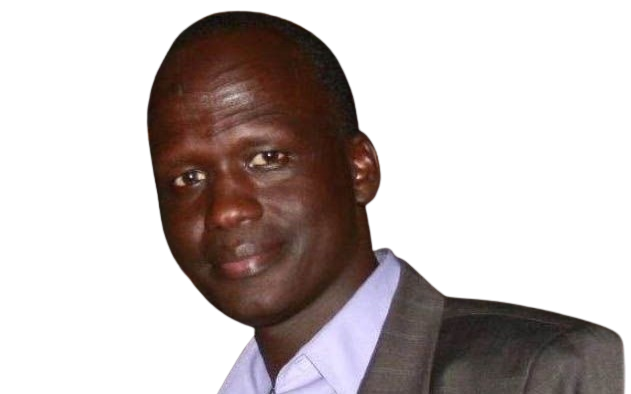
Duop Chak Wuol is an analyst, critical writer, and former editor-in-chief of the South Sudan News Agency. He is a graduate of the University of Colorado; his work focuses on geopolitics, security, and social issues in South Sudan and the broader East African region. His writing has appeared in leading regional and international media outlets. He can be reached at duop282@gmail.com.
The views expressed in ‘opinion’ articles published by Radio Tamazuj are solely those of the writer. The veracity of any claims made is the responsibility of the author, not Radio Tamazuj.

 and then