



International law is often sold as protection: a shield, a brake on brute force, a courtroom above the battlefield. But for many poorer, smaller, and developing countries, it offered something even more precious than protection. It offered dignity.
Dignity is the difference between being addressed and being erased, between being negotiated with and being notified, between being treated as a state and being treated as a nuisance. When you do not have aircraft carriers, reserve currencies, or corporations that can move markets, dignity used to be the one currency you can still spend without permission.
For decades, international law supplied that currency. It created a moral and procedural architecture that allowed weaker states to exist in a world built for stronger ones. It did not erase inequality or neutralise coercion. It did not reliably stop wars, coups, annexations, or proxy conflicts. Yet it provided a shared language in which the weak could speak as legal equals, even when they were not equals in material power.
In that sense, international law functioned like the rules of the road that turn a jungle into a street. Not a safe street, not a street without thieves, but a street with signs, lights, and at least the idea of order. Like traffic rules in a crowded city, those rules did not prevent every crash. They did something else. They made crashing into others costlier. They made excuses harder. They gave bystanders a vocabulary to shout, “Stop.”
Consider what statehood and sovereignty really are. You cannot hold sovereignty in your hand or store it in a vault. Borders are lines on maps made real by recognition, agreement, and the collective habit of treating them as binding. Territorial integrity, aggression, unlawful use of force, crimes against peace: these are not mountains and rivers. They are human creations, built out of words, votes, signatures, and vows. International law is the architecture that keeps these invisible buildings standing.
That is why it mattered to countries with little else. When a small state stood at the United Nations and invoked the Charter, it was not simply reciting text. It was asserting a civilised premise: that power must offer reasons, not merely appetites. That even the mighty must explain themselves. That some lines, if crossed, deserve global attention and global judgement.
Even when enforcement was weak, the rules produced a measure of predictability. A weaker state could plan, bargain, and align because there was at least a shared reference point, a baseline expectation that certain acts should shock the conscience, even if shock did not always translate into action.
And for the rich and powerful, international law offered something too. It provided the language for action, the decency for reaction, and the civility needed to deal with weaker states without openly confessing contempt. It allowed major powers to drape interest in the cloth of principle, to frame interventions as protection, sanctions as accountability, and diplomacy as responsibility. The system was never pure. It was often hypocritical. Yet hypocrisy, for all its ugliness, is still a tribute to standards. When the powerful feel compelled to justify themselves, they admit that naked power is not enough.
International law was not a magic cloak. It was a thin blanket, sometimes too thin to stop the cold. Vetoes froze action. Double standards were not uncommon. Some violations were condemned with thunder, others with murmurs, and many with silence. Yet even then, the existence of the rules created friction against violence. A law that cannot always punish can still shame. A standard that cannot always stop the blow can still make the blow harder to celebrate.
It also generated solidarity, the quiet sense that somewhere, someone would still name the wrong. A small island state could speak. A landlocked country could object. A regional organisation could issue a communiqué. A court could write a judgment. A rapporteur could publish a report. These acts did not always stop the harm, but they prevented the harm from becoming normal.
For those living inside fragile states, the “abstract” was not abstract at all. A passport was not just paper. It was a piece of the world’s recognition. A border was not just a line. It was the edge of a home. A seat at the UN was not just a chair. It was a lifeline, a thin wire connecting vulnerability to voice.
International law did not give the weak power. It gave the weak posture. It let them stand upright in a world that constantly tries to bend them. That posture, that dignity, is what is being lost.
International law isn’t invincible; international law is facing a new challenge!
It is not new that powerful states ignore international law. It is not new that enforcement often follows interest. It is not new that the same act is condemned in one theatre and excused in another. The script has long been uneven.
What is new is the rupture in the script itself. What is new is not merely silence in the face of violations, but speech that sides with the violator. Not just indifference, but endorsement. Not only the failure to call out wrongdoing, but the active condemnation of those who are wronged.
This shift matters because it breaks more than rules. It breaks the moral economy that made the rules worth invoking in the first place. When the powerful violate a norm, there is still, at minimum, a contest over meaning: argument, discomfort, the residual hope that reputation and shame still restrain behaviour. But when influential actors speak in favour of the violator and against the victim, they damage the last refuge of the weak: moral clarity backed by shared language. They take away not only enforcement, but recognition. Not only protection, but dignity.
International law is not just a set of constraints. It is also a factory of precedents. Every time a powerful actor reframes a breach as legitimate, it creates tools that others can use. Today’s excuse becomes tomorrow’s doctrine. Today’s “special case” becomes next decade’s normal.
That is how the world gradually legitimises the behaviour of despots. A ruler who wants to crush dissent, invade a neighbour, starve a region, or expel a population does not need to invent a justification from scratch. He can borrow from the shelf of precedents built by more influential states. He can point to yesterday’s speeches and say: you did it first. You called it lawful. You called it necessary. You called it self-defence. You called it stabilisation. You called it an internal matter.
The tragedy is that precedent does not remain in the hands of the powerful. It travels. It spreads. It becomes a template for abuse everywhere. And when the states and institutions that used to speak out later try to return to the language of principle, they will be challenged by their own record. Their renewed activism will be met with raised eyebrows and hard archives. Not because the rules are wrong, but because credibility will have been shattered.
This is how norms die: not only in dramatic collapses, but in a slow erosion of confidence. People stop believing that the rules mean what they say. They stop expecting consistency. They stop investing hope in institutions that appear to change their moral vocabulary depending on who is accused or who pays the largest portion of their budget. Silence is damaging, but endorsement is precedent-setting. Silence says, “We will not help.” Endorsement says, “This is acceptable.” Silence starves solidarity. Endorsement poisons it.
We have good examples in how easily brutality is wrapped in euphemism. Bombs that kill families become “collateral damage.” Invasions become “special operations.” Torture becomes “enhanced interrogation.” Mass surveillance becomes “security measures.” Hunger created by blockade becomes “pressure.” Diplomatic abandonment becomes “strategic ambiguity.” When language is softened, conscience is dulled. When conscience is dulled, law becomes decoration.
The consequence is not theoretical. When the rules become permissions, the abstractions of international life become fragile. Statehood becomes conditional. Sovereignty becomes negotiable. Borders become bargaining chips. Recognition turns into a reward that can be granted or withheld, rather than a principle that can be relied upon.
For ordinary people, this fragility shows up in everyday ways: passports that no longer open doors, trade routes that close, sanctions that spiral into hunger, refugee flows that become permanent, citizenship that dissolves into sorting, homes that become temporary. The weakening of international law does not produce a clean return to “the way the world really is.” It produces a more chaotic world, where power is exercised more openly and more often, and where the weak have fewer tools to resist.
And cynicism is contagious. Once people learn that rules are performative, they stop respecting rules altogether. They look for patrons, weapons, and survival strategies. They conclude that the only meaningful law is force. That is the path toward a world where cruelty starts to look rational.
Even in the age of speed and pride, we need international law
There is a fashionable claim that international law is outdated, a relic of 1945, a slow machine in a fast world. Multipolar competition, technological acceleration, and information warfare, the argument goes, have made the old system irrelevant.
That claim sounds reasonable but dangerously shallow.
The human nature that produced the UN Charter has not changed. Pride still burns. Fear still spreads. Ambition still hungers. Revenge still seduces. The impulse to dominate still wakes up each morning, shaves, and puts on a suit. If anything, technology amplifies these impulses. It allows harm to be inflicted faster, farther, and with fewer consequences. It makes propaganda cheaper, surveillance easier, outrage instant. It shrinks deliberation. It shrinks empathy.
In such a world, rules are not less necessary. They are more necessary.
The value of international law was never that it made the world virtuous. Its value was that it created friction against our worst instincts. It made aggression harder to sell. It gave the weak a vocabulary for resistance. It made it possible to form coalitions across regions. It gave citizens, journalists, lawyers, and activists a standard against which to judge power. Yes, the system is slow and messy. It is often compromised by bargaining and selective enforcement. But the alternative is not speed and clarity. The alternative is speed and violence.
Some argue that playing by the rules disadvantages those who obey, especially when others do not. In the short term, that can look true. But it ignores the long game of legitimacy. Legitimacy outlives bravado. Consistency outlasts convenience. Rules, even bent rules, still limit the shape of chaos.
The powerful may think law is a leash. The weak know law can be a ladder. It is a way to climb from desperation to negotiation, from pleading to argument, from silence to standing.
That is why smaller and developing countries should be at the forefront of developing and defending international law and build strong solidarity around it. When one weak state speaks alone, it can be dismissed. When many speak together, it becomes harder to ignore.
International institutions, too, must recognise the stakes. Neutrality is not the same as fairness. Balance is not the same as truth. Institutions lose legitimacy when they bend language to accommodate power. Their credibility depends on the ability to say clearly what the rules require and who has broken them, even when doing so is politically uncomfortable.
Citizens everywhere should also understand that international law is not only for diplomats. Food security, migration, trade, climate resilience, cyber stability, and public health all depend on predictable cooperation. When international law weakens, the costs do not stay abroad. Instability travels. Cynicism crosses oceans. Contempt, once legitimised, does not keep passports.
Least we forget
There is an uncomfortable point beneath all of this. International law is not weakening because it was perfect and then failed. It is weakening because some powerful actors have decided that dignity for the weak is optional, that civility is expendable, and that the language of restraint is a handicap. That approach may look efficient today, but it will not look efficient when the precedent is used by others, when borders become bargaining chips, when sovereignty is treated as a privilege rather than a principle, when exceptions swallow the rule.
International law, at its best, did not eliminate inequality. It softened it. It gave the weak a way to stand upright. It gave the powerful a way to act with restraint, or at least to blush when they did not. It gave the world a common baseline. We do not need law to serve power. We need power to serve law. The world does not need fewer rules. It needs more courage to apply them.
Because in a world sliding toward brute force, even something imperfect is better than nothing at all.
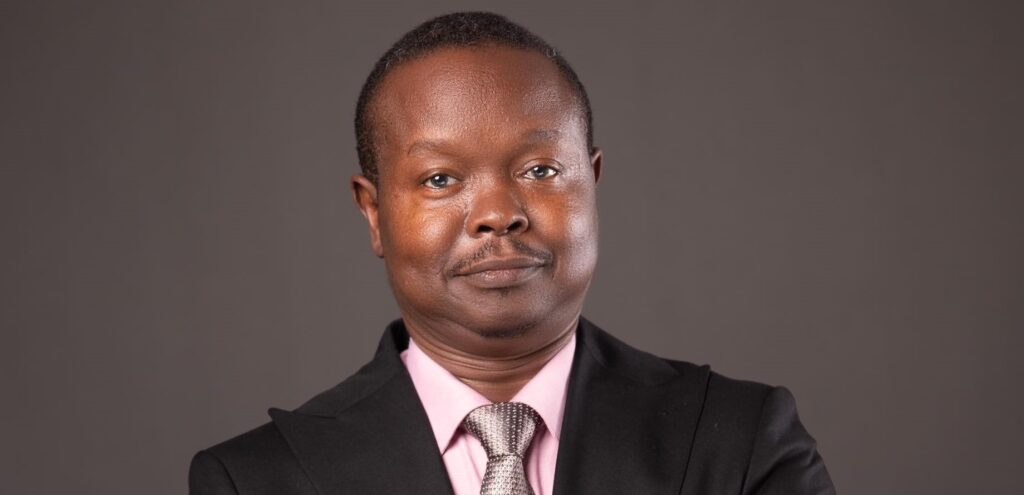
The writer, Dr. Remember Miamingi, is a South Sudanese expert in governance and human rights, as well as a political commentator. He can be contacted via email at remember.miamingi@gmail.com
The views expressed in ‘opinion’ articles published by Radio Tamazuj are solely those of the writer. The veracity of any claims made is the responsibility of the author, not Radio Tamazuj.

 and then