



The words of Equity Group Holdings CEO Dr. James Mwangi capture the scale of ambition Africa now requires: “Dream big because Africa’s challenges demand bold solutions. Addressing them will require visionary thinkers, courageous leaders, and innovators who are willing to imagine possibilities beyond what exists today. Let your dreams be as ambitious as the future you seek to build.”
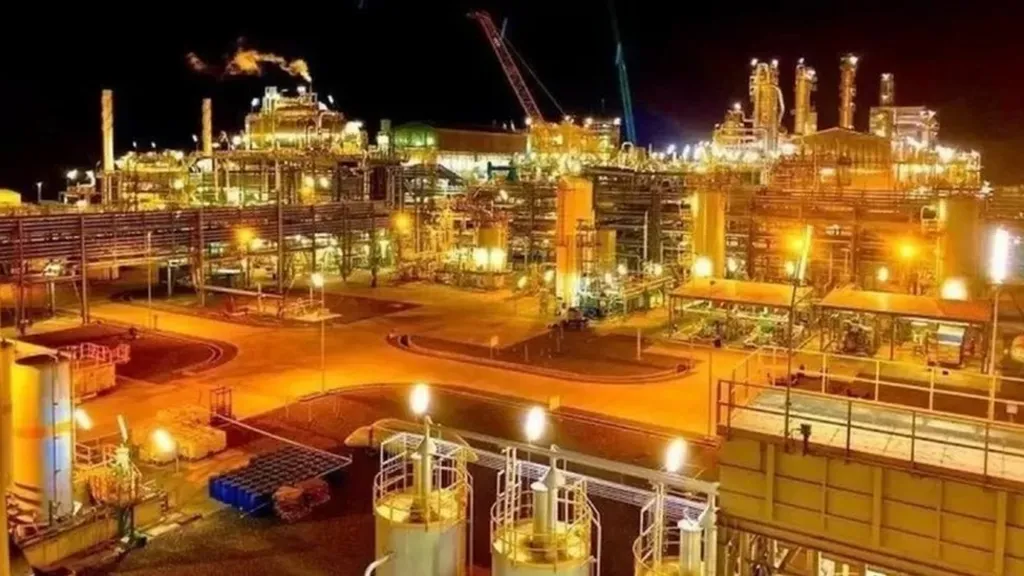
For me, that quote fits Aliko Dangote, a Nigerian industrialist and Africa’s wealthiest person, with an estimated net worth between $30 billion and $36.5 billion. He has built major interests in cement, petrochemicals, food commodities, logistics, energy, automotive, and fertilizer manufacturing. His most visible bet so far is the Dangote Petroleum Refinery and Petrochemicals (frequently referred to as the Dangote Petroleum Refinery) in Lagos, Nigeria. Today, it supplies over 70 percent of Nigeria’s domestic market and exports refined products to other African countries such as Togo, Cameroon, Côte d’Ivoire, Angola, Tanzania, and Ghana has become increasingly visible in global fuel trade, including aviation fuel exports to the United State and recently overtook American suppliers to become Europe’s largest source of jet fuel, a remarkable shift in global energy flows.
The Lamu Oil Refinery
The Dangote Group has now set its sights on East Africa. Between April and May 2026, he engaged with the presidents of Kenya, Uganda, and Tanzania, the founding members of the East African Community (EAC). Kenya’s President H.E. William Ruto later revealed that they discussed severe pushback from entrenched international fuel cartels and global oil suppliers who want Africa to remain dependent on imported Middle Eastern oil. President Ruto vowed to do everything in his power to fend off the cartels in order to secure long-term regional energy independence.
Dangote’s initial plan was to build an oil refinery in Tanga, Tanzania. However, He ultimately chose Lamu in Kenya. His reasons were: Kenya’s larger economy, higher domestic fuel consumption, deep‑water port advantages, and faster bureaucratic processes.
The Lamu project could be a regional platform serving East Africa and wider African markets. It is a continental play that could redefine East Africa’s energy security.
The timing matters: growing geopolitical tensions, the US-Iran War, disruptions around the Strait of Hormuz, and insecurity along the Red Sea corridor have exposed how vulnerable fuel-importing economies can be. For East African countries that still rely heavily on imported refined petroleum products, a major regional refinery could reduce exposure to distant supply shocks, shorten supply chains, and improve stock security.
Beyond energy security, if completed by 2030, the refinery could also create thousands of jobs across construction, engineering, logistics, transport, manufacturing, and related services. It could lower import bills, support currency stability, reduce demand for foreign exchange, and help East Africa capture more value from African crude instead of exporting raw resources while importing expensive finished products.
The Tanga countermove: Tanzania and Uganda enter the arena.
Dangote’s shift from Tanga to Lamu triggered a swift geopolitical response. On 6 August 2026, Tanzania and Uganda announced a partnership with Vitol Bahrain to develop the Tanga Regional Energy Hub. The project is expected to include refining, storage, logistics, trading, and distribution infrastructure. The linked East African Crude Oil Pipeline from Uganda’s Hoima oil field to Tanzania’s coast at Tanga is central to Uganda’s petroleum future.
Uganda is preparing to become an oil-producing state, with expected production of more than 200,000 barrels per day. As a landlocked country, Uganda needs reliable access to the ocean. Tanzania, in turn, sees Tanga as a vehicle for industrialization, job creation, foreign direct investment, port revenue, transit tariffs, corporate taxes, and local fuel distribution networks.
At the same time, it positions Tanzania as a rival energy gateway, challenging Kenya’s long-standing dominance in regional logistics and fuel distribution. Some analysts have already described the emerging contest as a “war of refineries.”
What this situation means for South Sudan
For South Sudan, East Africa’s largest crude oil producer, the implications are especially important. South Sudan is landlocked, and its oil travels through pipelines via Sudan to reach the Red Sea. The protracted war between the Sudanese Armed Forces and the Rapid Support Forces has repeatedly exposed the risks of that dependence, with insecurity threatening pipelines, processing hubs, and export continuity.
Such a situation raises difficult but unavoidable questions. Should South Sudan explore a new pipeline southward to Lamu through the LAPSSET corridor? Should it consider a route toward Tanga through Uganda and the EACOP infrastructure? Should it examine a Djibouti option, even though Djibouti, like Port Sudan, does not currently offer refining capacity? Or should rail-linked oil transport be part of a long-term diversification strategy?
There are more questions than answers, and each option carries financial, security, environmental, and diplomatic implications. But one lesson is already clear: South Sudan needs export-route diversification. The rise of Lamu and Tanga as competing refinery and energy corridors should push Juba to think strategically about how to protect its crude exports, expand market access, and capture more value from its resources, but that’s a discussion for another day.
In conclusion,East Africa and the wider region need both the Dangote Lamu oil refinery and the proposed Tanga energy hub. At peak capacity, the two projects could refine well over 1.7 million barrels of crude oil per day, transform the region’s petroleum sector, reduce reliance on distant suppliers, support industrialization, and strengthen Africa’s bargaining power in global trade.
The projects also align with the African Union’s Agenda 2063 and the African Continental Free Trade Area (AFCFTA) by promoting self-reliance, value addition, and intra-African trade. These are not just national projects; they are continental building blocks for Africa’s long-term economic transformation.
The writer is a diplomat at South Sudan’s Ministry of Foreign Affairs and International Cooperation and was a Fellow in the Office of the President of the UN General Assembly in 2024. He can be reached via Ladolobor@yahoo.com.
The views expressed in ‘opinion’ articles published by Radio Tamazuj are solely those of the writer. The veracity of any claims made is the responsibility of the author, not Radio Tamazuj.

 and then