



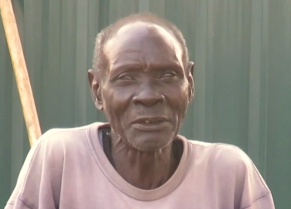
Our family—the family of the late Elder James Ojulu Okony Otin—announced his death with deep sorrow, yet with gratitude to God for a life well lived. Elder Ojulu, a veteran artist, broadcaster, church elder, and a former senior forestry officer, died in the capital city of Juba on Monday, February 23, 2026, after an illness.
Born to Mr. Okony and Mrs. Alok Omot Anur Lero, James (Ojulu) entered this world as a member of the esteemed Akobo Anyuak chiefdom. This position carried significant responsibility and honor.
Ojulu’s early years were marked by his community’s rich cultural heritage, instilling in him a profound appreciation for his roots. His father, Okony, was not only a revered artist but also a veteran of the colonial-era liberation war.
In the 1940s, as a spirited youth, Okony joined the ranks of the Upper Nile Scouts, a force composed mainly of around 500 Anyuak men, led by the ubiquitous anthropologist and Africanist Edward Evan Evans-Pritchard. Their mission was to liberate Gambella from Italian occupation. In 1945, years after Gambella was liberated, James Ojulu was born, the second in line after his brother Omot (Adiere).He also hada twin, a brother (Okello), and another sibling, Nyojalo—all deceased except for Okello.
As the son of a respected village elder, James Ojulu spent his early childhood hunting and tending to cattle before enrolling in a Christian missionary school in Akobo District (now Akobo County, Jonglei State) in 1954-55. During his formative years, James gained several honorific titles, such as “Abuuy” and “Borcha,” in recognition of his influence. The nickname Borcha, an Italian term for a pouch used for carrying ammunition, was bestowed upon him by his father.
Early education
In 1954-55, James Ojulu began his elementary education at the Akobo missionary school. At that time, formal education was often viewed with skepticism by his Anyuak community, as many village elders preferred to keep their children out of schools to avoid foreign influence. Young Ojulu was not an exception, and his education faced interruptions.
He would later enroll in Bible studies in the 1970s, during which he gained both biblical knowledge and literacy.
Public service and community empowerment
James Ojulu devoted his life to public service and community empowerment. His life was a testament to quiet service and cultural pride. In 1972, following the Addis Ababa Agreement, he joined the government as a forestry and agricultural officer, where his connection to the land and his commitment to environmental conservation laid the foundation for a life of stewardship.
Since the 1960s, his life has been anchored in Christian faith. As a devoted Church Elder at the Presbyterian Church of South Sudan (PCOSS), he was a spiritual father to many. He served the congregation with humility, wisdom, and a deep, abiding faith, counseling the young and supporting the old.
Beyond the church service, particularly during the 1960s to 1975, his heart always sang the songs of his ancestors. As a celebrated traditional Anyuak singer, he was a tireless guardian of his culture. He used his gift to preserve the stories, history, and values of the Anyuak people, ensuring they would echo for generations to come. His songs were a bridge between the past and the future.
In 2018, his eloquence and command of language soon led him to a new platform. As a veteran broadcaster, his voice became a familiar and trusted presence in homes across Jonglei State. For about a decade, he informed the nation, always with professionalism, integrity, and a calm that reassured listeners in times of both joy and uncertainty. As his bones and flesh are laid to rest, we proudly say: “Your voice has fallen silent on the airwaves, but it will forever sing in our hearts.”
Summary of work experience
1959 – 1968: Worked as a businessman, supplying consumables from Ethiopia’s Gambella region across the border to Akobo.
1950s – 1975: As a member of the Dai-Kaa age set group, he composed several praise, dance, and self-defense songs for his community. He actively participated in various cultural festivals during this time, including an event in Juba in 1973 that celebrated the Addis Ababa Agreement.
1967: Temporarily joined the Anyanya guerrilla movement before resigning due to familial responsibilities.
1960s: Employed by the government to assist with dredging and clearing aquatic plants from the Sobat and Nile Rivers up to Obel/Ashab el Nil.
1972: Following the Addis Ababa Agreement, he formally joined the government as a forestry and agricultural officer, later rising to the senior position of inspector.
1985 – 1992: Deployed to Renk as a senior forestry officer.
1992: Deployed as a senior forestry officer in Kadugli, Kordofan State, Sudan.
1993 – 2000: Reassigned as the forestry director in Bentiu, Unity State.
2001 – 2026: Deployed to Jonglei State, where he held various positions in Bor and his hometown of Akobo.
2018 – 2026: Worked for Radio Jonglei 95.9 FM as a presenter of the Anyuak program “Powa,” served as a radio evangelist, and was a board member.
2020 – 2026: Ordained as a deacon and served as an elder in charge of the Presbyterian Church of South Sudan (PCOSS) Bor congregation.
James Ojulu Okony was a devoted father and grandfather, married to Akway Cham Owar since 1975. He is survived by his children: Anyango, Owety, Nyochway, and Manas.
He was preceded in death by his children Achan Ojulu, Owar Ojulu, Ojo Ojulu, and Omot Ojulu.
James Ojulu fought a good fight, he finished the race, and he kept the faith. After a period of illness, he now rests in the eternal peace of his Lord and Savior.
“The LORD gave, and the LORD has taken away; blessed be the name of the LORD.” JOB 1: 21

 and then