



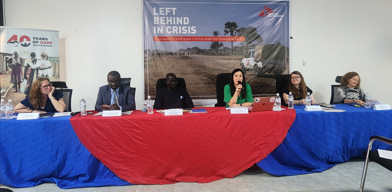
South Sudan’s health system is under immense pressure as escalating conflict, disease outbreaks, and limited resources leave hundreds of thousands without access to basic care, Médecins Sans Frontières (MSF) said on Tuesday.
People in South Sudan are facing a deteriorating humanitarian situation, while at the same time international interest and support continue to decline, says a new Médecins Sans Frontières (MSF) report, Left Behind in Crisis: Escalating Violence and Healthcare Collapse in South Sudan.
Dr. Sigrid Lamberg, MSF’s Head of Field Operations in South Sudan, speaking during the launch of the report in Juba, revealed that 2025 has been a particularly turbulent year.
“Violence is on the rise, attacks on hospitals are increasing, and multiple crises are hitting communities at the same time,” Lamberg said. “Our teams are seeing a health system stretched to its limits, with very few resources available for those in need.”
She highlighted MSF’s long-standing presence in the country, running 14 secondary healthcare projects, including hospitals, with a budget of $119 million in 2024. Despite this, she stressed, even MSF cannot solve the broader gaps in South Sudan’s health system.
The report cites outbreaks of cholera affecting over 80,000 people, floods across multiple regions, and attacks on health facilities, including eight incidents targeting MSF hospitals this year alone. Two hospitals—Ulang and Old Fangak—were forced to close, leaving roughly 400,000 people without access to care.
“The health system is not keeping up with the needs,” Lamberg said. “When people are forced to flee, they lose access to essential services, and there are no health workers or medicines available in these areas. Immediate support and safe access for health staff are urgently needed.”
The MSF official also criticised low government investment in health.
“Only 1.3 percent of the national budget goes to healthcare,” she said. “This is far below what is needed, and the population suffers as a result. Both donors and the government must step up to prevent further loss of life.”
MSF’s new report comes amid calls for increased international support and greater government commitment to ensure that hospitals and clinics can reach vulnerable populations, especially in conflict-affected regions.
On his part, Dr. Humphrey Karamagi, WHO’s Country Representative in South Sudan, said the Health Sector Transformation Project (HSTP) is now 18 months into its rollout, aiming to move the country’s health system from a purely humanitarian model to a more development-focused approach.
He noted that while the project aspires to improve equity, efficiency, and effectiveness, challenges such as ongoing conflict, population displacement, disease outbreaks, and funding shortfalls have limited its impact.
“In some hospitals, you see the MSF wing running smoothly, and the HSTP side struggling. It’s a work in progress,” he said, adding that despite setbacks, WHO remains committed to supporting the country’s health transformation.
Meanwhile, Teri Ann Bryans, Head of Access at WFP South Sudan, said humanitarian operations in the country faced unprecedented challenges in 2025 due to escalating conflict, shifting frontlines, and difficult terrain.
“Conflict is happening all year round now, with new areas of control and influence, airstrikes, and ground offensives making it harder than ever to reach people in need,” she said.
Bryans highlighted that access constraints are compounded by funding shortfalls and said overall humanitarian funding has fallen from around $700 million to $280 million, leaving essential health, nutrition, and food programs severely underfunded.
“Prioritization is now unavoidable. We must focus on life-saving activities, even if that means some preventive or protective services may receive less attention,” she said. “It’s a delicate balance, but we are working to ensure the humanitarian system can still respond to the most urgent needs.”
For her part, Silvia Moriana, Technical Assistant at the European Union representing donors in South Sudan, said renewed international prioritization is urgently needed to address the country’s health crisis.
“South Sudan is largely absent from international media, and the situation on the ground is worsening. We need the world to refocus attention and resources here,” she said. “Healthcare workers are the heroes showing up every day despite not being paid for years. But attacks on hospitals and clinics must stop, and all armed actors must guarantee safe access for staff and patients.”
She also called for strengthening the Health Sector Transformation Project and other health system initiatives, stressing that support and coordination among donors, government, and humanitarian actors are critical to ensure medicines and services reach the most vulnerable.

 and then