



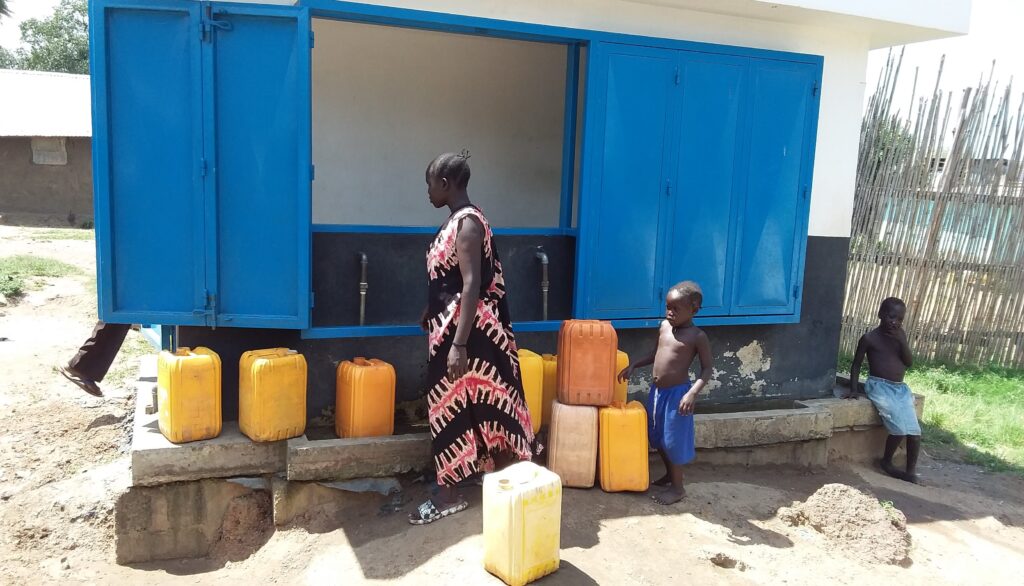
On the occasion of World Water Day, Germany reaffirmed its commitment to improving access to safe drinking water and sanitation in South Sudan, a country facing multiple humanitarian crises and developmental challenges.
World Water Day is an annual United Nations observance day held on 22 March that highlights the importance of fresh water. The day is used to advocate for the sustainable management of freshwater resources.
A press release on Sunday said that through Deutsche Gesellschaft für Internationale Zusammenarbeit (GIZ), Germany supports comprehensive, sustainable water supply and Sanitation interventions that aim to improve public health, strengthen local institutions, and enhance community resilience.
“The support focuses on urban and rural water infrastructure, including the rehabilitation and expansion of water supply systems in cities such as Juba, Torit, Yei, and Yambio, and the development of small-scale, community-managed water facilities in rural areas in Yambio, Nzara, and Aweil County,” the statement reads in part. “These interventions provide reliable access to clean water for hundreds of thousands of people, including internally displaced people and vulnerable populations.”
The statement said a central feature of GIZ’s approach is institutional strengthening. GIZ works closely with national and local water authorities to enhance governance, operation, and maintenance of water services. This includes capacity-building for staff, technical support for utilities, and guidance for community-based management of water points.
“Over the last decade, GIZ has supported the Don Bosco Vocational Training Centre, which provides essential technical and vocational education (TVET) to youth and graduates hundreds of students each year,” the statement said. “The Centre provides specialized technical training, including programs in waterworks, equipping graduates with the skills needed to address the shortage of qualified personnel in South Sudan’s water sector.”
According to GIZ, this long-term investment has helped build local capacity and strengthened the country’s ability to operate and maintain water infrastructure effectively.
“The approach equips local institutions to deliver long-term, sustainable services, while empowering communities and strengthening community ownership and resilience,” the statement explained. “Furthermore, this ensures that water access supports livelihoods, nutrition, and food security while contributing to local economic development.”
Just at the beginning of March 2026, GIZ’s Food and Nutrition Security and Natural Resources Management of (FONA) project handed over four new boreholes to communities in Northern Bahr el Ghazal. Earlier, the project also drilled another 7 boreholes and rehabilitated an additional 11 boreholes in Western Equatoria to help improve livelihoods, food and nutrition security, health, and resilience of the local population.
“This marks an important step toward a safer, healthier future. Through this project, communities were trained in the development of water catchment management plans, hygiene, sanitation, and integrated water resource management, which helped reduce disaster risk, waterborne diseases, improve public health outcomes, and agricultural productivity,” the statement reads. “Further improvements were realized through the distribution of irrigation pumps that assisted farmers in farming activities and increased farm productivity. Germany supports a wide range of programmes in the water sector through GIZ and KfW, implemented by UNICEF, WFP, ICRC, and other humanitarian and development partners.”
Over the last years Germany has supported several programmes in the Water Sector in South Sudan, through its implementing organisations GIZ and KFW, in close consultation with the local authorities and in collaboration with other partners, such as UNICEF and ICRC

 and then