



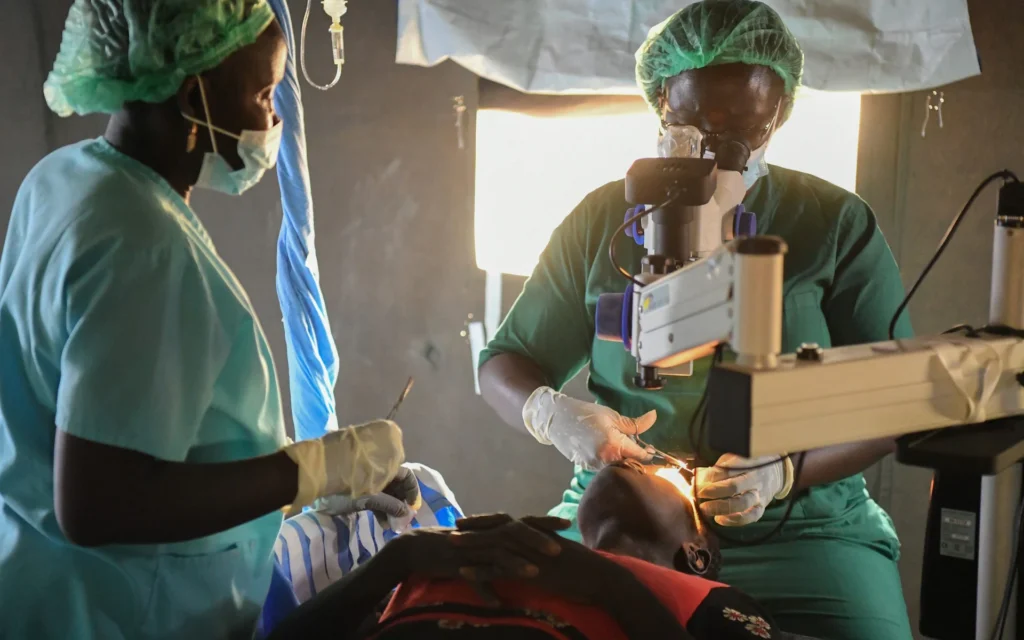
Cataract removal surgeries have begun in Adré, eastern Chad, as part of a medical camp targeting Sudanese refugees and host communities.
The initiative, organized in collaboration with Al-Jawda Eye Clinic, the For You Initiative and Ihya Charitable Foundation, aims to provide 150 free surgical procedures.
Nasr Arabi Abdelrahman, administrative director of Al-Jawda Eye Clinic, said the camp had attracted a large number of patients, with more than 800 people registering for its services. Patients underwent medical examinations and screening to identify those requiring surgical intervention.
“The procedures target people suffering from cataracts, a condition that impairs vision, and the camp forms part of broader efforts to expand access to healthcare for Sudanese refugees in eastern Chad,” he stated.
In a statement, the For You Initiative said more than 315 refugees and members of the host community had undergone medical consultations and examinations over the past week. Following the screening process, 150 people were identified as requiring cataract removal surgery.
The statement added that the operations began on Saturday morning at Al-Jawda Eye Clinic in Adré. As of the time the statement was issued, 42 successful surgeries had been performed, with procedures expected to continue throughout the week to meet the target.
Speaking about their experiences, one female beneficiary who had undergone surgery said all procedures and treatment had been provided free of charge.
“We express gratitude to the organizers of the camp and the organizations supporting the initiative,” she said.
Meanwhile, a patient’s relative said he had travelled from an area east of El Geneina, in Sudan’s West Darfur State, to Adré to arrange surgery for a family member.
“The process was straightforward, and the patient received treatment and medication free of charge,” he said.
The For You Initiative said the surgeries represent one phase of a broader humanitarian effort to provide eye care services to Sudanese refugees and host communities in eastern Chad. It added that further medical interventions were planned for 2027, with the aim of reaching more people in need across refugee camps and host communities.

 and then