



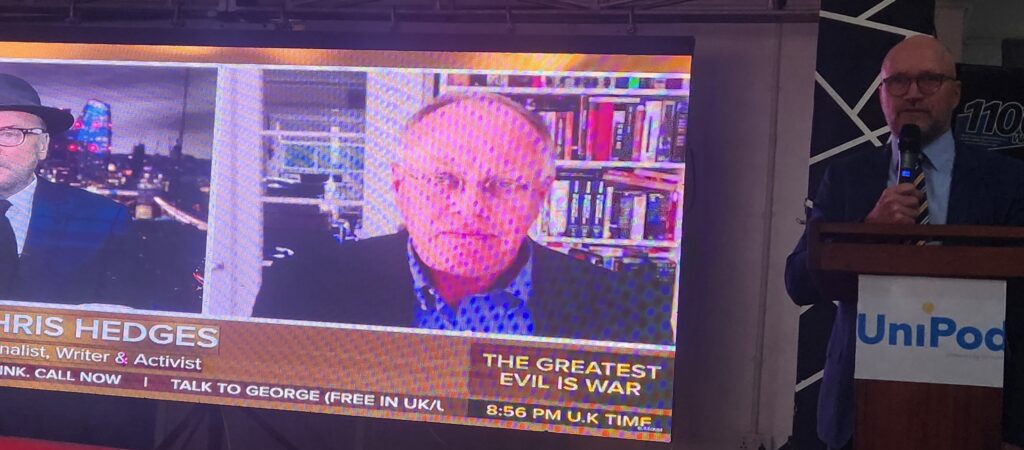
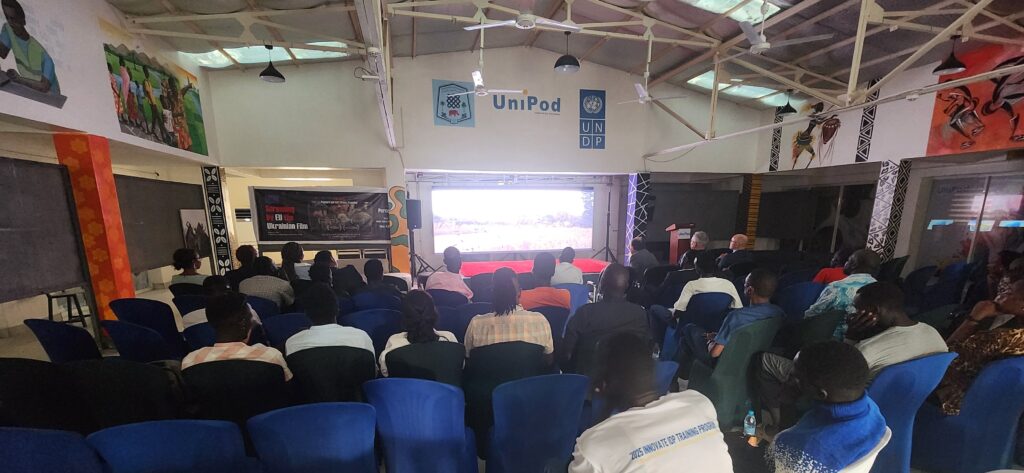
Diplomats, journalists, academics and civil society representatives gathered in Juba on Monday for a screening of the Ukrainian film Porcelain, hosted by the European Union Delegation to mark four years since Russia’s full-scale invasion of Ukraine.
The event, held at the University of Juba, combined culture and discussion, using the film’s portrayal of artists persevering during wartime to reflect on conflict, resilience and peace in both Ukraine and South Sudan.
Global conflict, local reflection
European Union Ambassador Pelle Enarsson said the screening was meant to highlight the urgency of ending war.
“The people in Ukraine can’t wait … they can’t wait for peace,” he said, adding that the film’s focus on resilience was chosen because it would resonate in South Sudan, a country emerging from years of civil war.
Russia launched its invasion of Ukraine in February 2022, triggering Europe’s largest conflict since World War II and causing widespread destruction, displacement and economic strain.
For Prof. John Apurout Akec, vice chancellor of the University of Juba, the film’s message extended beyond Europe.
“Whenever you watch stories of war, it brings out the best in the human spirit more than the horrors of war,” he said, drawing parallels between Ukraine’s experience and the economic and social hardships facing many South Sudanese.
Calls for dialogue
British Ambassador David Ashley said the war in Ukraine demonstrates how conflict destroys lives, hopes and opportunities, describing the devastation as “such a waste.” He said it was important to amplify the voices of those affected by war.
Dutch Ambassador Paul Tholen said the film highlighted shared human aspirations across divides. “People are very much wanting the same things … and we need those narratives to make people realise what they share,” he said.
George Aggrey Owino, chairperson of the Reconstituted Joint Monitoring and Evaluation Commission (RJMEC), said the discussion underscored the need for dialogue in resolving conflicts.
“Without dialogue, you cannot stop any war … we must think about dialogue, dialogue, dialogue,” he said.
Media’s role
Daniel Majak of the Union of Journalists of South Sudan said storytelling can help prevent conflict and promote accountability. He called for support for journalists to document the impact of crises on ordinary citizens.
South Sudan, the world’s youngest nation, has faced recurring political instability and economic hardship since gaining independence in 2011.
Through a film set thousands of miles away, participants in Juba reflected on their own country’s challenges, emphasizing resilience, empathy and the pursuit of lasting peace.

 and then