



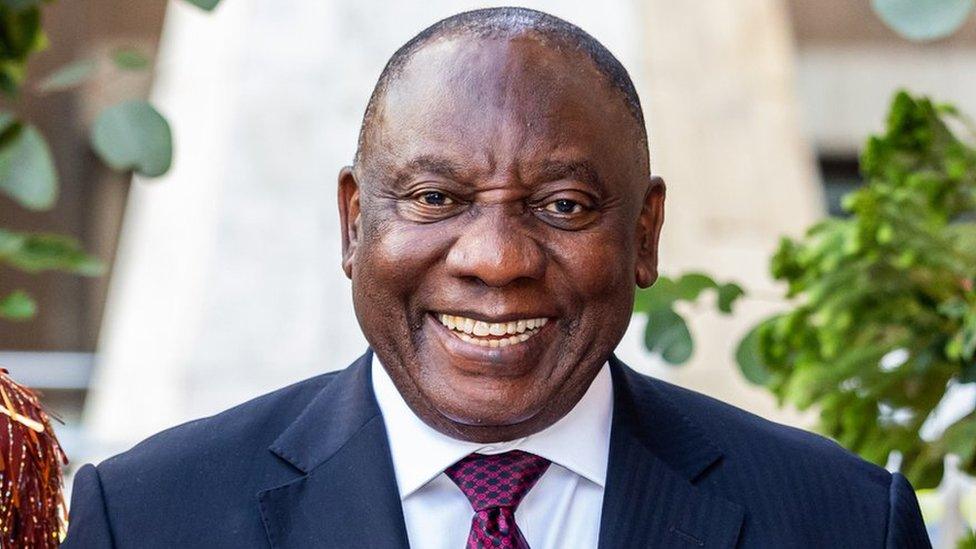
South Africa’s President Cyril Ramaphosa has warned that elections alone will not guarantee peace and democracy in South Sudan, saying a credible vote must be backed by an inclusive political process, security and functioning institutions.
Ramaphosa made the remarks on Tuesday as he opened a virtual meeting of the African Union’s High-Level Ad Hoc Committee on South Sudan, known as the C5, with members of the Intergovernmental Authority on Development (IGAD).
South Africa chairs the C5, which comprises South Africa, Algeria, Chad, Nigeria and Rwanda. The committee supports efforts to advance peace and the implementation of South Sudan’s 2018 peace agreement.
South Sudan is due to hold general elections on Dec. 22, its first national vote since gaining independence in 2011.
“We know that elections on their own are not a significant or sufficient guarantor of peace and democracy,” Ramaphosa said.
Election conditions
He said credible elections must be preceded and accompanied by a genuine and inclusive political process, security arrangements and protection for electoral staff, civilians and the electoral process.
“There must be a clear legal framework, adequate financing, and capable institutional as well as operational capacity,” he said.
Ramaphosa urged South Sudan’s political leaders to address outstanding shortcomings ahead of the election and continue dialogue despite their differences.
“Inclusive dialogue is a vital guarantor of the future of South Sudan and its people,” he said.
Ramaphosa said regional and continental partners are ready to support South Sudan, but urged its leaders to take the necessary steps to ensure that the election contributes to lasting peace and stability.
The remarks came after South Sudan amended its National Elections Act on Sept. 21 and dissolved its transitional government the following day, replacing it with a caretaker administration as preparations for the December vote continued.
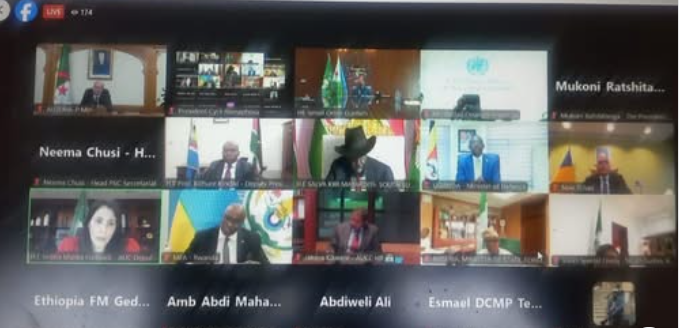
Ambassador Selma Malika Haddadi, the Deputy Chairperson of the African Union Commission (AUC), said at the meeting that South Sudan was entering a “decisive stage” of its political transition and stressed the need to preserve the ceasefire, strengthen political confidence through inclusive dialogue and create conditions for a peaceful and credible election.
“The forthcoming election is crucial to the security and political stability of South Sudan,” she said.
Haddadi further said AU support for the electoral process in South Sudan would remain anchored in the implementation of the 2018 peace agreement, which it described as the principal framework for completing South Sudan’s political transition.
Regional warnings
IGAD Chair and Djibouti’s President Ismail Omar Guelleh said recent developments in South Sudan had highlighted the fragility of the situation, with violence continuing in several states and increasing displacement and cross-border movements.
“Political decisions taken in the aftermath of these events have generated concern among stakeholders,” Guelleh said, adding that uncertainty over the sequencing of the transition risked undermining confidence in the peace process.
Guelleh called for a “clear and definitive roadmap” for the transition and reiterated IGAD’s call for elections to be held in December.
“Neither South Sudan nor the region of the continent can afford another delay,” he said.
The AU and IGAD have continued to press South Sudan’s leaders to maintain the peace process and create conditions for a credible electoral transition.

 and then