



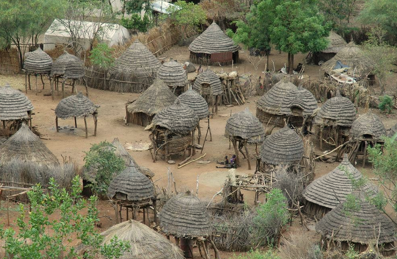
Hundreds of people in Kauto Administrative Area in Eastern Equatoria State are reportedly abandoning their homes and villages in search of food and water as a prolonged drought deepens hunger and livestock losses across the area.
Local officials and a national lawmaker representing the area told Radio Tamazuj that the crisis is affecting communities across Kauto and parts of Kapoeta East County, with families moving toward mining areas, Narus, Kapoeta and neighboring Ethiopia in search of food, water and livelihoods.
Angelo Lokinga Lotabo, a national lawmaker representing the area, said the situation had become increasingly desperate after prolonged drought.
“There has been no rain since last year up to now,” he said, describing communities as “confused” as they move away from their settlements in search of survival. He said the affected areas include Lotimor, Kauto, Kuron and Lole, where communities traditionally depend heavily on livestock.
According to the lawmaker, many families have been forced to sell animals to obtain food, while others have migrated with their remaining livestock toward Ethiopia. The movement has also taken people to mining sites around areas including Okorungor and other locations. However, officials say the migrants are facing another major challenge there: lack of water.
“Mining only depends on water,” Lokinga said, adding that people arriving at mining areas are finding conditions increasingly difficult.
He said some younger people and livestock keepers have moved away while elderly people, women and children have remained in villages with limited access to food.
For his part, Lomanat Kevin Joseph Lokirita, Chief Administrator of Kauto Administrative Area, said persistent drought and changing weather patterns have severely affected food production.
He said the area has experienced persistent drought for about five years, undermining communities’ ability to produce food.
“Hundreds of people are affected by acute food deprivation, which is becoming profound and protracted in nature,” Lokirita said, adding that the hunger crisis has contributed to the displacement of hundreds of families from Kauto toward Narus and Kapoeta.
According to Lokirita, around 25 bomas in Kauto and Lotimor are particularly affected.
Livestock keepers, he said, are moving toward Ethiopia with their animals, while young people and elderly women are increasingly left behind in Kauto.
Lokirita said the distance from Nanyangachor to the Lukorungor mining site is about 155 kilometres. Some people reportedly walk for days, with little or no water available along the route.
“Some people travel at night, and they reach Narus after two or three days,” he said.
Others who can afford transport reportedly pay drivers to take them, but Lokirita alleged that some transport operators are exploiting the desperate situation by charging excessive fares. Local authorities have also received reports of deaths associated with the crisis.
According to the administrator, several chiefs had reported deaths in the areas of Nambole, Akime and Namurpus, although he stressed that he was not personally on the ground to independently verify this due to lack of telephone connectivity.
Officials say the situation has created a cycle of displacement: people leave drought-affected villages looking for food and livelihoods, only to encounter new risks and shortages at their destinations.
The officials are appealing for urgent humanitarian assistance.

 and then