



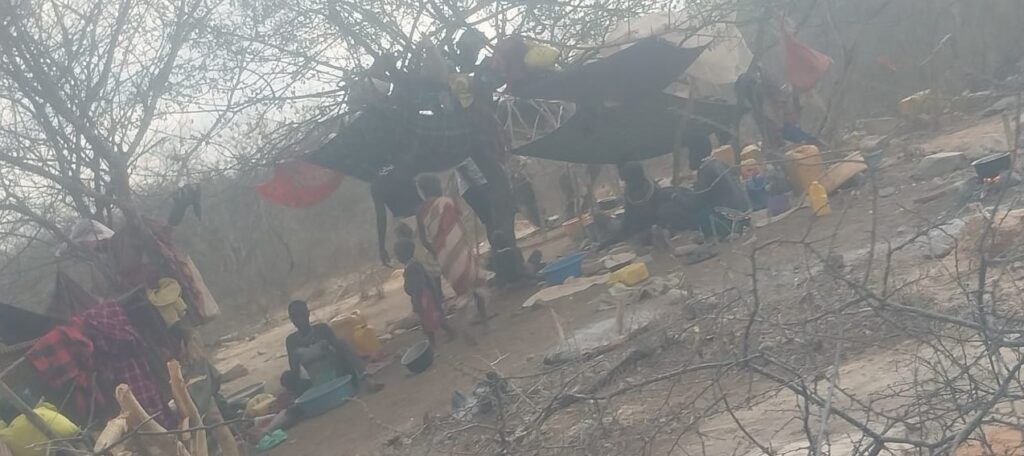
A severe water shortage in a gold-mining area of South Sudan’s Eastern Equatoria state has left thousands of residents struggling to access safe drinking water, raising concerns about the risk of disease, civil society groups said.
The Eastern Equatoria Civil Society Network (EECSN) has called for emergency water supplies, borehole drilling, improved sanitation and an urgent health assessment in Lokorumor, a rapidly growing mining settlement in Natinga Payam, Kapoeta East County.
“Communities should not be forced to spend hours travelling for water or sleep at water points simply to obtain this basic necessity,” said Alphonse Lotunyeny, chairperson of the network, in a statement issued on Tuesday.
Some residents are travelling for about six hours to collect water, while others are spending nights at water points waiting for their turn, Lotunyeny said.
The crisis has been exacerbated by prolonged drought, putting further pressure on communities whose livelihoods depend on livestock, small-scale farming and gold mining, the network said.
Moses Lokolong, a youth leader in Kapoeta East, estimated the population of the mining area at about 4,000, saying it could rise to 5,000 this month and 7,000 next month as people from surrounding villages move to the site.
“All the people from all the villages have gone there. All the sections, I mean, all of them have gone to the mining area,” Lokolong said.
Residents have been forced to seek water from a river, sometimes digging six to seven metres into the riverbed to find it, he said. Others transport water from Narus to the mining area.
The water shortage is also placing pressure on sanitation facilities in the settlement, increasing concerns about the spread of waterborne diseases.
Lokolong said residents had reported diarrhoea, vomiting and other symptoms, with children particularly affected.
“Many children are suffering, many of them are dying,” he said.
He said four infants died last month, although the causes of death had not been independently verified.
The EECSN urged the government, humanitarian agencies, donors and development partners to provide emergency water trucking, drill boreholes, improve sanitation, conduct a rapid WASH assessment and strengthen disease surveillance and medical services.
Lotunyeny said emergency water supplies could provide immediate relief, while boreholes and better sanitation would offer longer-term solutions.
Lokolong said youth representatives had reported the situation to local authorities, but it remained unclear what concrete assistance had been secured.
“We are reporting to the local authorities so that they will see another alternative of assisting the community,” he said.
South Sudan has some of the world’s weakest access to clean water and sanitation, while recurring drought, conflict and displacement have compounded humanitarian needs in several parts of the country.

 and then