



A coalition of more than 50 civil society organisations and trade unions has called for greater transparency and strict adherence to procurement laws following the South Sudanese government’s announcement of a $2 billion “Gold-for-Roads” project.
The Civil Society Coalition on Natural Resources said in a statement on Tuesday it was “deeply concerned” about the plan to use the country’s gold reserves as collateral to finance the construction of 1,031 kilometres of roads.
The project, approved by the Council of Ministers on Feb. 20, grants a sovereign guarantee to Shamrock Global Group at a reported cost of $2.3 million per kilometre.
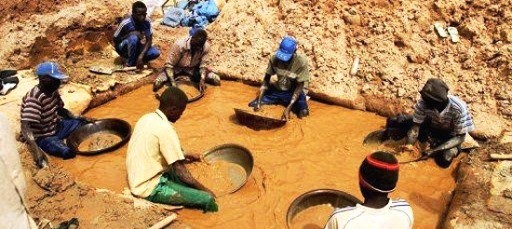
The coalition questioned the basis for using gold reserves as collateral, saying there is no publicly available, verified data on South Sudan’s gold deposits. It said that in recent engagements with the Ministry of Mining, officials acknowledged that mineral deposits in the country have not been fully mapped.
“In our recent engagements with the Ministry of Mining, it was apparent that the mineral deposits of South Sudan are not mapped,” the coalition said, asking how unmapped resources could credibly serve as security for a multi-billion-dollar infrastructure deal.
The group also raised concerns about the procurement process, questioning why the government opted for a single-source contract instead of an open competitive bidding process as provided for under the Public Procurement and Disposal of Assets Act of 2018.
It further described the $2.3 million per kilometre price as excessive compared with regional benchmarks and warned that, without a clear repayment or contingency framework, the arrangement could expose the country to long-term financial risks and a potential loss of control over its natural resources.
The coalition cited a 2020 “oil-for-roads” initiative as a cautionary example, saying the Bahr el Ghazal road project bypassed established procurement procedures and failed to deliver the expected results.
“Given such records, we question the viability of the project in terms of efficiency, transparency and accountability,” the statement said.
The coalition urged the government to publish credible data on gold reserves and disclose the criteria used to select Shamrock Global Group. It also called for mandatory environmental impact assessments, the establishment of rehabilitation funds for affected areas and the conclusion of legally required community development agreements with local populations in mining regions under the Mining Act of 2012.
In addition, it proposed the creation of a joint oversight committee comprising lawmakers, security officials and civil society representatives to monitor implementation of the project.
While expressing support for infrastructure development, the coalition said such projects should be financed through transparent gold sales and accountable public revenue management rather than through barter-style arrangements involving unverified mineral reserves.

 and then