



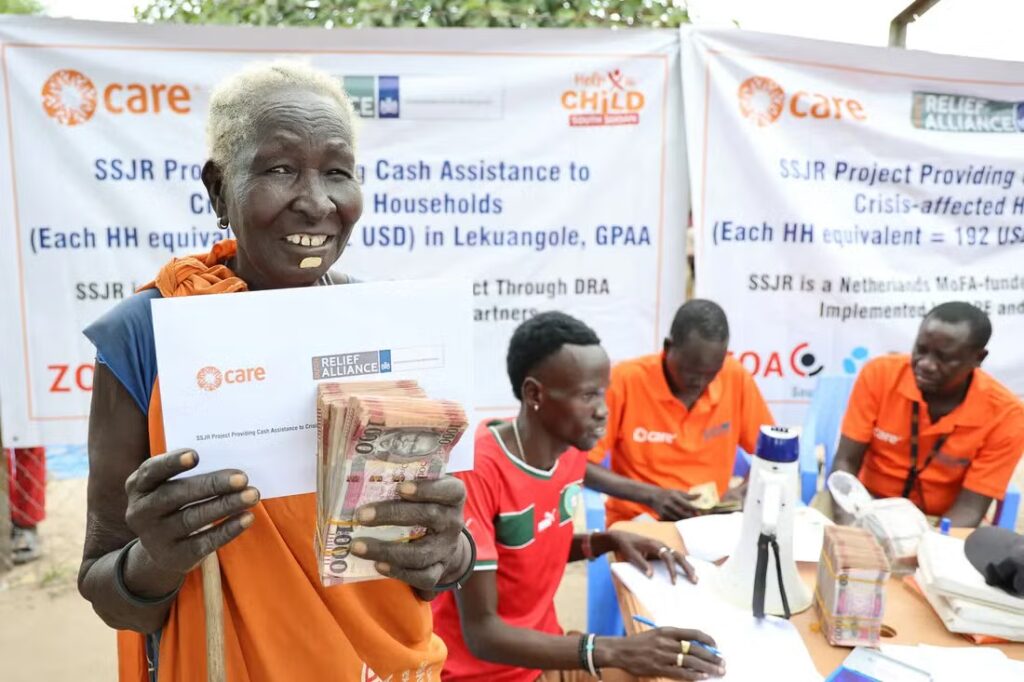
As the world commemorated International Women’s Day, CARE South Sudan on Sunday called for sustained and practical action to address the rising levels of Gender-Based Violence (GBV) across South Sudan, particularly in the context of ongoing conflict and humanitarian crisis.
International Women’s Day (IWD), celebrated annually on March 8, honors the social, economic, cultural, and political achievements of women while acting as a global call to accelerate gender equality.
A CARE South Sudan press release extended to this publication on Monday said women and girls in South Sudan continue to face alarming risks.
According to UNFPA, South Sudan records one of the highest prevalence rates of Gender-Based Violence in the region, with conflict, displacement, economic hardship, and weakened protection systems significantly increasing women’s exposure to violence, exploitation, and abuse.
“Gender-based violence is not inevitable; it is preventable. We cannot accept a reality where conflict and crisis continue to endanger the dignity and safety of women and girls,” said James Akai, Country Director of CARE South Sudan. “International Women’s Day must be more than a moment of recognition; it must be a call to action for lasting solutions.”
Acknowledging that important efforts are already underway in parts of South Sudan, CARE South Sudan reiterated its call for stronger, coordinated action to prevent and respond to gender-based violence by expanding survivor services, ensuring safe reporting and justice, and investing in women’s economic empowerment.
According to CARE South Sudan, when women have income and financial power, their safety, voice, and resilience are strengthened.
“When women are safe and economically empowered, communities become more resilient and peaceful,” Akai underscored. “Protecting women’s rights is not only a moral responsibility, but also essential for sustainable development and stability.”
The statement said that at CARE South Sudan, women are at the center of everything they do — not only on International Women’s Day, but every day.
“Through programs that strengthen economic empowerment, protection systems, and community leadership, CARE works to ensure women have the resources, safety, and voice they need to thrive,” the statement reads in part. “As the country continues to navigate complex humanitarian challenges, CARE South Sudan reaffirms its commitment to standing with women and girls, advocating for their rights, and working with communities to build a future free from violence.”
“Women’s rights cannot wait. Action must continue beyond International Women’s Day,” the statement concluded.

 and then