



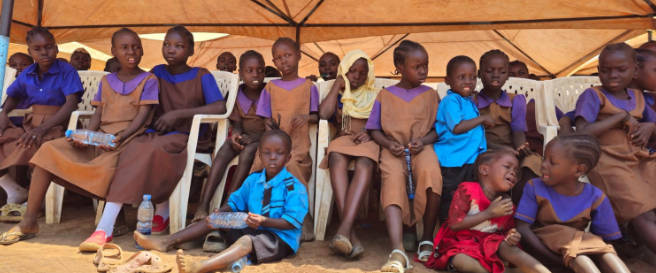
The Government of South Sudan and international partners on Monday launched the national Back to Learning campaign in the Western Bahr el Ghazal State capital, Wau, a nationwide initiative spearheaded by UNICEF to bring millions of out-of-school children back into classrooms.
The campaign aims to boost enrolment and retention, particularly among vulnerable groups, including displaced children, girls, and children with disabilities.
National Education Minister Kuyok Abol Kuyok said the government remains committed to expanding access to education and improving learning conditions across the country.
“Education is free and compulsory. It is a right that every child must go to school and receive quality education,” he stated. “This year, we are going to pay capitation grants for all government primary schools because we know what capitation grants do for our schools.”
“Without paying salaries for teachers, we will not have quality education in our schools,” the minister added.
For his part, Western Bahr el Ghazal State Governor Sharrif Daniel Sharrif welcomed the campaign and thanked development partners for supporting education programmes in the region.
“On behalf of the government and people of Western Bahr el Ghazal State, allow me to register my heartfelt gratitude to the donors for their dedication and standing firm to support education in Western Bahr el Ghazal State,” he said.
The Back to Learning campaign, led by UNICEF in partnership with the Ministry of General Education and other agencies, mobilises communities to identify children who are out of school and encourage families to enrol them.
Noala Skinner, the UNICEF Representative to South Sudan, said the initiative is designed not only to reopen school gates but also to restore opportunities for children whose education has been disrupted.
“Education is not simply about classrooms and textbooks, it is about protection, dignity, opportunity, and hope,” she said. “In South Sudan, too many children have had their learning disrupted by conflict, displacement, economic hardship, and climate shocks. Each year out of school increases the risk of child labour, early marriage, exploitation, and lost potential.”
South Sudan faces one of the world’s largest education gaps, with education partners estimating that about three million children remain out of school due to conflict, poverty, and displacement.
Diplomats attending the launch urged the government to increase investment in education. Lothar Jaschke, the Deputy Head of the European Union Delegation, said budget execution for the sector was reported to be less than two percent of government spending last year.
“Nothing is more important for building a nation than education,” he said, calling for stronger funding for the sector.
Education partners say insecurity, displacement, and shortages of trained teachers continue to affect access to quality schooling.
Joanne Minns, the Canadian Ambassador, said children in South Sudan deserve a stable and well-resourced education system.
Meanwhile, David Ashley, the UK Ambassador to South Sudan, said millions of children remain outside the education system despite years of international support.
Officials say the campaign will now expand across the country as communities, schools, and local authorities work to identify children who have dropped out and encourage families to send them back to learning.

 and then