



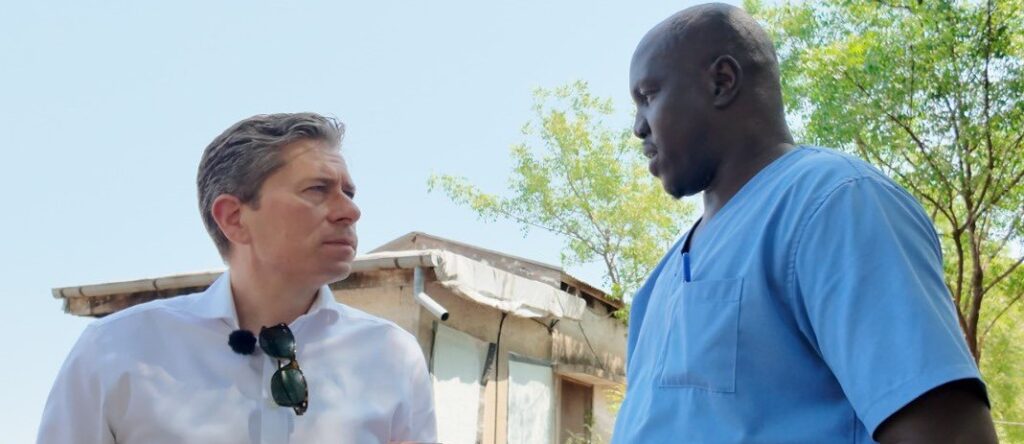
The UN Emergency Relief Coordinator arrived in South Sudan on Friday to visit one of the most under-reported humanitarian crises in the world, as clashes between government and opposition forces continue in Jonglei state.
In a statement, the United Nations said Tom Fletcher, the UN Under-Secretary-General for Humanitarian Affairs and Emergency Relief Coordinator, is visiting to assess the deteriorating situation in the world’s youngest nation and escalating protection risks facing civilians and aid workers.
Fletcher travelled directly to Malakal in Upper Nile state, where he met local residents, community leaders and returnees affected by conflict and the spillover from the war in neighbouring Sudan.
Posting on X, Fletcher said many displaced families have spent years in camps despite wanting to return home.
“Nobody chooses to be in a camp like this. They want to be living at home in security, bringing up their families, putting their kids through schools, getting hospital treatment. And yet here they are, year after year after year,” he wrote, adding that many had lost everything but not their dignity.
He said those uprooted had endured repeated upheavals, including attacks and robberies along their journeys. Beyond efforts to advance peace, Fletcher said one of the biggest challenges was what he described as international apathy toward the suffering of South Sudan’s people.
On Saturday, he travelled to Jonglei, where recent fighting has displaced around 280,000 people, according to authorities, further straining already limited resources.
In Akobo County, Fletcher said he met people with gunshot wounds, including an 18-month-old child and a 70-year-old grandmother.
“Civilians should never be a target,” he wrote.
UN spokesman Stephane Dujarric told reporters in New York that Fletcher would use his five-day mission to draw attention to the worsening crisis in South Sudan.
“Throughout the visit, the humanitarian chief will meet with local responders on the frontline,” Dujarric said. “He will advocate for the protection of civilians and humanitarian workers, reiterate our urgent calls for support to the humanitarian response and call for coordinated efforts to tackle the root causes of the crisis.”

 and then