



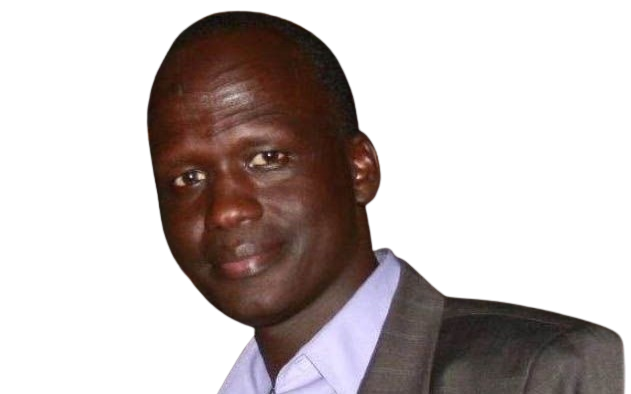
In his article, “Nigeria Is Wrong on South Sudan, and the Continent Should Say So,” published in Radio Tamazuj, Dr. Sunday de John argues that Nigeria’s call for the “immediate and unconditional release” of Dr. Riek Machar would reward rebellion. This claim rests on unstable assumptions: it conflates diplomatic intervention with support for insurgency, treats sovereignty as absolute while selectively invoking international law, and assumes criminal culpability without demonstrating procedural integrity. A closer look shows that his position is far less secure than it appears.
Let us begin with first principles. The Revitalized Agreement on the Resolution of the Conflict in the Republic of South Sudan (R-ARCSS) is not purely domestic. It was negotiated through regional mediation and embedded in a multilateral framework supported by continental and international actors. When a peace arrangement is regionally brokered and internationally monitored, its stability becomes a legitimate concern for the broader region. Nigeria’s engagement is therefore not interference in a sealed domestic jurisdiction, but a legitimate contribution to safeguarding the agreement.
To argue otherwise ignores the hybrid nature of the transitional arrangement. One cannot accept regional and global mediation to establish a power-sharing government and then reject the same regional diplomacy when the arrangement faces destabilization. Sovereignty cannot be invoked selectively, embraced when convenient, and dismissed when uncomfortable.
Dr. Sunday portrays Dr. Machar as a criminal suspect subject to International Criminal Court-like standards rather than a political detainee. The comparison sounds impressive, but it collapses under scrutiny. The ICC’s authority rests not on labeling crimes as grave, but on procedure: independent prosecutors and transparent indictments, strict evidentiary thresholds, and judges insulated from executive influence. Without these safeguards, citing ICC standards offers prestige without legitimacy.
If South Sudan truly invokes ICC-like standards, the public must see them applied. Where is the independent indictment demonstrating that this case is legally grounded and free from political influence? Where are prosecutors insulated from executive interference? Where is the evidentiary basis that meets the thresholds for command responsibility? Without these safeguards, invoking the ICC’s vocabulary does not confer legitimacy—it exposes the absence of institutional guarantees. The appearance of legitimacy without procedural rigor weakens the argument.
Dr. Machar is not an ordinary defendant. As the constitutionally recognized First Vice President under a power-sharing agreement, detaining him is not routine—it disrupts the transitional balance. In fragile post-conflict settings, removing a core signatory carries systemic consequences that extend far beyond individual culpability and may unravel the very agreement designed to prevent renewed conflict.
This is the central issue Dr. Sunday’s article avoids: the gap between abstract criminal theory and the realities of transitional politics. A peace agreement is sustained not by legal formalism alone but by reciprocal trust among adversaries who have agreed, however reluctantly, to govern together. Removing a key signatory under contested legal circumstances immediately weakens that foundation. Nigeria’s intervention should therefore be understood not as indulgence toward rebellion or sympathy for armed groups, but as strategic risk mitigation within a volatile transition. Diplomacy is not surrender or rebellion—it functions in the gray zones of transitional politics.
The claim that Dr. Machar’s release would “reward rebellion” presents a false binary: detention is equated with justice, release with surrender. Transitional politics is far more complex. Diplomatic de-escalation tools—such as temporary release pending transparent proceedings, regionally supervised guarantees, or conditional arrangements—can uphold both accountability and stability. Framing any call for release as support for armed violence oversimplifies the range of diplomatic options and gives a misleading impression. Even so, there is no guarantee that diplomatic measures alone will prevent armed escalation, and contingency plans should be prepared for potential breaches of the peace.
Equally concerning is the selective application of accountability. The article scrutinizes alleged violations by the Sudan People’s Liberation Movement/Army-In Opposition (SPLM/A-IO) but applies no comparable standard to government forces. One side is presumed guilty by default, while the other is presumed innocent. It is important to acknowledge that armed groups, including the SPLM/A-IO, have committed crimes—such as attacks on civilian areas—that cannot be overlooked in any discussion of transitional stability. However, if these crimes occurred, why does Dr. Sunday not ask why they happened or examine the broader context in which they took place? If command responsibility is the standard, it must apply equally to all commanders exercising effective control. International law recognizes no partisan enforcement. While symmetry in accountability is ideal, it may not fully reflect on-the-ground realities where one side may have committed fewer violations or none of comparable scale.
Dr. Sunday warns that releasing Machar could set a dangerous continental precedent, emboldening warlords across Africa. This projection is speculative at best and logically flawed. By the same logic, detaining opposition leaders in fragile transitions would embolden incumbents. A far more consequential precedent arises when leaders in fragile transitions manipulate legal or peace processes to neutralize rivals or suppress dissent under the guise of sovereignty. The true continental risk, therefore, lies not in diplomacy or calls for negotiation but in the selective weaponization of legal frameworks.
The question, therefore, is not whether crimes should be investigated—they unquestionably must be. Nor is it whether armed offensives must be condemned—they must be. The critical issue is whether prosecutorial action during a fragile power-sharing arrangement is conducted with procedural integrity, regional transparency, impartiality, and symmetrical accountability. Without these safeguards, detaining a vital peace signatory like Machar becomes a politically charged act whose consequences extend far beyond the courtroom, threatening the stability of the transitional framework.
Nigeria’s intervention is not an endorsement of insurgency. Rather, it recognizes that the collapse of a fragile transitional arrangement carries catastrophic human and political costs. Diplomacy operates along transitional fault lines where legal formalism collides with post-conflict realities. Its purpose is to prevent escalation before positions harden and before full-scale war becomes unavoidable. Importantly, given the deep mistrust between peace signatories, Nigeria’s diplomatic push could easily be interpreted as favoring one side, even if the intention is impartial mediation.
Africa indeed cannot afford dangerous precedents. Yet the gravest threat is not diplomacy itself—it is the normalization of asymmetrical accountability in transitional governance, where contested actions are cloaked in the language of international justice. Sustaining transitional integrity demands consistency: accountability applied equally, law grounded in procedure, and sovereignty exercised with institutional credibility. Diplomacy is not rebellion; it is a disciplined, strategic effort to prevent a fragile peace from collapsing into irreversible conflict.
The writer, Duop Chak Wuol, is an analyst, critical writer, and former editor-in-chief of the South Sudan News Agency. He is a graduate of the University of Colorado; his work focuses on geopolitics, security, and social issues in South Sudan and the broader East African region. His writing has appeared in leading regional and international outlets, including AllAfrica, Radio Tamazuj, The Independent (Uganda), The Arab Weekly, The Standard (Kenya), The Chronicle (Ghana), Addis Standard (Ethiopia), and Sudan Tribune. In 2017, the Ethiopian Broadcasting Corporation (EBC) highlighted his article on Prime Minister Meles Zenawi’s role in Ethiopia’s economic transformation. He can be reached at duop282@gmail.com.
The views expressed in ‘opinion’ articles published by Radio Tamazuj are solely those of the writer. The veracity of any claims made is the responsibility of the author, not Radio Tamazuj.

 and then