



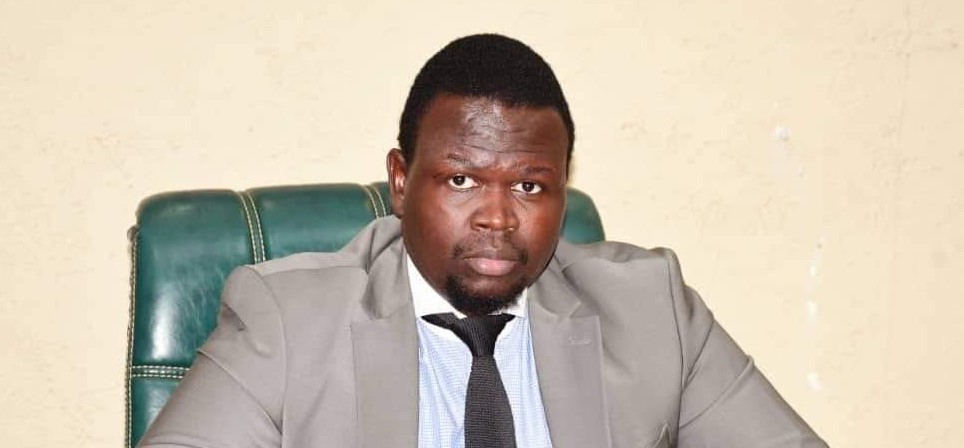
The opposition SPLM-IO on Tuesday pushed back against government claims that its forces are advancing on the capital, Juba, saying it has mobilised troops purely in self-defence after repeated attacks and violations of security arrangements by government forces.
Puok Both Baluang, press secretary in the office of opposition leader Riek Machar, told Radio Tamazuj that SPLA-IO forces had reinforced positions, responded to assaults on defensive sites, and acted against repeated violations of the 2018 peace deal.
“The recent political and security crisis in South Sudan is a man-made tragedy perpetrated by a regime that has consistently violated its agreement,” he said.
“Therefore, the recent military actions by our gallant forces are necessary and a direct response to unprovoked aggression by the SPLM-IG and its allies. Our forces did not initiate the current security crisis, and the call to march towards Juba resulted from the SPLM-IG’s systematic violations of the security arrangements and the agreement as a whole,” he added.
Puok explained that SPLA-IO forces had been compelled to react after what he described as systematic violations of the 2018 Revitalised Peace Agreement, including attacks on cantonment and training sites protected under the deal.
According to Puok, the crisis escalated in February 2025 when government forces, allied militias, the Uganda People’s Defence Forces (UPDF) and what he termed “foreign mercenaries” launched repeated assaults on SPLA-IO positions in Upper Nile and Jonglei states.
He said SPLA-IO commanders had ordered defensive deployments in Jonglei and other areas, reinforced frontlines, and engaged attackers to repel advances, insisting these steps were taken to stabilise the situation rather than expand the conflict.
“Our recent military operations are not acts of aggression,” Puok said. “They are defensive measures grounded in international law and our responsibility to protect civilians.”
Puok also said SPLA-IO had documented alleged abuses by government forces, including the use of gunships against civilian areas, and accused them of deploying chemical weapons in Upper Nile, Jonglei, and parts of Greater Equatoria — allegations that could not be independently verified.
He said SPLM-IO had shared its concerns with regional and international guarantors and renewed calls for urgent mediation, but said no tangible action has been taken so far.
“We have repeatedly appealed to the agreement guarantors, the region, and the international community to intervene, revive the peace process, and facilitate inclusive, honest, and result-oriented dialogue,” he said.
Puok reiterated that SPLA-IO remained committed to implementing the 2018 peace agreement “in letter and spirit” and said it was seeking political solutions alongside defensive military measures.
The opposition response followed remarks by Information Minister and government spokesman Ateny Wek Ateny, who rejected reports that South Sudan is returning to full-scale war.
“We are not at war,” Ateny told reporters in Juba on Tuesday, saying clashes in northern Jonglei State were part of a defensive operation by the army to halt what he described as an SPLA-IO advance towards Juba and to protect civilians.
The South Sudan People’s Defence Forces (SSPDF) have deployed additional troops to northern Jonglei to recapture positions in Uror, Nyirol, and surrounding areas. On Sunday, the army announced a campaign dubbed “Operation Enduring Peace” aimed at regaining territory held by the Sudan People’s Liberation Army-in-Opposition (SPLA-IO).
Tensions between the two parties have been rising since December, with senior military figures on both sides issuing threats and reinforcing positions, raising fears of a return to full-scale war.
South Sudan’s 2013–2018 civil war killed around 400,000 people before a peace deal brought the foes into a fragile unity government.
That 2018 agreement has since been weakened by repeated violations, unilateral actions, and disputes between President Salva Kiir’s SPLM and Machar’s SPLM-IO. Machar has been suspended as first vice president and is facing a treason trial in Juba.

 and then