



South Sudan’s National Elections Commission (NEC) announced Monday that it will use the geographical constituency boundaries from the 2010 general elections for the upcoming December 2026 polls, citing delays in conducting a new national census.
The commission declared a total of 102 national constituencies across the country’s 10 states and three administrative areas, a decision it said was mandated by law after parties to the nation’s peace agreement agreed to decouple the elections from a pending population count and constitutional review.
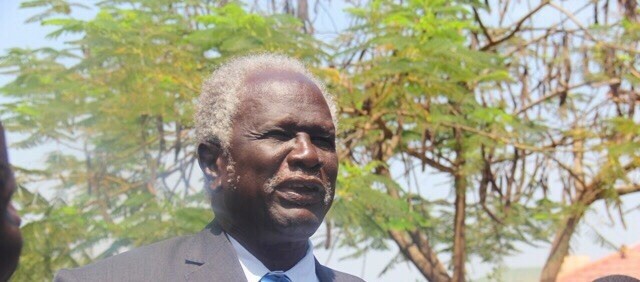
NEC Chairperson Professor Abednego Akok Kacuol told reporters in Juba that the move is guided by the National Elections Act of 2012, as amended in 2023. The law requires the commission to revert to the 2010 constituency framework when a fresh census has not been held.
“In accordance with the National Elections Act … the NEC hereby declares the 102 constituencies in accordance with the ten states and the three administrative areas,” Akok stated in a press release.
The constituency distribution includes Central Equatoria State with 14 constituencies, Eastern Equatoria State with 11, and Western Equatoria State with 8. Jonglei State, which includes the Greater Pibor Administrative Area, has 17 constituencies.
Unity State, including the Ruweng Administrative Area, has 7 constituencies. Upper Nile State has 12 constituencies, Lakes State has 8, and Northern Bahr el Ghazal State has 9. Western Bahr el Ghazal State has 4 constituencies, while Warrap State, including the Abyei Administrative Area, has 12.
The commission said detailed names and descriptions of each constituency will be published on its official website and in print media, as required by Section 41(1)(g) of the elections law.
The decision to use the 2010 boundaries follows a December 10 agreement by signatories to the Revitalized Agreement on the Resolution of the Conflict in South Sudan (R-ARCSS) to proceed with elections without a new census or completed constitution-making process—originally set as preconditions.
Akok called on the public and stakeholders to rely on official NEC publications for accurate information regarding their constituencies as election preparations advance.
South Sudan, which gained independence in 2011, has faced repeated delays in holding elections since the end of its civil war. The 2026 vote is seen as a critical test for the country’s peace process and political stability.

 and then