



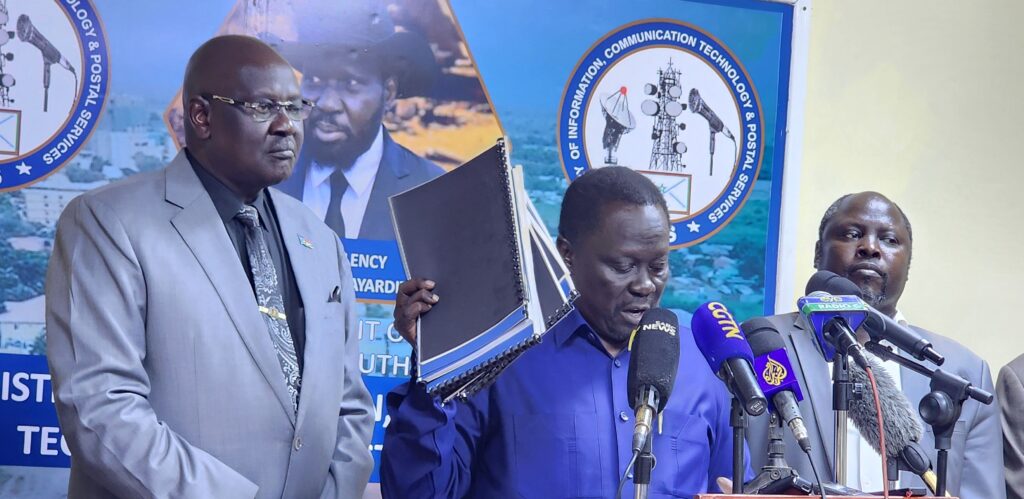
South Sudan’s agriculture minister has announced that forces loyal to him have been handed over to the national army, in what he called a move to support the peace process.
Hussein Abdelbagi Akol, who leads a faction of the South Sudan Opposition Alliance (SSOA) and the South Sudan Patriotic Movement (SSPM), said the step was taken “in the supreme interest” of the country.
The move is intended to mark a transition from “armed struggle to civilian political engagement,” he told reporters in the capital, Juba, on Monday.
Under the 2018 peace agreement that ended a brutal civil war, all armed groups were supposed to be unified into a single national army. However, this security arrangement has been repeatedly delayed.
The government has cited financial and logistical challenges, while observers point to a lack of political will and disputes among the country’s leaders.
Abdebagi said all opposition forces under his command, along with their weapons, had been placed under the authority of President Salva Kiir, who is commander-in-chief of the South Sudan People’s Defence Forces (SSPDF).
“We have consciously decided that the future of South Sudan must be determined through ballots, not bullets,” he said.
He called for the immediate integration of these forces and directed his commanders to report to official training centres.
‘A positive step’
The announcement was welcomed by Information Minister Ateny Wek Ateny, who described it as “a positive and encouraging step” for political stability.
He said it strengthened confidence in the peace process and helped end “parallel command structures”.
Ateny also said Abdelbagi’s stated intention to form a political party was a “constitutional right”.
Political context
The handover comes amid political rivalry within the SSOA, which is split into factions led by Abdelbagi and Vice-President Josephine Lagu.
Abdelbagi, who is a close ally of President Kiir, was removed from his post as vice-president in February 2025 and reassigned as minister of agriculture.
Some observers see his decision to relinquish his forces as a strategic move within this internal rivalry. Abdelbagi directly challenged rival factions to provide evidence of any other armed forces under the SSOA banner outside of his command, claiming control of about 3,700 fighters in South Sudan.
The unification of forces is a key pillar of the 2018 peace deal, but progress has been slow. The transitional government is currently working to hold national elections in December 2026 amid complaints from the opposition SPLM-IO, led by detained First Vice President Riek Machar.

 and then