



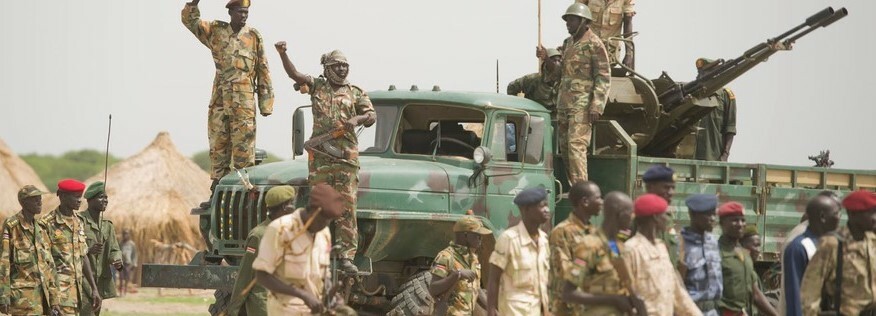
South Sudan’s cabinet has proposed a 2025/26 national budget that allocates hundreds of billions of pounds to the military, intelligence and security services, raising questions about spending priorities in a country grappling with acute humanitarian and economic pressures.
Draft budget documents seen by Radio Tamazuj show the security sector remains the largest recipient of state funding. The Ministry of Defence is allocated 325.8 billion South Sudanese pounds (SSP). Although this is a reduction from revised spending in the previous financial year, it remains the single largest allocation to any government institution.
The National Security Service (NSS), the country’s main intelligence agency, is set to receive 159.7 billion SSP, up sharply from an initial allocation of 58.7 billion SSP in the 2024/25 budget. Budget figures also indicate that the NSS’s actual expenditure last year reached 682.6 billion SSP — more than ten times its original allocation — a discrepancy that is not fully explained in the documents.
Other significant security-related allocations include 103.4 billion SSP for Veteran Affairs, 1.02 billion SSP for the National De-Mining Authority, 6.9 billion SSP for the Presidential Guard, and a combined 7.97 billion SSP for military training and logistics. A further 40 billion SSP is earmarked for “Defence and Organised Forces” under a dedicated peace implementation fund.
Total government spending for 2025/26 is projected at 8.58 trillion SSP, against expected revenue of 7.0 trillion SSP, resulting in a deficit of 1.58 trillion SSP. Oil remains the backbone of public finances, with projected revenues of 5.22 trillion SSP, while non-oil income is estimated at 1.78 trillion SSP.
The scale of security spending stands in contrast to allocations for social services. The Ministry of Agriculture is allocated 130.9 billion SSP, despite widespread food insecurity across the country. Health services, meanwhile, are described in budget documents as largely dependent on donor-funded transfers rather than direct state financing.
The draft Appropriation Bill includes accountability provisions, stating that accounting officers who misuse public funds can be barred from holding public office and required to repay misappropriated amounts. However, the large and unexplained overspending by the NSS in the previous financial year has raised doubts about how effectively these measures are enforced.
Further scrutiny of the budget reveals substantial sums allocated to broadly defined expenditure lines. The NSS budget includes 149.6 billion SSP for “Incentives and Overtime” and 75.0 billion SSP for “Pension Contributions”, as well as a combined 77.2 billion SSP for three separate “Foreign Station Groups”. The defence budget similarly lists significant funding for “Use of Goods and Services” across units such as the Ground Forces and the Air Force, with limited public detail.
South Sudan remains in a transitional phase under the 2018 Revitalised Peace Agreement, with security sector reform still incomplete. Fighting between government forces, the SSPDF, and the opposition SPLA-IO has continued in Jonglei and other parts of the country since December 2025, underscoring the fragile security environment.
The draft budget, presented to parliament earlier this week by Finance Minister Dr. Barnaba Bak Chol, will now be debated by lawmakers.
The 2025/26 budget was presented seven months later than required. Article 88(1) of the Constitution stipulates the timeline for the submission of the national budget to parliament.

 and then